When Flat Feels Right: An Introduction
Flatwound strings have long been associated with jazz guitarists thanks to their smooth surface, darker tone, and reduced string noise. But they’re not just for bebop aficionados. These strings are finding their way into indie rock, blues, and experimental music for players seeking something beyond the typical bright bite of roundwounds.
So, what makes flatwounds special—and who’s using them beyond the jazz club?
What Are Flatwound Strings?
Unlike the more common roundwound strings, flatwounds use a flat ribbon wire wrapped around the core. This creates a smooth, polished feel and changes the tonal response dramatically. Here’s how they differ:
- Tone: Darker, mellower, more focused midrange
- Feel: Smooth to the touch, no ridges under the fingers
- Noise: Minimal finger squeak, ideal for clean tones and recording
- Durability: Longer lifespan due to reduced grime buildup
- Tension: Typically higher tension, offering a stiffer playing experience
The Classic Flatwound Crowd: Jazz Greats
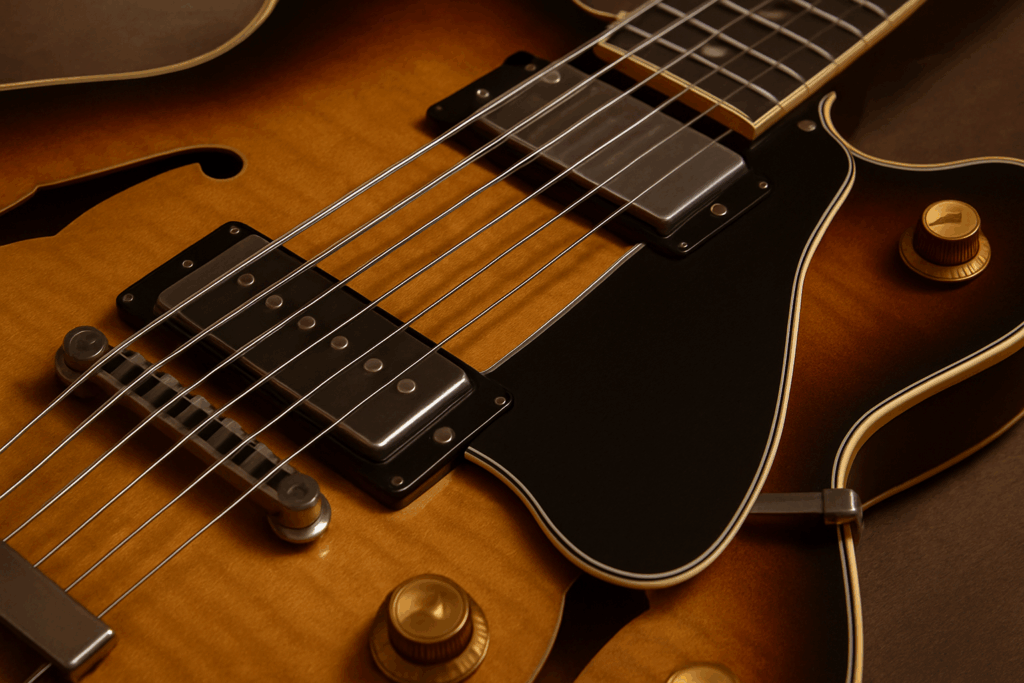
Flatwounds have been the go-to for jazz guitarists since the 1940s and ’50s. Their warm, round tone pairs beautifully with archtop hollow-body guitars and clean tube amps.
Some of the most iconic flatwound users include:
- Wes Montgomery – Known for his thumb-picked lines and fluid tone, Wes relied on flatwounds for a smooth, singing attack.
- Joe Pass – His impeccable chord-melody style and warm tone were enhanced by flatwounds on his Gibson archtops.
- George Benson – Still a proponent of flatwounds today, Benson’s tone is rich, articulate, and precise—hallmarks of flatwound character.
Beyond Jazz: Unexpected Flatwound Devotees
While flatwounds are synonymous with jazz, players from unexpected corners of the guitar world have adopted them to achieve a distinctive sound.
Matt Sweeney
(Zwan, Chavez, Matt Sweeney & Bonnie “Prince” Billy)
Sweeney brings flatwounds into alternative and indie rock, praising their ability to bring out “fundamental tone” while taming harshness. His parts often feature intricate clean playing or droning lines that benefit from the smoothness and warmth flatwounds offer.
Tom Bukovac
A Nashville session legend, Bukovac uses flatwounds for their feel and tone in both rhythm and lead work, especially when recording clean tones for country, rock, or Americana.
John Frusciante
Known primarily for his work with the Red Hot Chili Peppers, Frusciante has reportedly used flatwounds during certain solo projects for a more vintage-inspired, intimate tone.
Steve Albini
Though more known as a producer than a shredder, Albini was a fan of flatwounds for their consistency and fundamental-focused tone. He often used them in his band Shellac for punchy, precise rhythm guitar work.
Why You Might Try Flatwounds
1. Cleaner Recordings:
Flatwounds minimize finger noise, making them ideal for clean recordings or fingerstyle passages.
2. Less Wear on Frets and Fingers:
The smooth surface is gentle on both your fretboard and your fingertips, especially for long sessions.
3. Vintage Vibes:
If you’re chasing tones from the ’50s and ’60s, flatwounds get you closer than any pedal can.
4. Unique Tone Palette:
In a sea of roundwound sparkle, flatwounds can give you a tone that stands out—darker, punchier, more nuanced.
Downsides to Consider
While they offer a unique experience, flatwounds aren’t for everyone:
- Reduced Harmonic Content: They don’t have the bright sparkle or harmonic richness of roundwounds, which might feel dull to some players.
- Stiffer Feel: Bends and vibrato can be harder to execute unless you’re using a lighter gauge or a shorter scale guitar.
- Limited Availability: Fewer brands and sets exist compared to roundwounds, especially for non-jazz gauges or longer scales.
Popular Flatwound String Sets
- D’Addario Chromes – A favorite among jazz and rock players alike. Smooth, consistent, and widely available.
- Thomastik-Infeld Jazz Flats – Boutique-level feel and tone with lower tension.
- La Bella Flats – A classic choice for both jazz and vintage rock tones.
- GHS Precision Flats – A balanced feel and classic sound, great for jazz or clean rock tones.
Final Thoughts
Flatwound strings offer a timeless tone that’s finding a new audience outside of jazz. Whether you’re chasing the dark, mellow richness of Wes Montgomery or the unorthodox textures favoured by Matt Sweeney, flatwounds are an invitation to reimagine your guitar’s voice.
If you’re feeling stuck in your tone journey, a simple string change could open up a whole new dimension.