Few bands have pushed the boundaries of guitar-based music like Radiohead. From their early days as a grunge-tinged Britpop act to their transformation into one of the most innovative bands in modern music, Radiohead’s sound has always been deeply tied to their choice of guitars, pedals, and recording gear. This post explores the iconic instruments and technology that shaped their evolving soundscape.
Early Years: “Pablo Honey” (1993)
Radiohead burst onto the scene with their debut album Pablo Honey, powered by the breakout single “Creep.” The sound was raw, distorted, and alt-rock-driven—reflective of the early ’90s.
Guitars:
- Thom Yorke: Fender Telecaster Plus – known for its Lace Sensor pickups and TBX tone control.
- Jonny Greenwood: Fender Telecaster Plus – his primary guitar in early years, customized with a kill switch.
- Ed O’Brien: Fender Stratocaster and Gibson Les Paul – contributed textural rhythm parts and delay-soaked layers.
Effects & Amps:
- Marshall ShredMaster, Pro Co RAT, Electro-Harmonix Small Stone – early staples on Jonny’s board.
- Roland Space Echo and BOSS delay units – for atmospheric textures.
- Vox AC30s and Fender Twins were common amp choices across the band.
The Bends (1995): Textural Ambition
By The Bends, Radiohead had begun to stretch beyond alt-rock. The guitars were still central, but they were now more lush, layered, and emotionally resonant.
Gear Highlights:
- Greenwood’s arsenal expanded to include Yamaha SG1000, Fender Starcaster, and a Roland GK-2A pickup for MIDI use.
- Yorke continued with the Telecaster Plus but introduced more delay, chorus, and reverb pedals.
- O’Brien began heavily using EBow and Electro-Harmonix Deluxe Memory Man, creating ambient pads.
OK Computer (1997): Guitar Deconstruction
OK Computer is often seen as the pinnacle of creative guitar production in the ’90s. The band treated guitars as sound sources to be manipulated—not just instruments to be played.
Key Gear:
- Greenwood’s Roland VG-8 and Digitech Whammy – used to pitch-shift, warp, and filter guitars.
- Yorke’s Gibson ES-330 made appearances.
- O’Brien’s delay layering became foundational, using Line 6 DL4, Digitech XP-100, and EHX Memory Man.
Amps were often run through multiple effects chains and blended in the studio. Recording experimentation with engineers like Nigel Godrich also shaped their evolving guitar tones.
Kid A / Amnesiac (2000–2001): The Anti-Guitar Era
These albums marked a seismic shift: guitars were de-emphasized in favor of synths, samplers, and loops, but the guitar was never gone—it was just repurposed.
Tech-Driven Setup:
- Jonny Greenwood used the Ondes Martenot, a vintage electronic instrument, extensively.
- Yorke and Ed used heavily processed guitar loops via Line 6 DL4, Kaoss Pads, and Boss GT-6 units.
- Guitars were routed through filters, tremolos, and synth pedals to emulate textures rather than riffs.
Hail to the Thief (2003): Hybridization
Hail to the Thief brought the guitars back, now fused with the electronic sensibilities of the previous two records. The gear setup became more hybrid—acoustic instruments, digital effects, and live looping all coexisted.
Notable Additions:
- Yorke: Gretsch Country Gentleman and Martin acoustics.
- O’Brien: Fender E-Bow techniques combined with vintage delay units and the Line 6 Echo Pro rack unit.
- Greenwood: Custom-built MIDI controllers and software manipulation using Max/MSP.
In Rainbows (2007): Warmth and Humanity
This album brought a more organic feel, with guitars at the forefront but more emotional and less processed.
Gear Highlights:
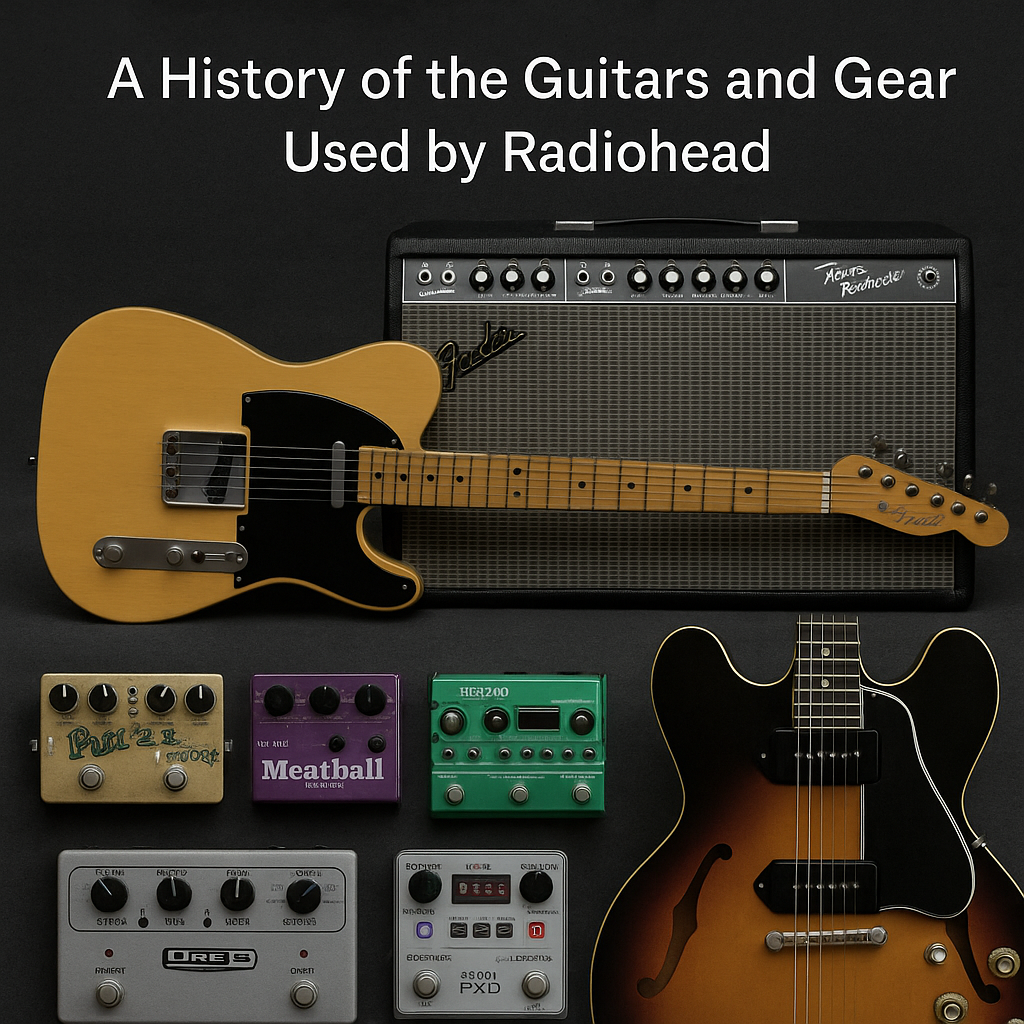
- Greenwood returned to his Telecaster Plus, but with boutique effects like the ZVEX Fuzz Factory, Lovetone Meatball, and Korg Kaoss Pad 2.
- O’Brien used a Fernandes Sustainer-equipped Strat and a wide palette of reverbs and delays.
- Yorke focused more on rhythm guitars, often using the Gibson ES-330, vintage Martins, and minimal pedals.
The King of Limbs (2011) & A Moon Shaped Pool (2016): Texture and Restraint
These albums saw Radiohead pushing deeper into minimalist and loop-based territories.
Studio and Live Gear:
- Custom Ableton Live rigs to loop and manipulate guitar parts in real time.
- Greenwood used granular synthesis and studio manipulation on guitar stems.
- Yorke’s use of the Gretsch Duo Jet and acoustic guitars tied with subtle modulation gave the albums their understated beauty.
Signature Pedals and Gear Staples
- Digitech Whammy – especially Jonny Greenwood’s expressive use.
- Line 6 DL4 – used extensively for real-time looping and ambient textures.
- ZVEX Fuzz Factory, Electro-Harmonix Memory Man, Boss RV-5, and Kaoss Pad – common tools across their pedalboards.
- Custom-built MIDI controllers and Max/MSP patches – a big part of Greenwood’s setup from Kid A onward.
Conclusion: The Art of Sonic Sculpture
Radiohead’s relationship with gear is never static. For them, guitars are not just tools for riffs—they’re canvases for sonic exploration. From analogue fuzz to digital loopers, from clean Telecasters to MIDI-triggered textures, the band’s commitment to evolving their sound has made their gear history as compelling as their music.