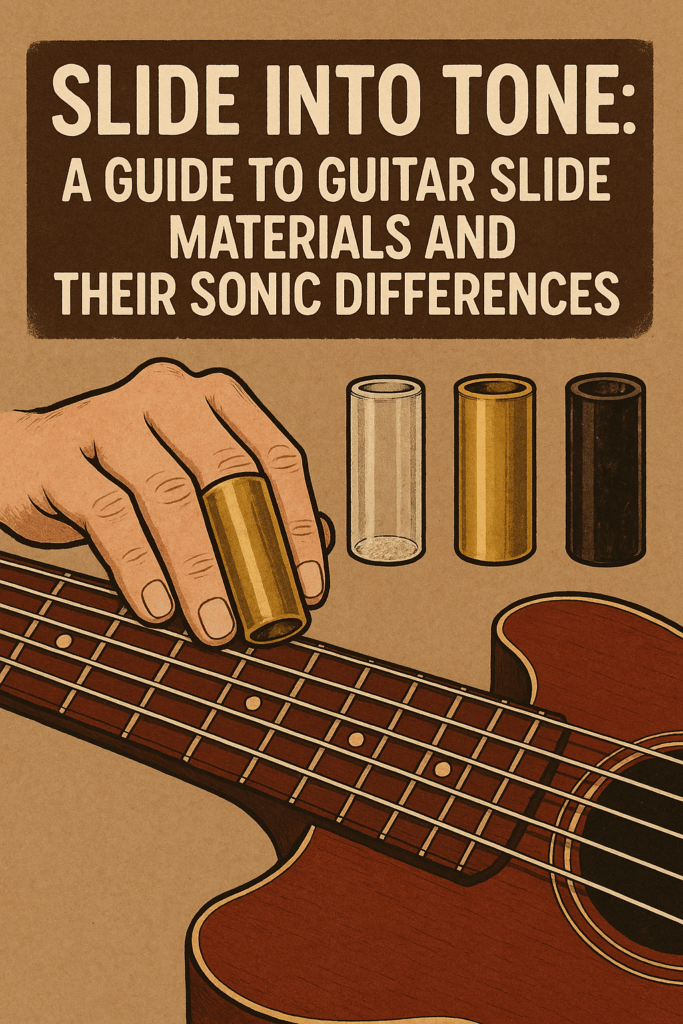
For players chasing expressive, vocal-like phrasing or swampy blues tones, the guitar slide is an essential tool. Whether you’re channelling Duane Allman, Derek Trucks, Bonnie Raitt, or Ry Cooder, your choice of slide has a big impact on tone, sustain, and playability. But not all slides are created equal — the material of the slide plays a major role in shaping your sound.
In this post, we’ll explore the most common materials used for guitar slides and how each one affects your tone and playing experience.
Glass Slides: Smooth and Singing
Tone: Warm, smooth, round
Feel: Slick and lightweight
Best for: Electric blues, soulful leads, classic rock
Glass slides deliver a mellow, rounded tone with less top-end harshness than other materials. They glide easily across strings, making them a popular choice for electric players chasing that fluid, vocal tone — think Derek Trucks’ soaring Allman Brothers leads.
Bottleneck-style glass slides (often literally cut from wine bottles in the old days) are traditional and great for vintage-style blues. Thinner glass provides less sustain but is lighter and easier to control; thicker glass gives more sustain but may feel cumbersome.
Metal Slides: Bright and Aggressive
Brass Slides
Tone: Bright, mid-heavy, punchy
Feel: Hefty with a bit of drag
Best for: Dirty blues, rock, heavier slide styles
Brass slides produce a loud, cutting tone with more sustain and grit. They’re heavier than glass, which can translate to longer sustain and a more authoritative attack — perfect for crunchy amp settings and aggressive picking. Brass also adds a bit of rasp that suits blues and rock styles.
Steel Slides
Tone: Brighter than brass, tighter high-end
Feel: Very smooth, cold to the touch
Best for: Country, lap steel, pedal steel, high-fidelity slide work
Steel slides offer a harder, sharper tone with a clean high-end. They’re often used for lap steel and pedal steel guitars but work great for standard slide playing too, especially if you want clarity and bite. Steel slides glide more easily than brass and can sound a little less “gritty,” making them good for clean amp tones or country-style playing.
Ceramic Slides: Warmth and Texture
Tone: A mix of glass and metal — warm but gritty
Feel: Slightly porous, comfortable grip
Best for: Blues, roots, alternative slide tones
Ceramic slides sit between glass and metal in both feel and sound. They have the warmth and smoothness of glass, but with a bit of the grit and sustain you’d expect from brass or steel. Artists looking for something a little different — or more texture in their tone — often reach for ceramic. They’re also comfortable to wear and stay relatively temperature-neutral.
Some ceramic slides are even kiln-fired or hand-glazed for a unique look and feel, and companies like Rocky Mountain Slides or Mudslide specialize in these artisan models.
Other Materials: Experimental or Niche
- Porcelain: Similar to ceramic but often smoother and brighter.
- Chrome: Durable, slick, and slightly brighter than brass.
- Bone or Stone: Unusual but increasingly popular among experimental and roots players — earthy, organic tones with unique character.
- Plastic or Acrylic: Lightweight but generally lacking sustain and resonance. Mostly for beginners or experimentation.
Things to Consider Beyond Material
- Slide Size and Fit: A good slide should fit snugly on your finger without being too tight. Many players use it on the pinky or ring finger to leave other fingers free for fretting.
- Wall Thickness: Thicker slides have more mass, meaning more sustain — but they’re heavier to control.
- Length: Full-length slides cover all six strings, but shorter ones offer more finger flexibility.
- String Gauge and Action: Heavier strings and higher action work better for slide, especially with heavier materials that might otherwise rattle against the frets.
Choosing the Right Slide for You
Ultimately, your ideal slide depends on your style, rig, and feel preferences. Playing a Strat into a cranked tube amp? Glass might be your friend. Swampy Delta blues on a resonator? Try brass. Need lap steel shimmer or country clarity? Go with steel.
Here’s a quick comparison summary:
| Material | Tone | Feel | Weight | Best For |
|---|---|---|---|---|
| Glass | Warm, smooth | Slick | Light | Electric blues, classic rock |
| Brass | Bright, gritty | Hefty, textured | Heavy | Blues-rock, swampy styles |
| Steel | Clear, sharp | Very smooth | Medium-heavy | Country, lap steel |
| Ceramic | Warm, textured | Slight drag | Medium | Blues, roots, alt styles |
| Chrome | Bright, hard | Slick | Medium | Rock, blues |
| Porcelain | Smooth, slightly bright | Comfortable | Medium | Alternative tones |
Final Thoughts
A slide can be one of the most expressive tools in your guitar arsenal. Whether you’re aiming for silky melodic lines or raw blues grit, the material you choose will influence every note you play. Try a few different slides and let your ears — and fingers — decide.