In the world of musical instruments, few names command as much reverence as Gretsch. With over 140 years of heritage, Gretsch has become synonymous with vintage tone, bold aesthetics, and unmistakable sonic identity — across both guitars and drums. From Chet Atkins’ shimmering 6120 to Charlie Watts’ signature Gretsch drum sound, the brand’s fingerprints are all over rock, jazz, country, and pop history.
This blog post explores the remarkable story of Gretsch — from its 19th-century origins to its modern revival — and highlights the instruments, innovations, and artists that define “That Great Gretsch Sound.”
1. Brooklyn Beginnings (1883–1940s)
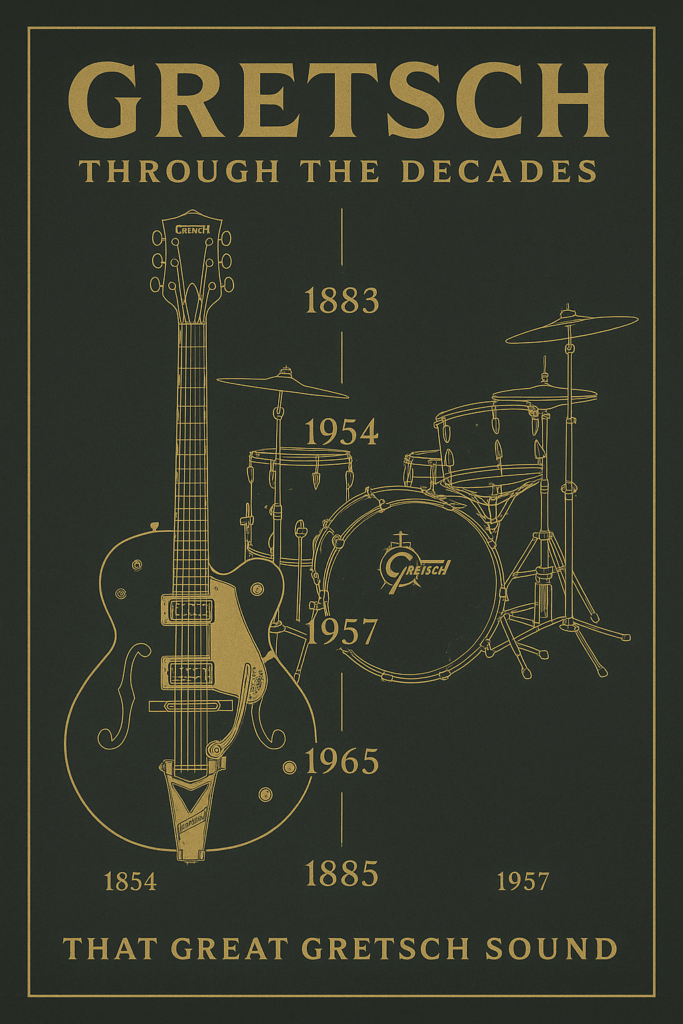
Gretsch was founded in 1883 by German immigrant Friedrich Gretsch in Brooklyn, New York. The company originally produced banjos, tambourines, and drums, quickly earning a reputation for craftsmanship and quality.
When Friedrich passed away in 1895, his son Fred Gretsch Sr. took the reins, expanding the business and eventually moving operations into a massive 10-story building at 60 Broadway. By the 1920s, Gretsch was already innovating — their drums featured warp-free laminated shells long before competitors.
During these early decades, drums remained a cornerstone of the brand’s identity, laying the groundwork for what would become one of the most respected percussion brands in the world.
2. The Electric Guitar Boom (1950s–1960s)
Gretsch’s entrance into the electric guitar market was a turning point. In 1954, the company collaborated with country legend Chet Atkins to develop the Gretsch 6120 — a hollow-body electric with striking looks, rich tone, and Atkins’ name on the headstock.
A year later, Gretsch released the now-legendary White Falcon, an ornate, high-end “dream guitar” that pushed the boundaries of visual design and tone.
Key innovations followed:
- Filter’Tron humbuckers (1957): One of the earliest dual-coil pickups, shaping Gretsch’s bright, punchy sound.
- Unique finishes: Sparkle, Cadillac Green, and Two-Tone burst stood out in a sea of sunbursts.
- Signature hardware: “G-arrow” knobs, Bigsby vibratos, and thumbnail inlays became visual trademarks.
With endorsements from Duane Eddy, Eddie Cochran, and later George Harrison of The Beatles, Gretsch guitars were catapulted into the spotlight — particularly in rockabilly, country, and early rock circles.
3. The Drum Legacy
While guitars garnered headlines, Gretsch Drums remained a staple of serious musicians. The company’s drums were built with 6-ply maple/poplar shells, known for warmth, resonance, and clarity.
Gretsch kits became a go-to for jazz, session, and rock players — and were used by legends like:
- Max Roach
- Tony Williams
- Charlie Watts (Rolling Stones)
- Phil Collins
The combination of die-cast hoops, Silver Sealer interior coatings, and signature round badges created a unique sonic profile: articulate, warm, and powerful. Whether in jazz clubs or stadiums, Gretsch drums became iconic.
4. Corporate Changes and Comeback (1967–1990s)
In 1967, the Gretsch family sold the company to Baldwin. Guitar production moved to Arkansas, but quality control suffered, and sales declined amid the Fender and Gibson boom.
By the 1980s, Gretsch was in decline — until Fred W. Gretsch, great-grandson of the founder, bought the company back in 1985. Guitar production restarted in 1989 with a focus on reissue models and vintage correctness, reigniting interest from collectors and players alike.
For drums, Drum Workshop (DW) took over manufacturing in 2015, preserving the classic Gretsch tone while improving modern production standards.
5. Gretsch Today: Vintage Cool Meets Modern Quality
Today, Gretsch is thriving under the umbrella of Fender Musical Instruments Corporation (guitars) and DW Drums (percussion). The lineup includes:
- Electromatic and Streamliner guitars for entry-level players
- USA Custom Shop guitars for collectors
- Full lines of Broadkaster and Renown drums for pros
The vintage aesthetic — oversized hollow-bodies, gold sparkle drums, Filter’Trons, and Bigsbys — is still alive and well. Whether you’re after classic Nashville twang or jazzy drum tones, Gretsch remains a top-tier choice.
6. Why Gretsch Still Matters
For collectors, musicians, and retailers alike, Gretsch offers:
- Timeless design
- Unique tone that cuts through modern mixes
- Rich backstory with family roots and cultural influence
- High visual appeal — perfect for print artwork, display, and photography
In a world flooded with Strat copies and mass-market drums, Gretsch continues to stand out — not by following trends, but by refining its legacy.