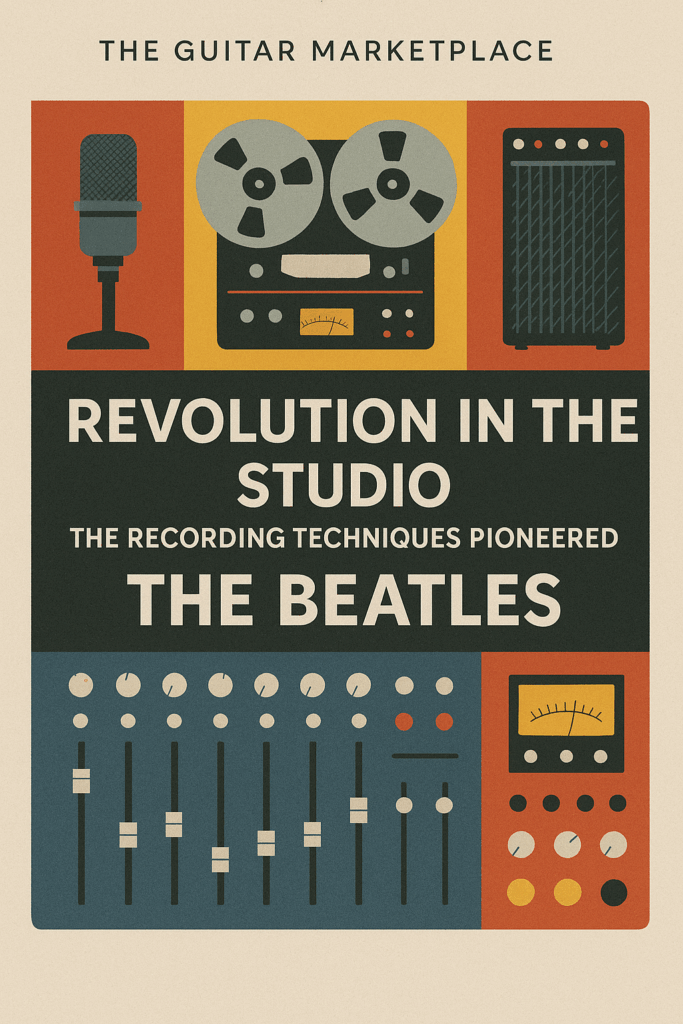
When The Beatles stepped into Abbey Road Studios in the early 1960s, the world was about to witness not just a musical revolution, but a technical one. With the help of visionary producers and engineers like George Martin, Geoff Emerick, and Ken Townsend, The Beatles rewrote the rulebook of studio recording. Their fearless experimentation didn’t just shape their own sound—it laid the groundwork for modern recording as we know it.
Today, we’re looking back at some of the groundbreaking recording techniques The Beatles pioneered—many of which still influence guitarists, producers, and engineers around the world.
🎙️ 1. Close-Miking Instruments
At the time, engineers typically positioned microphones at a distance from instruments for a natural room sound. But The Beatles (alongside engineer Geoff Emerick) broke that convention.
One of the most famous examples is Paul McCartney’s bass tone—Emerick placed the mic inches from the amp speaker, resulting in a thicker, more present bass sound. This approach gave their recordings a punch and intimacy that set them apart in the ’60s—and it’s now standard practice in studios everywhere.
🔁 2. Artificial Double Tracking (ADT)
Invented specifically for John Lennon, ADT was created by Ken Townsend to satisfy Lennon’s request: “Can’t you just make it double without me having to sing it twice?” The technique involved using two tape machines with slight delays, creating a doubled vocal effect without the need to record multiple takes.
ADT became a Beatles signature—especially on tracks like “Tomorrow Never Knows” and “Eleanor Rigby”. It also laid the foundation for chorus and flanger effects we now find in modern guitar pedals.
🌀 3. Backward Recording
Psychedelia met tape in the mid-60s, and The Beatles went all in. One of the most striking examples is “Rain”—the first commercially released song to feature backwards vocals.
Guitar parts, vocals, and even drums were recorded, reversed, and flown back into the final mix. The result? A surreal, dreamlike texture that perfectly captured the psychedelic era. It wasn’t just a gimmick—it was a compositional tool.
📼 4. Tape Loops and Sampling
Before samplers, there were scissors and reels. On “Tomorrow Never Knows,” The Beatles used tape loops featuring everything from seagull cries to reversed guitar lines. These loops were physically fed through tape machines by hand during the mixdown—an early form of sampling.
Guitar textures were especially affected—feedback, reverse delays, and layered loops became part of the sonic palette.
🎚️ 5. Varispeed Recording
Changing the tape speed during recording or playback (known as varispeed) allowed The Beatles to alter the pitch and tone of instruments and vocals.
On “Strawberry Fields Forever,” this trick helped splice together two versions of the song recorded in different keys and tempos—something previously considered impossible. George Martin carefully adjusted the tape speeds to match, creating a seamless, otherworldly transition.
For guitarists, this was huge. Suddenly, a solo recorded at half-speed could sound impossibly fast and clean in the final mix.
🥁 6. Experimental Drum Recording
Ringo’s drums underwent a transformation during the Revolver sessions. Instead of the wide, roomy drum sound of early pop records, Geoff Emerick dampened the toms with tea towels, placed mics closer than ever, and heavily compressed the signal.
The result was the iconic dry, punchy sound on “Tomorrow Never Knows” and “Paperback Writer.” This direct, aggressive tone became a blueprint for rock drumming through the 1970s and beyond.
🎸 7. DI (Direct Input) Recording of Bass
Another game-changer came with direct injection. Instead of miking a bass amp, engineers plugged McCartney’s bass straight into the console—a radical idea at the time. The tone was cleaner, deeper, and more defined.
For modern home recording, this is a standard technique—but in 1966, it was revolutionary. It opened the door for more clarity in the mix, especially when guitars, drums, and vocals fought for space.
🧠 Final Thoughts
What set The Beatles apart wasn’t just their songwriting—it was their willingness to experiment in the studio. With every new session, they saw the studio not as a limitation, but as an instrument in its own right.
From ADT and reverse tape effects to close-miked amps and DI bass tracks, their innovations became the building blocks of modern music production. And for guitarists? These techniques are directly responsible for the tones, textures, and freedoms we enjoy today—whether we’re recording in a bedroom or at Abbey Road itself.