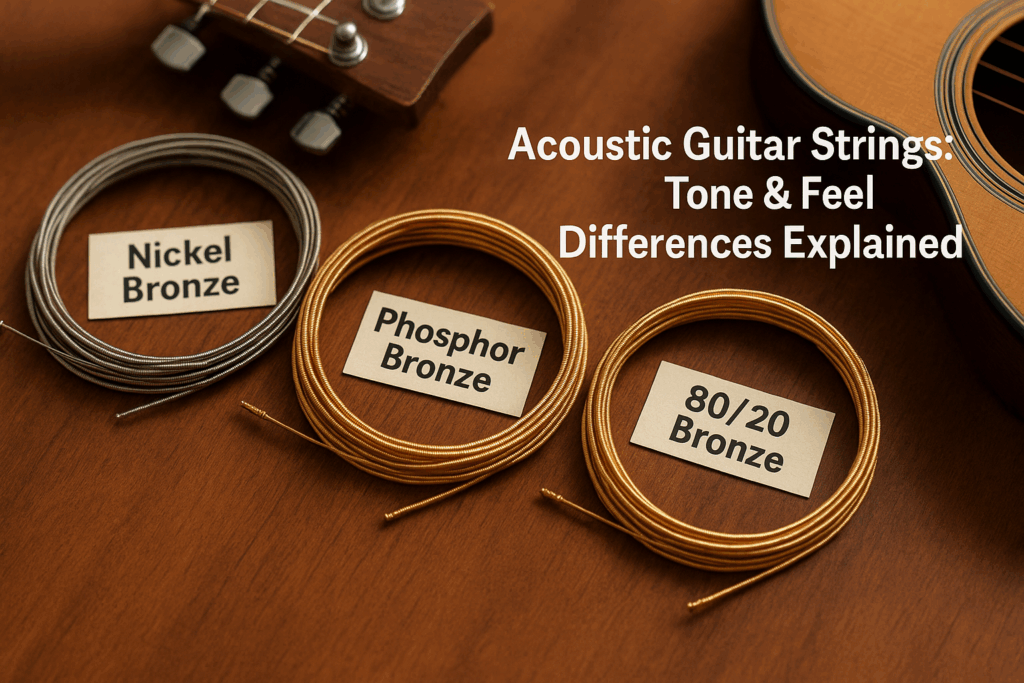
When it comes to shaping the tone and feel of your acoustic guitar, few things make as immediate a difference as your choice of strings. Whether you’re a fingerstyle player looking for warmth, a flatpicker chasing sparkle, or a singer-songwriter wanting balanced mids to sit in the mix—your string material matters.
In this guide, we break down the most common types of acoustic guitar strings—including phosphor bronze, 80/20 bronze, nickel bronze, and others—explaining how they differ in tone, feel, and longevity, so you can find the perfect match for your playing style.
🎸
Phosphor Bronze Strings
Common Brands: D’Addario EJ16, Elixir Nanoweb Phosphor Bronze, Martin MA540
Tone: Warm, rich, balanced
Feel: Smooth, slightly mellow attack
Lifespan: Moderate to long (especially coated sets)
Phosphor bronze strings are perhaps the most popular acoustic string type today. Introduced in the 1970s, these strings blend 92% copper with about 8% tin and a touch of phosphor, giving them a well-rounded tone with warm lows, rich mids, and clear (but not piercing) highs.
They’re great for fingerstyle, strumming, and singer-songwriters who need a versatile tone that works in both solo and ensemble settings.
✅ Best for: Balanced tone lovers, fingerpickers, warm acoustic recordings
🚫 Less ideal for: Players wanting bright, cutting top-end sparkle
✨
80/20 Bronze Strings (aka Brass Strings)
Common Brands: D’Addario EJ11, Ernie Ball Earthwood 80/20, Martin M140
Tone: Bright, crisp, shimmering
Feel: Snappy, articulate
Lifespan: Shorter (prone to tarnishing)
Made from 80% copper and 20% zinc, these strings have a brighter and more immediate tone than phosphor bronze. They offer a sparkling high end and tight bass, which makes them a go-to for recording where a guitar needs to cut through a mix.
However, they oxidize faster than other alloys, so many players find them lose their brightness quickly—making them great for short-term punch rather than long-term consistency.
✅ Best for: Bright, lively tone; strummers and flatpickers
🚫 Less ideal for: Players who want warmth or long string life
🧲
Nickel Bronze Strings
Common Brands: D’Addario Nickel Bronze, GHS Vintage Bronze
Tone: Clear, transparent, natural guitar tone
Feel: Slightly stiffer, more piano-like attack
Lifespan: Moderate
Nickel bronze strings use a nickel-plated phosphor bronze wrap, which brings a clear and uncolored tone to your guitar—essentially letting the wood and construction of the guitar speak for itself. These strings are popular among players who want less coloration and more honest articulation.
Their articulate highs and focused mids make them great for modern fingerstyle, live work, or players using pickups and microphones who don’t want too much string coloring.
✅ Best for: Natural guitar tone, fingerstyle, recording
🚫 Less ideal for: Those who want added warmth or body from strings
🌪️
Silk and Steel Strings
Common Brands: Martin M130, Thomastik-Infeld Classic S
Tone: Soft, mellow, vintage-like
Feel: Low tension, easy on fingers
Lifespan: Shorter
A favorite of folk and classical crossovers, silk and steel strings use a steel core with silk (or nylon-like) threads between the core and the winding. The result is softer tone and feel, ideal for parlor guitars, vintage instruments, and beginners.
They’re not as loud or bright but offer a lovely, gentle sound perfect for light fingerpicking and mellow arrangements.
✅ Best for: Vintage tone, parlor guitars, fingerstyle folk
🚫 Less ideal for: Strumming, volume-demanding situations
🧪
Coated Strings
Examples: Elixir Nanoweb/Polyweb, D’Addario XS, Ernie Ball Everlast
Materials: Often available in phosphor bronze or 80/20 with a protective coating
Tone: Slightly softened highs, consistent over time
Feel: Slicker under fingers
Lifespan: Very long
While not a separate alloy, coated strings are worth mentioning because of their extended life and smooth feel. Some players love the reduced finger squeak and smoother texture, while others miss the raw bite of uncoated strings.
If you’re gigging regularly, playing in humid conditions, or just hate changing strings, coated options may be the way to go.
✅ Best for: Long-lasting tone, live players, humid climates
🚫 Less ideal for: Players who prefer maximum raw tone and brightness
🎯
Choosing the Right Strings for You
| String Type | Tone | Best For |
|---|---|---|
| Phosphor Bronze | Warm, balanced | All-purpose playing |
| 80/20 Bronze | Bright, sparkling | Strumming, recording |
| Nickel Bronze | Clear, natural | Fingerstyle, live tone purity |
| Silk and Steel | Mellow, soft | Folk, vintage guitars, beginners |
| Coated (Various Alloys) | Consistent, smooth | Gigging, humid environments |
Final Thoughts
The best string for you depends on your guitar, your hands, and your ears. Experimenting with different types can completely transform the voice of your instrument—and keep your playing inspired.
Whether you crave the earthy glow of phosphor bronze, the zing of 80/20, or the truthful tone of nickel bronze, the right strings are more than just wire—they’re the voice of your acoustic story.