In the heart of the United Kingdom lies a city whose name resonates far beyond its geographic confines—a city renowned not only for its industrial past and iconic football clubs but also for the pulsating rhythms that have emanated from its streets. Manchester, a hub of history, culture, and creativity, stands as a testament to the remarkable power of music to shape a city’s identity and influence the world. From the gritty alleys that nurtured the post-punk movement to the grand stages that witnessed the rise of Britpop, Manchester’s musical legacy is a vibrant tapestry woven from the threads of innovation, rebellion, and sheer passion.
This article embarks on a journey that transcends time and genre, navigating through the rich soundscape of Manchester’s finest bands. Each chord, lyric, and beat that emerged from the city’s depths has left an indelible mark on the trajectory of music history. This journey will traverse the transformative eras that birthed not only genre-defining bands but also cultural movements that resonated globally.
With every note, Manchester has crafted a unique narrative reflecting the city’s resilient, progressive, and ever-evolving spirit. The sonic landscape is a mirror to the urban tapestry, reflecting the stark contrasts of a city steeped in history yet always looking forward. The bands that emerged from Manchester have not only created music but also a sense of belonging, uniting fans across generations and continents under the banner of their distinctive sounds.
As we embark on this sonic odyssey, we invite you to immerse yourself in the melodies and stories that have shaped Manchester’s identity. From the pioneers who laid the foundation to the modern marvels pushing boundaries, each band is a chapter in a story that showcases the city’s enduring impact on the world of music. Manchester’s finest bands are more than just musical acts; they are a testament to the city’s resilience, creativity, and its ongoing commitment to shaping the soundtrack of our lives.
The late 1970s marked a pivotal era for the global music scene, and at the heart of Manchester’s musical transformation stood Joy Division—a band that would defy conventions and forge a sound unlike any other. Joy Division’s journey began with the meeting of minds in the bleak landscapes of post-industrial Manchester. Their formation, comprising vocalist Ian Curtis, guitarist Bernard Sumner, bassist Peter Hook, and drummer Stephen Morris, heralded the emergence of a musical force that would leave an indelible mark.
Joy Division’s signature sound was characterized by its enigmatic blend of post-punk, new wave, and elements of electronic music. Curtis’s haunting and emotionally charged vocals, delivered with an almost poetic introspection, became the focal point of their music. Songs like “Love Will Tear Us Apart” and “Transmission” showcased their distinct ability to infuse raw emotion into their sound, evoking a sense of vulnerability that resonated deeply with their audience.
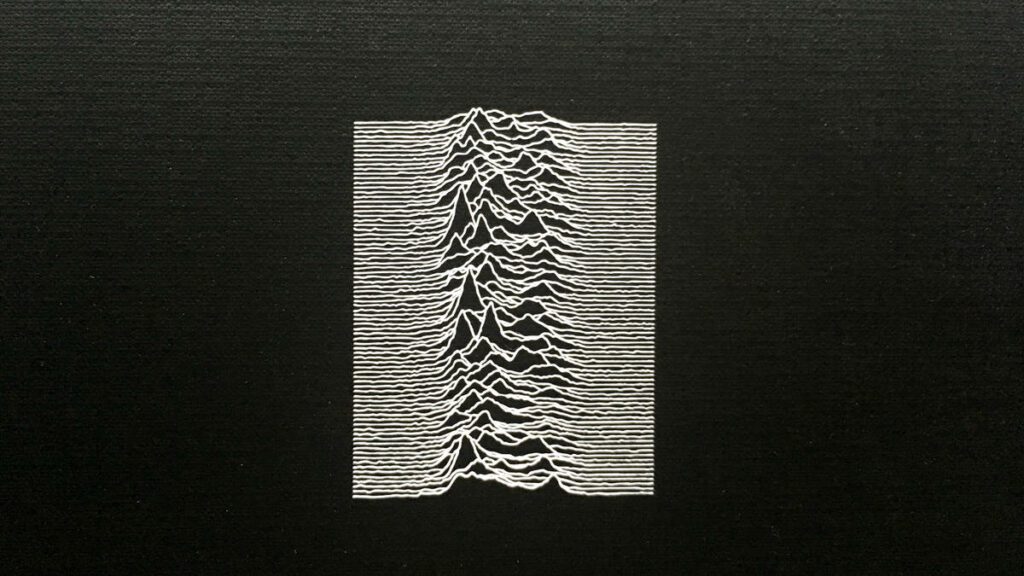
Beyond their music, Joy Division’s aesthetic was marked by striking visual elements, often associated with the iconic artwork of Peter Saville. The synergy between their sonic and visual identity created a complete artistic experience that transcended the boundaries of music.
Tragically, the band’s ascent was cut short by the untimely death of Ian Curtis in 1980. Curtis’s struggles with depression and epilepsy culminated in his tragic suicide, leaving a void that shook the music world. Despite their brief existence, Joy Division’s influence endured, shaping the course of post-punk and alternative rock. The surviving members went on to form New Order, carrying forward the legacy of Joy Division’s experimentation and innovation.
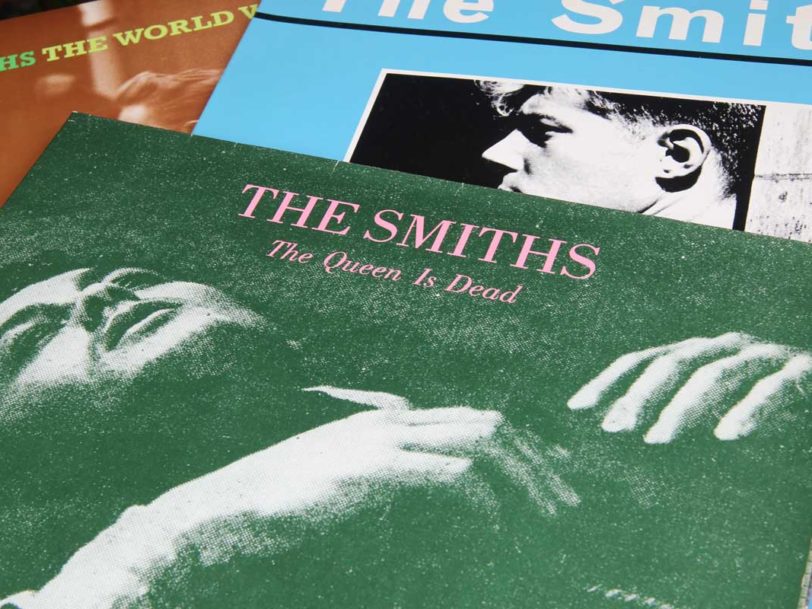
As the echoes of Joy Division’s haunting melodies still reverberated through Manchester’s streets, another iconic band was poised to emerge, armed with a distinct sound and lyrical prowess—The Smiths. Formed in 1982, The Smiths were the brainchild of vocalist Morrissey and guitarist Johnny Marr. Their collaboration would yield a body of work that resonated with the essence of British youth and the sentimentality of melancholy.
The Smiths’ music was characterized by its jangly guitar melodies, intricate arrangements, and Morrissey’s poetic and often wistful lyrics. Songs like “This Charming Man” and “There Is a Light That Never Goes Out” became anthems for a generation navigating the complexities of life and love. Morrissey’s enigmatic stage presence and distinctive vocal delivery further solidified The Smiths’ status as a band with a cult-like following.
Their impact extended beyond the confines of music, as Morrissey’s lyrical themes of alienation, desire, and nostalgia resonated with listeners on a deeply personal level. The Smiths’ discography delved into a myriad of emotions, crafting a unique narrative that bridged the gap between the mundane and the profound.
However, internal tensions eventually led to the band’s dissolution in 1987, leaving behind a legacy that continues to influence indie rock and alternative music. The Smiths’ ability to marry melancholic introspection with dynamic musical arrangements laid the foundation for an entire subgenre of British music and solidified their position as one of Manchester’s—and the world’s—most celebrated bands.
A. The Stone Roses: Captivating the Spirit of an Era
The late 1980s witnessed the emergence of a musical phenomenon that would come to define an entire era—a movement that encapsulated the free-spiritedness and hedonism of the times. Central to this movement were The Stone Roses, a band that seamlessly blended the swagger of rock with the euphoria of dance, giving birth to what would later be known as the Madchester scene.
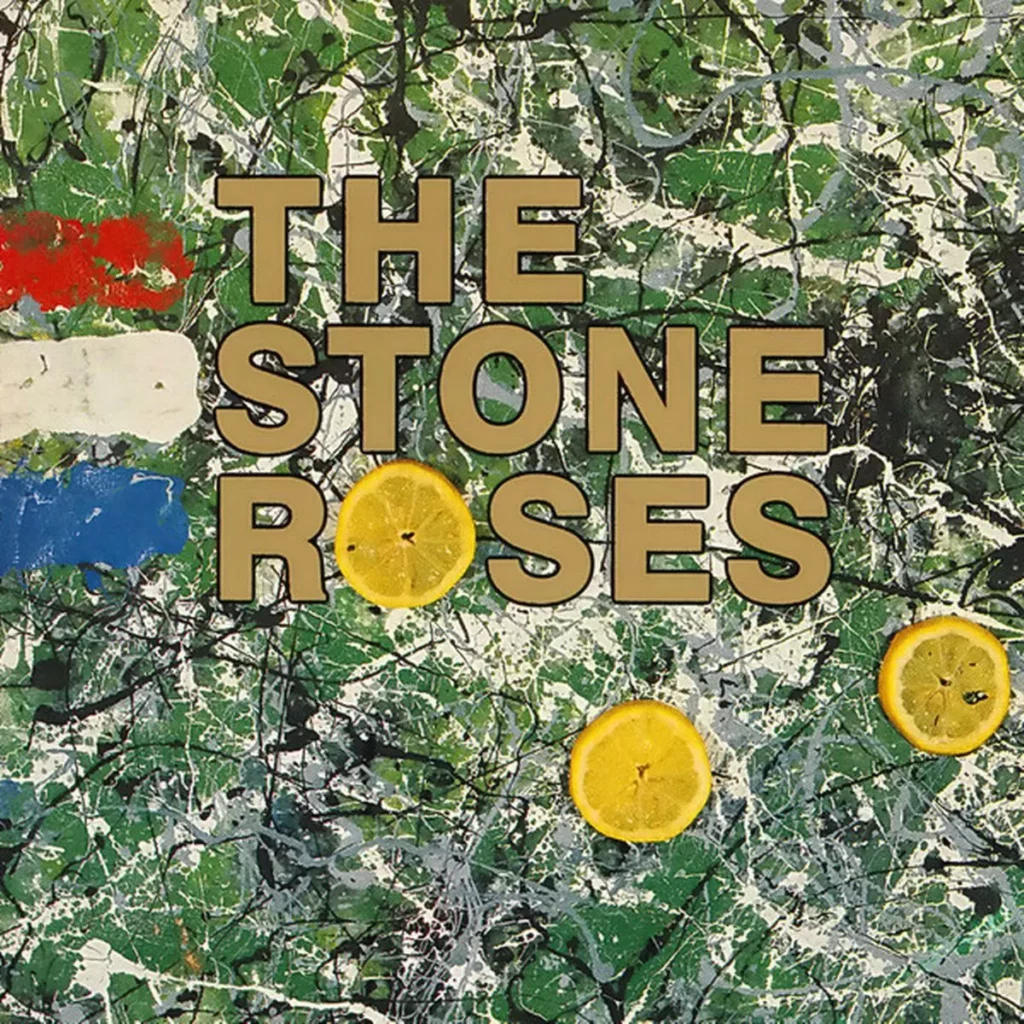
The Stone Roses’ self-titled debut album, released in 1989, ignited a cultural spark that reverberated far beyond Manchester. Their music was characterized by catchy guitar hooks, infectious rhythms, and a fusion of rock and dance elements. Tracks like “She Bangs the Drums” and “I Wanna Be Adored” became instant anthems, their melodies embodying the carefree spirit of a generation.
Beyond their music, The Stone Roses represented a lifestyle—a movement that celebrated eclecticism, unity, and the allure of the dancefloor. Their influence extended to fashion, art, and even the rave culture, as they became emblematic of the cultural landscape of late ’80s Britain.
Despite internal conflicts and legal battles with their record label, The Stone Roses left an indelible mark on the music scene. Their legacy endured not only through their iconic tracks but also through their influence on subsequent bands, solidifying their status as pioneers of the Madchester movement.
If The Stone Roses were the vanguard of the Madchester sound, then Happy Mondays were its unruly, party-fueled heartbeat. Formed in the early ’80s, Happy Mondays were a band that transcended musical genres, embracing a chaotic blend of rock, dance, funk, and even elements of psychedelia.
At the forefront of Happy Mondays was frontman Shaun Ryder, whose enigmatic persona and lyrical audacity elevated the band’s identity. The band’s sophomore album, “Bummed,” captured the zeitgeist of the era, channelling the hedonism and nonconformity that defined the Madchester scene.
Happy Mondays’ music was a kaleidoscope of sound, driven by infectious basslines, swirling melodies, and a relentless groove. Tracks like “Step On” and “Kinky Afro” became synonymous with the spirit of the movement, and their live performances were legendary for their chaotic energy.
The band’s connection to the burgeoning rave culture further solidified their position as cultural icons. Happy Mondays epitomized the fusion of music, dance, and unapologetic pursuit of pleasure—a perfect encapsulation of the Madchester ethos.
However, the band’s excesses and internal conflicts eventually led to their downfall, marking the end of an era that had seen them soar to unprecedented heights. Despite their tumultuous journey, Happy Mondays remain emblematic of the Madchester movement’s spirit, forever etched into the annals of music history.
III. Britpop Brilliance: Defining a Generation
A. Oasis: The Supersonic Revolution
The 1990s ushered in a new era in British music—one defined by the Britpop movement—and at the forefront of this revolution were the Gallagher brothers and their band, Oasis. Formed in 1991, Oasis harnessed the energy of their working-class roots and channelled it into a sonic force that would captivate audiences worldwide.
The sibling rivalry between Liam and Noel Gallagher, along with their audacious confidence, propelled Oasis to international fame. Their debut album, “Definitely Maybe,” showcased a swaggering blend of rock and pop anthems that resonated with a generation disillusioned by the preceding era’s grunge domination.
The peak of the Britpop movement was marked by the fierce rivalry between Oasis and Blur, culminating in the “Battle of Britpop.” Oasis’s hit single “Wonderwall” became an anthem of the era, symbolizing their meteoric rise and shaping the sound of the ’90s.
Noel Gallagher’s songwriting prowess, combined with Liam Gallagher’s distinctive vocals, ensured that Oasis became not just a band, but a cultural phenomenon. Tracks like “Don’t Look Back in Anger” and “Champagne Supernova” solidified their place in the annals of music history.
B. The Verve: Bittersweet Symphony of Emotion
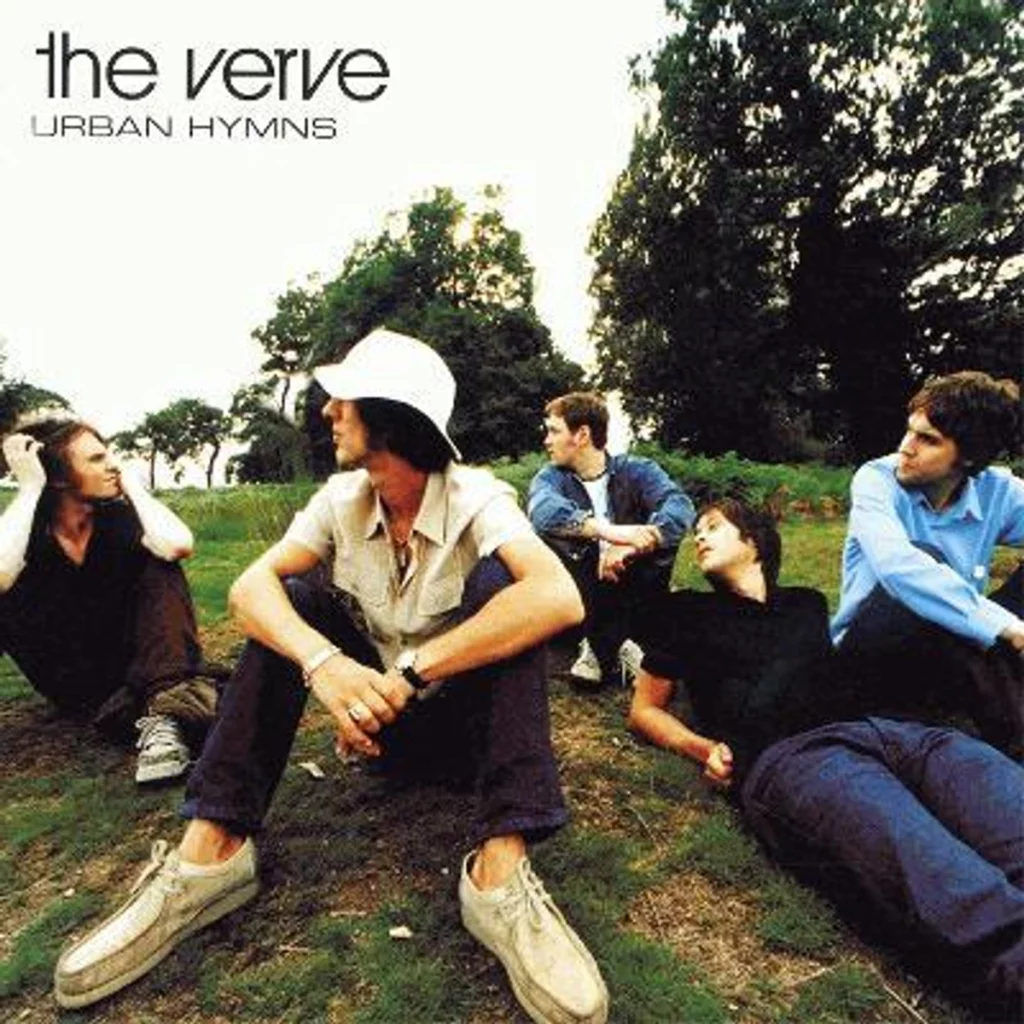
Parallel to Oasis’s rise was The Verve’s emergence as torchbearers of the Britpop movement’s introspective side. Led by the charismatic Richard Ashcroft, The Verve combined lush orchestration with introspective lyrics, creating an ethereal sound that resonated deeply with audiences.
The Verve’s defining moment came with “Bittersweet Symphony,” a symphonic masterpiece that encapsulated the emotional complexity of the ’90s. The track’s sweeping strings, Ashcroft’s impassioned vocals, and the poignant lyrics all contributed to a composition that transcended mere music.
While The Verve’s journey was marked by internal struggles and temporary breakups, their impact on the Britpop movement and beyond remained undeniable. Albums like “Urban Hymns” continued to showcase their ability to meld rock, alternative, and orchestral elements into a unique tapestry of sound.
The Verve’s legacy extended far beyond their active years, shaping the sonic landscape of subsequent generations. Their contributions to alternative rock and their ability to convey raw emotion through music solidified their place among Manchester’s musical legends.
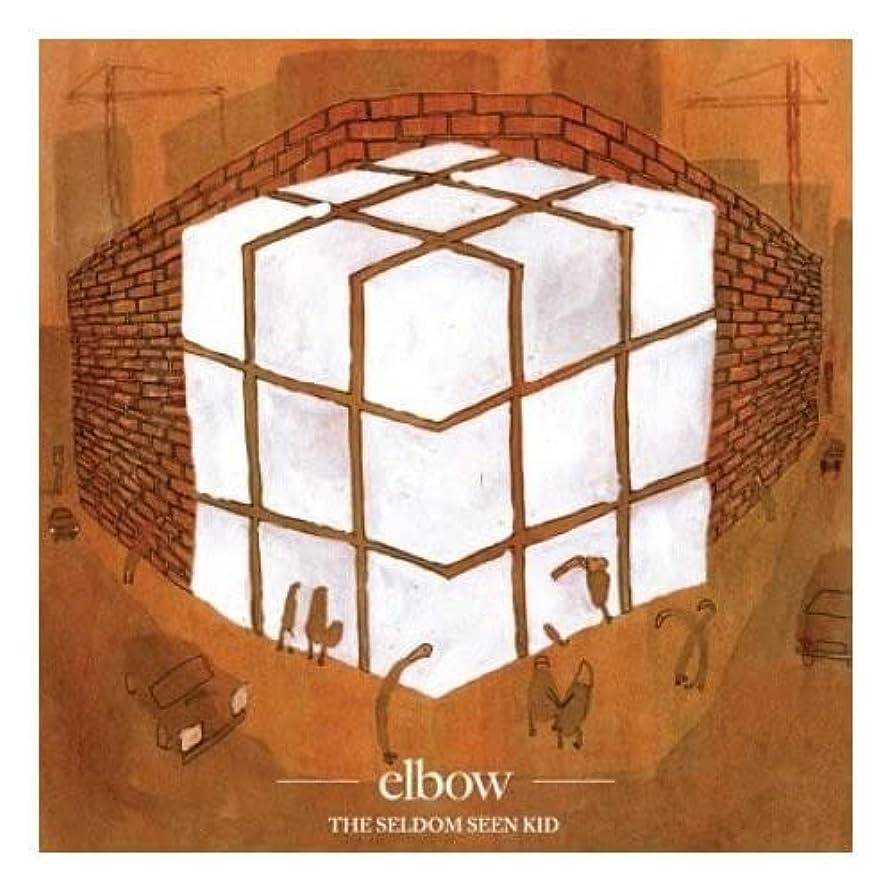
As the 2000s unfolded, a band emerged from Manchester’s musical tapestry, epitomizing evolution and artistic growth—Elbow. Originally formed in 1997, Elbow transitioned from their indie rock beginnings to embrace a more expansive and orchestral sound that set them apart.
Elbow’s distinctive feature was the evocative and resonant vocals of Guy Garvey, complemented by the band’s adept instrumentation. Albums like “The Seldom Seen Kid” and “Build a Rocket Boys!” displayed a sense of introspection and poetic lyricism that resonated with listeners on a profound level.
Their breakout single, “One Day Like This,” became an anthem for celebrations, encapsulating a sense of hope and unity. Elbow’s ability to craft music that is simultaneously intimate and grandiose earned them critical acclaim and a dedicated fanbase.
Over the years, Elbow’s music matured, maintaining its emotional depth while incorporating orchestral arrangements that added a layer of sophistication. Their sound, which traversed from indie rock to more experimental and atmospheric territories, showcased a band unafraid to push creative boundaries.
B. Everything Everything: Pushing Boundaries of Genre
In an era marked by musical experimentation, Everything Everything emerged as a testament to innovation and genre-blurring creativity. Formed in 2007, the band’s music defied categorization, merging art-pop, indie rock, and electronic elements into a complex and captivating sonic experience.
Everything Everything’s distinct feature lay in their intricate musicianship and thought-provoking lyricism. Tracks like “Cough Cough” and “Distant Past” showcased a fusion of meticulous arrangements and emotionally charged themes, earning them recognition for their forward-thinking approach.
The band’s willingness to explore new sonic territories and incorporate unconventional rhythms and melodies set them apart. Their albums, such as “Get to Heaven” and “A Fever Dream,” demonstrated their evolution and ability to resonate with audiences looking for fresh and challenging sounds.
The impact of Everything Everything extended beyond their music. Their ability to craft songs that were both intellectually stimulating and emotionally resonant contributed to a new wave of music that embraced complexity and innovation.
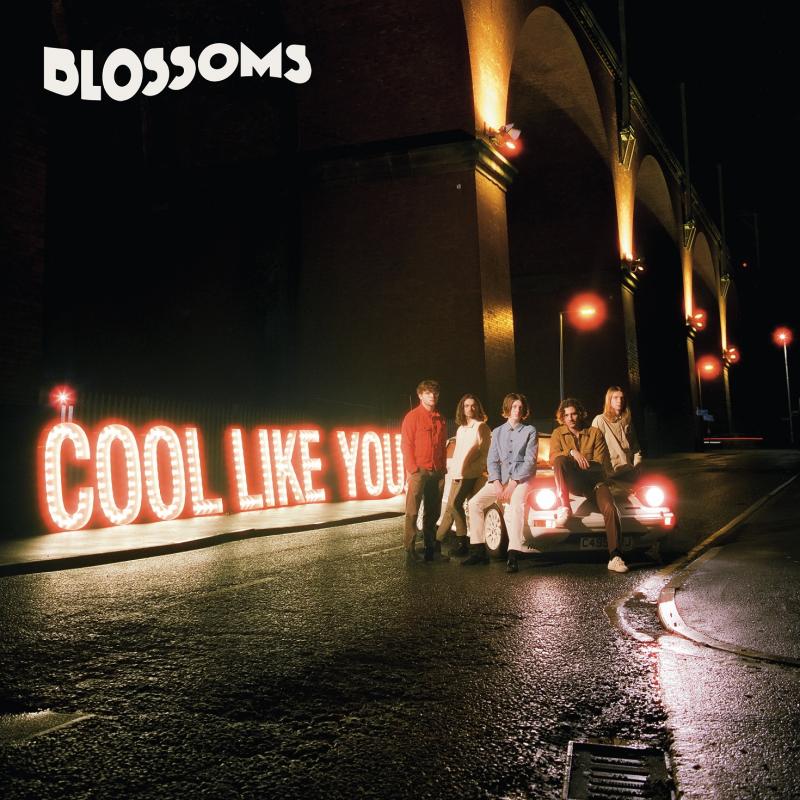
As Manchester’s musical legacy lives on, a new generation of artists emerges, ready to carry the torch of the city’s creative spirit. Among them is Blossoms, a band that marries indie rock with a touch of nostalgia. Formed in 2013, their music pays homage to Manchester’s rich musical history while offering a fresh perspective.
Blossoms’ rapid rise to prominence was marked by their debut self-titled album, which showcased their knack for crafting infectious melodies and relatable lyrics. Tracks like “Charlemagne” and “Honey Sweet” garnered attention for their ability to capture the essence of youth and romance.
The band’s dedication to their craft and their nostalgic sonic palette resonated with audiences, leading to a dedicated fanbase and critical acclaim. Blossoms’ music offers a contemporary take on Manchester’s signature sound, creating a bridge between the city’s musical past and its future.
B. Cabbage: Punk Revival with a Modern Twist
Embracing the punk spirit of rebellion and dissent, Cabbage emerged as a force that injected a modern twist into a classic genre. The band’s formation in 2016 heralded a revival of punk influences, intertwining political and satirical lyrics with a gritty sound.
Cabbage’s music is a commentary on contemporary issues, unafraid to tackle political and social themes head-on. Tracks like “Gibraltar Ape” and “Terrorist Synthesizer” showcase their raw energy and commitment to using music as a platform for expression and reflection.
Their live performances are renowned for their energy and engagement with the audience, mirroring the punk ethos of direct connection and participation. Cabbage’s music stands as a testament to the enduring power of punk to challenge norms and provoke thought.
As Manchester’s musical landscape continues to evolve, bands like Blossoms and Cabbage exemplify the city’s commitment to artistic innovation and cultural relevance. These emerging talents demonstrate that Manchester’s legacy is not confined to the past; it lives on through the sounds and voices of those who continue to shape its musical narrative.
Manchester’s musical journey is a tapestry woven with threads of innovation, rebellion, and a commitment to pushing boundaries. From the pioneers of post-punk to the anthems of Britpop, and the sonic explorations of modern marvels, the city’s bands have left an indelible mark on the world of music.
Each era brought its own flavour, yet Manchester’s sonic legacy remains a cohesive testament to the city’s creative spirit. As newer talents like Blossoms and Cabbage rise, they bridge the gap between the past and the future, reaffirming Manchester’s status as a wellspring of musical inspiration and innovation. In a world where sounds continue to evolve, Manchester’s influence is a constant, shaping the melodies that soundtrack our lives.
Songwriting: The Key to Creativity.
Songwriting is a beautiful form of self-expression and communication with the world. As a songwriter, one of your main goals is to create music that captivates and engages your audience. However, in a sea of songs, it’s easy to get lost in the noise if your compositions lack novelty and excitement.
To prevent this, you must continually challenge yourself to keep your songwriting fresh, interesting, and compelling. In this blog post, we will explore some effective techniques that can help you maintain interest in your songwriting journey.
Check out Post Malone and his songwriting tips HERE
1. Start with a Strong Concept
Every great song is built upon a foundation of a powerful concept or story that resonates with both the songwriter and the audience. Before embarking on the composition process, take the time to delve into your thoughts, feelings, and experiences.
Draw inspiration from real-life events, personal struggles, or even from observing the world around you. By tapping into authentic emotions, you infuse your lyrics with sincerity, making them more relatable and compelling for listeners.
A strong concept not only provides direction to your song but also helps you maintain focus throughout the writing process. It serves as a guiding light, steering your melodies, harmonies, and instrumentation towards a unified message or theme. This focus prevents your song from becoming disjointed or meandering, capturing the essence of what you want to convey.
Moreover, a well-crafted concept has the power to set your song apart from others in the crowded music landscape. It allows you to explore unique perspectives or narratives, breathing fresh life into your music. Daring to be different and bringing a distinct voice to your songwriting can pique the curiosity of your listeners and leave a lasting impression on them.
Incorporating a strong concept into your songwriting doesn’t mean your themes have to be overly complex or profound. Even simple stories or emotions can be compelling if delivered with authenticity and vulnerability. Sometimes, the most impactful songs are those that resonate on a personal level with the listeners, making them feel seen and understood.
2. Experiment with Song Structures
While the traditional verse-chorus-verse structure has been the backbone of countless successful songs, don’t limit yourself to this formula. Embrace experimentation with different song structures to inject freshness and unpredictability into your music.
Whether it’s a bridge that takes a detour from the established melody or a pre-chorus that sets up a powerful hook, exploring alternative arrangements can breathe new life into your compositions.
One approach to experimenting with song structures is to think of your song as a musical journey. Consider how you want to guide your listeners through various emotional peaks and valleys, much like a rollercoaster ride. Mixing up the order of your song’s sections can create a sense of surprise and anticipation, drawing your audience into your musical narrative.
Moreover, playing with song structures can enhance the storytelling aspect of your music. For instance, adopting a non-linear approach to depict a memory or a dream sequence can add an evocative and cinematic quality to your song. This kind of experimentation can help you break free from conventional songwriting norms and open up a world of creative possibilities.
However, while it’s essential to experiment, remember to maintain a sense of coherence in your song. Strive for a balance between novelty and familiarity, so your listeners can still connect with the core elements of your composition while appreciating the fresh twists you’ve introduced.
3. Utilize Dynamic and Contrast
Dynamic range is a powerful tool that can significantly impact the emotional impact of your song. Incorporating varying degrees of volume, intensity, and instrumentation can add depth and texture, making your music more engaging and evocative.
Think of dynamics as a way to convey the emotional journey of your song. Starting with a soft and gentle verse can create an intimate atmosphere, drawing your audience in and setting the stage for what’s to come. Gradually building up to a powerful and anthemic chorus can unleash a surge of emotions, leaving a lasting impact on your listeners.
Contrast is another essential element in keeping your song interesting. By contrasting different sections of your song, you can create excitement and anticipation. For instance, transitioning from a sparse and stripped-down verse to a lush, instrumentally rich chorus can create a sense of elevation and release.
To effectively utilize dynamics and contrast, pay attention to the arrangement of your instrumentation. Experiment with different combinations of instruments to create distinct soundscapes for different sections of your song. By doing so, you can add layers of complexity to your music, captivating your audience and encouraging them to immerse themselves fully in your sonic world.
4. Incorporate Unique Melodies and Harmonies
A captivating melody is the beating heart of any memorable song. It’s the part that lingers in the minds of listeners, leaving them humming your tune long after the music has stopped. While crafting a strong melody may seem daunting, it’s essential to approach it with an open mind and a willingness to explore various musical avenues.
Start by experimenting with different note patterns and intervals to create melodies that are both catchy and emotionally resonant. Remember, simplicity can often be as effective as complexity. Many iconic melodies are based on straightforward, memorable sequences that stick with the listener.
Consider the role of harmonies in adding depth and dimension to your song. Harmonies are additional vocal or instrumental lines that support and enrich the main melody. They can elevate your music to new heights by creating a lush and immersive sonic experience.
While harmonies are commonly associated with vocals, they can also be incorporated into instrumental arrangements. Playing with different harmonic progressions and layering can give your music a sophisticated and captivating quality.
When exploring melodies and harmonies, don’t hesitate to push the boundaries and challenge traditional norms. Experiment with unexpected twists and turns, explore unusual scales or modes, and mix different musical influences to create a unique signature sound that sets you apart as a songwriter.
5. Explore Diverse Instrumentation and Production
To keep your songwriting fresh and interesting, it’s essential to break free from the confines of familiar instrumentation and production techniques. Embrace a spirit of exploration and curiosity by incorporating diverse instruments and experimenting with innovative production styles.
Think beyond the traditional guitar-bass-drums setup and consider introducing electronic elements, ethnic instruments, or even unconventional sounds like samples from everyday life. Such experimentation can give your music a distinctive character, making it more memorable for your audience.
Collaboration can be an excellent way to expand your musical horizons. Partnering with other musicians or producers who bring different perspectives and expertise to the table can lead to exciting new musical directions. Their input might inspire you to take your songs in unexpected yet fascinating directions, enhancing the overall creative process.
Remember that the production of your song can also greatly impact its overall appeal. Use production techniques to create atmosphere and mood, amplifying the emotional message of your song. Whether it’s experimenting with ambient textures, incorporating intricate layering, or using creative effects, your production choices can elevate your songwriting to new heights.
As you venture into diverse instrumentation and production, remain mindful of the song’s core essence. The experimentation should serve to enhance and complement the song’s central theme and message rather than overshadowing or diluting it.
6. Play with Rhythms and Grooves
Rhythm is the heartbeat of a song, and playing with different rhythmic patterns and grooves can add excitement and dynamism to your music. Whether it’s a driving beat that makes your listeners want to move or intricate percussive arrangements that add layers of complexity, rhythmic experimentation can elevate your songwriting to a whole new level.
Syncopation, which involves placing accents on unexpected beats, is a fantastic way to inject unpredictability and energy into your compositions. By disrupting the regular flow of the rhythm, you create an element of surprise that keeps the audience engaged and attentive.
Unexpected pauses or rhythmic variations can also create a sense of tension and release, leading to a more engaging and memorable musical experience. These subtle changes in rhythm can be used strategically to highlight important moments in your song, such as before a significant lyrical or melodic change.
Consider the genre and mood of your song when experimenting with rhythms and grooves. Different styles of music may lend themselves to specific rhythmic patterns, so be sure to explore a wide range of possibilities that align with the overall vibe you want to convey.
Check out some lyrics writing techniques here
7. Focus on Effective Lyrics
The power of effective lyrics cannot be overstated. A well-crafted lyrical narrative has the ability to touch the hearts and minds of listeners, forging a deep connection between the songwriter and the audience. When crafting your lyrics, strive to communicate your message clearly while leaving room for interpretation and personal resonance.
Start by exploring themes that are meaningful to you personally or that address relevant social or emotional topics. Whether it’s a personal reflection on life’s struggles or a call for positive change in the world, infusing your lyrics with authenticity and depth will make them more relatable and impactful.
Poetic devices such as metaphors, similes, and allegories can add layers of complexity and imagery to your lyrics. They provide a fresh perspective on familiar topics and spark the imagination of your listeners. Be creative with your use of language, finding unique ways to express emotions and ideas.
Avoid falling into cliches or overused phrases. Instead, strive for originality and a fresh take on common themes. Dare to express yourself in a way that hasn’t been heard before, and your lyrics will stand out and make a lasting impression on your audience.
Remember that lyrics and melody are inherently intertwined. The musical phrasing of your lyrics can greatly impact the overall flow and emotional impact of your song. Experiment with different melodic patterns that complement the lyrics, ensuring that the music enhances the message you wish to convey.
8. Embrace the Element of Surprise
One of the most powerful tools in a songwriter’s arsenal is the element of surprise. Introducing unexpected twists and turns can keep your audience on their toes, eager to discover what lies around the musical corner. Surprise doesn’t mean being random; rather, it involves cleverly breaking patterns or deviating from expectations to captivate your listeners.
Incorporate surprising melodic intervals, unconventional chord progressions, or unexpected shifts in dynamics to add intrigue and excitement to your music. When done effectively, these surprises can create memorable moments that linger in the minds of your audience.
Surprises can also manifest in your lyrical content. Think of unexpected plot twists, ambiguous or thought-provoking lines, or clever wordplay that challenges the listener’s perceptions. By keeping the audience engaged and guessing, you maintain their interest throughout the song.
However, remember to balance surprise with coherence. Ensure that your surprises contribute to the overall flow and theme of your song rather than feeling forced or out of place. Cohesion is essential in delivering a satisfying musical experience to your audience.
Conclusion
Songwriting is a journey of creativity, emotion, and self-discovery. To keep your music interesting and engaging, challenge yourself to explore new territories, experiment with various techniques, and infuse your unique voice into every composition.
Starting with a strong concept provides a clear direction for your song and sets the stage for a captivating musical narrative.
Experimenting with song structures, dynamics, and contrast ensures your music remains fresh and unpredictable, leaving your listeners eager for more.
You create a distinctive signature sound that sets you apart as an artist by incorporating unique melodies, harmonies, diverse instrumentation, and innovative production.
Playing with rhythms and grooves adds energy and excitement, making your songs irresistible to the audience.
Effective lyrics add depth and meaning, forging a deep connection between you and your listeners.
Finally, embracing the element of surprise keeps your music intriguing and leaves a lasting impact on those who experience it.
Through a combination of creativity, passion, and boldness, you can continually evolve as a songwriter and create music that touches the hearts and souls of your audience. Happy songwriting!
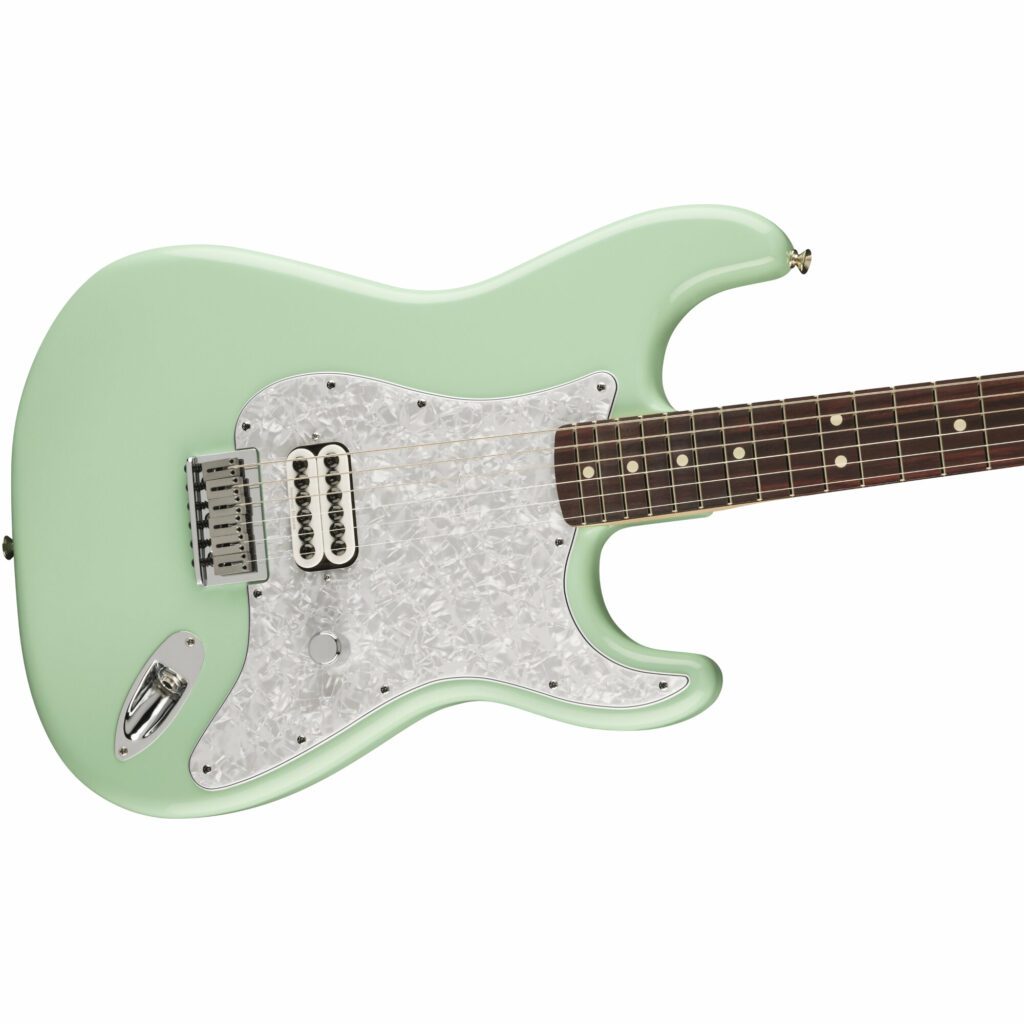
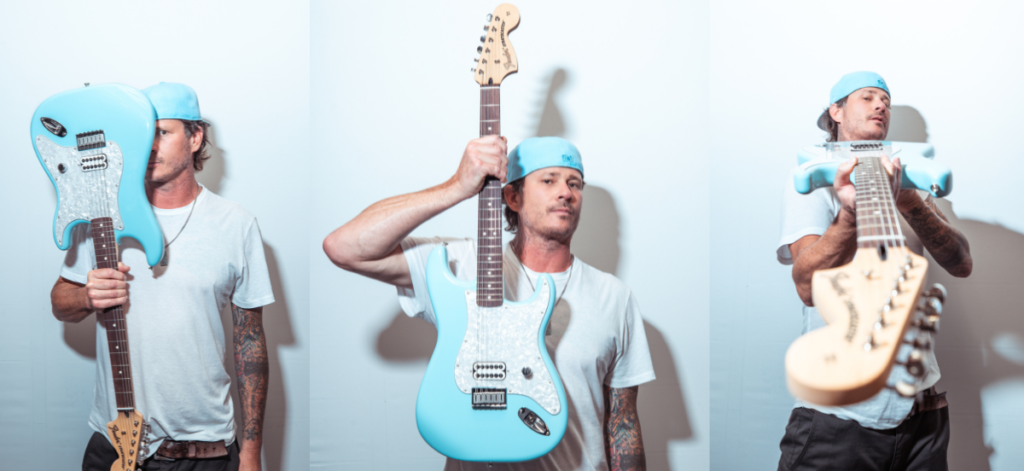
The 2023 Fender Tom DeLonge Signature Stratocaster is a guitar that has been eagerly anticipated by fans of the Blink-182 guitarist for years. Finally, after much speculation, the guitar is here, and it does not disappoint.
The guitar is based on DeLonge’s signature model from the early 2000s, but with a few modern updates. The most notable change is the addition of a Seymour Duncan Invader humbucker in the bridge position. This pickup is known for its high output and aggressive tone, and it gives the guitar a much more powerful sound than a traditional single-coil pickup.
The rest of the guitar’s specs are also top-notch. The body is made of alder, which is a lightweight and resonant wood that gives the guitar a bright, clear tone. The neck is maple, with a comfortable C-shaped profile and a 9.5-inch radius fingerboard. The frets are medium jumbo, and the scale length is 25.5 inches.
The guitar comes with a hardshell case, and it is available in a few finishes including our favourites – Sonic Blue and Seafoam Green.
I had the opportunity to try out the 2023 Fender Tom DeLonge Signature Stratocaster for a few weeks, and I was very impressed with it. The guitar is incredibly comfortable to play, and it sounds amazing. The Invader pickup is perfect for punk rock, metal, and other genres that require a lot of distortion. But it can also clean up nicely, so you can get some nice, chimey tones if you want.
The guitar is well-made, with a solid build quality. The neck is straight and true, and the frets are well-finished. The hardware is also high quality, with smooth action and no buzzing.
The guitar sounds great. The Invader pickup is very versatile, and it can be used to produce a wide range of tones. It’s perfect for high-gain playing, but it can also clean up nicely for more mellow tones. The neck pickup is also very good, and it provides a nice balance to the Invader pickup.
The guitar is also very comfortable to play. The neck is a comfortable C-shape, and the 9.5-inch radius fingerboard makes it easy to play chords and single notes. The frets are medium jumbo, which I personally prefer.
Overall, the 2023 Fender Tom DeLonge Signature Stratocaster is a fantastic guitar. It’s well-made, it sounds great, and it’s comfortable to play. If you’re a fan of Tom DeLonge or you’re looking for a versatile guitar that can do it all, then this is definitely a guitar you should check out.
Here is a more detailed look at the guitar’s features:
Body: Alder
Neck: Maple, C-shaped profile
Fingerboard: Rosewood, 9.5-inch radius, 21 medium jumbo frets
The Invader pickup can be a bit too bright for some people
The hardtail bridge can be limiting for some players
Overall, the 2023 Fender Tom DeLonge Signature Stratocaster is a great guitar. It’s well-made, it sounds amazing, and it’s comfortable to play. If you’re a fan of Tom DeLonge or you’re looking for a versatile guitar that can do it all, then this is definitely a guitar you should check out.
Here are some additional thoughts on the guitar:
The Invader pickup is a bit of a polarizing pickup. Some people love it, while others find it to be too bright. If you’re not sure if you’ll like it, I recommend trying it out before you buy it.
The hardtail bridge is a bit limiting for some players. If you’re a fan of tremolo, then you may want to look for a different guitar.
The guitar is very versatile. It can be used for a variety of genres, from punk rock to metal to blues.
The Invader Pickup
The Invader pickup is the most talked-about feature of the 2023 Fender Tom DeLonge Signature Stratocaster. It’s a high-output humbucker that was originally designed for metal guitars, but it can also be used to produce a wide range of tones.
The Invader pickup is very bright and articulate. It has a lot of output, so it can handle a lot of gain without distorting. But it can also clean up nicely for more mellow tones.
If you’re looking for a pickup that can do it all, then the Invader is a great option. It’s perfect for punk rock, metal, and other genres that require a lot of distortion. But it can also clean up nicely for more mellow tones.
The Neck
The neck on the 2023 Fender Tom DeLonge Signature Stratocaster is a comfortable C-shape. It’s not too thick or too thin, and it has a nice satin finish that feels smooth and fast.
The frets are medium jumbo, which I personally prefer. They’re big enough to be comfortable, but they’re not so big that they get in the way.
The neck is also very straight and true. There’s no buzzing or fret outs, even when I’m playing with a lot of distortion.
The Overall Feel
The 2023 Fender Tom DeLonge Signature Stratocaster is a very comfortable guitar to play. The neck is comfortable, the frets are well-finished, and the body is lightweight.
I was able to play for hours without any fatigue. As Stratocasters tend to, the guitar just feels right.
The 2023 Fender Tom DeLonge Signature Stratocaster is a great guitar. It’s well-made, it sounds amazing, and it’s comfortable to play. If you’re a fan of Tom DeLonge or you’re looking for a versatile guitar that can do it all, then this is definitely a guitar you should check out.
Here are some of the things I liked the most about the guitar:
The Invader pickup is very versatile and can produce a wide range of tones.
The neck is comfortable and plays well.
The guitar is well-made and has a solid build quality.
Here are some of the things I would have liked to see improved:
The hardtail bridge can be limiting for some players.
The guitar is a bit on the expensive side.
Overall, I highly recommend the 2023 Fender Tom DeLonge Signature Stratocaster. It’s a great guitar that will appeal to a wide range of players.
Begin your practice session with a warm-up routine to prepare your fingers and hands for playing. Focus on exercises that improve finger flexibility, strength, and dexterity. Here’s a suggested warm-up routine:
Finger exercises: Start by doing simple finger stretches, like opening and closing your hands, making gentle fists, and bending your fingers back and forth. Then, perform basic finger exercises like spider crawl (moving fingers sequentially up and down the fretboard) and finger rolls (rolling fingers on adjacent frets).
Chromatic scale: Play the chromatic scale up and down the fretboard using all four fingers. This will help synchronize your fingers and improve coordination.
Picking exercises: Practice alternate picking and economy picking exercises across strings to enhance your picking speed and accuracy.
Section 2: Technique Building (20 minutes)
This section will focus on improving specific guitar techniques that you want to develop or master. Choose techniques based on your current skill level and personal goals. Here are some examples:
Chords and strumming: Work on mastering essential open chords and practice various strumming patterns. Focus on maintaining a steady rhythm and clean chord changes.
Scales and soloing: Learn and practice scales such as the pentatonic scale, major scale, or blues scale. Use them to improvise and create guitar solos.
Fingerpicking: If you’re interested in fingerstyle playing, practice fingerpicking patterns and exercises to enhance finger independence.
Barre chords: Work on barre chord shapes and transitioning between different chords. Start with easier variations and gradually move to more complex shapes.
Bending and vibrato: Practice bending strings accurately and adding vibrato to your notes for expressive playing.
Section 3: Repertoire (30 minutes)
In this section, focus on learning and mastering songs. Choose a variety of songs that align with your skill level and musical preferences. Learning songs will help you apply the techniques you’ve been practicing and build your musical repertoire. Break this section into two parts:
Learning new songs: Select a new song to learn and break it down into smaller sections. Work on each section separately before putting them together.
Reviewing old songs: Spend some time reviewing and polishing songs you’ve already learned. This will help reinforce your memory and improve your overall playing.
Section 4: Ear Training and Music Theory (15 minutes)
Improving your ear and understanding music theory will greatly benefit your playing. Dedicate time to ear training and theory exercises:
Interval recognition: Practice identifying intervals by ear, both ascending and descending. This skill will help you play by ear and create melodies.
Chord progressions: Train your ear to recognize common chord progressions, which will help you anticipate chord changes in songs.
Music theory study: Take some time to study essential music theory concepts like scales, chord construction, and keys. Understanding theory will deepen your understanding of music and enhance your improvisation skills.
Section 5: Improvisation and Creativity (10 minutes)
Improvisation is a vital aspect of guitar playing. Use this section to experiment with your creativity:
Jam tracks: Play along with backing tracks or use a looper pedal to create your own chord progressions. Improvise melodies and solos over these tracks.
Experiment with effects: If you have access to effects pedals, use them to explore different sounds and textures in your improvisation.
Section 6: Cool Down and Stretching (5 minutes)
Conclude your practice session with a cool-down routine to prevent muscle strain and promote flexibility:
Slow chord changes: Play through some basic chords at a relaxed pace to cool down your fingers.
Finger stretches: Gently stretch your fingers and hands to release any tension.
Neck and shoulder rolls: Roll your neck and shoulders to relax the upper body.
Remember that consistency is key to progress. Stick to this practice plan and adjust it as needed based on your progress and personal goals. Always listen to your body and take breaks when necessary to avoid overuse injuries. Happy practicing!
Birmingham: A History of Music in England’s Second City (Part 1)
Step right up, music lovers and curious cats alike! Welcome to the rollicking rollercoaster of rock, the bluesy bonanza, and the poppin’ paradise that is Birmingham, UK – where musical greatness blooms like daisies in a meadow!
Forget tea and crumpets; here in Brum, we’re all about riffing guitars and drum solos that could wake the dead. As we set off on this musical escapade, you’ll soon realize that Birmingham isn’t just a city; it’s a hotbed of hip-shaking, foot-stomping, hair-raising talent that has rocked the socks off the world!
From the good ol’ days of groovy vinyl records to today’s streaming playlists, Birmingham has been a musical dynamo that birthed some of the quirkiest and most outrageously gifted bands ever to grace a stage. We’ll take you on a whirlwind tour of their shenanigans – from wild gigs in dingy pubs to chart-topping anthems that’ll get you dancing in your PJs.
You think you know Birmingham? Oh, honey, you’ve barely scratched the surface. Prepare to meet the bands that gave the world more than just iconic tunes – they unleashed a whole new meaning to the word “eccentric.” Get ready to laugh, cry, and possibly question the sanity of some of these rock ‘n’ roll mavericks.
Get ready to be surprised as we celebrate the bands that prove this city is more than just black pudding and Brummie accents. Let’s dive headfirst into the riotous realm of the best bands to come out of Birmingham, UK! Your ears won’t know what hit ’em!
Just a preface, I will be including bands from the surrounding towns in this list.
IN NO PARTICULAR ORDER, LET’S BEGIN…
DURAN DURAN:
In the dazzling neon lights of the 1980s, there emerged a band that would forever redefine the landscape of pop music – Duran Duran. With their suave style, infectious hooks, and dreamy good looks, they quickly became heartthrobs and music icons of a generation.
The Fab Five, as they were fondly called, hailed from Birmingham, UK, and their artistry transcended the boundaries of time and space. Simon Le Bon’s distinct vocals, John Taylor’s groovy basslines, Nick Rhodes’ ethereal synth work, Roger Taylor’s dynamic drumming, and Andy Taylor’s blazing guitar solos formed the symphony that captivated millions.
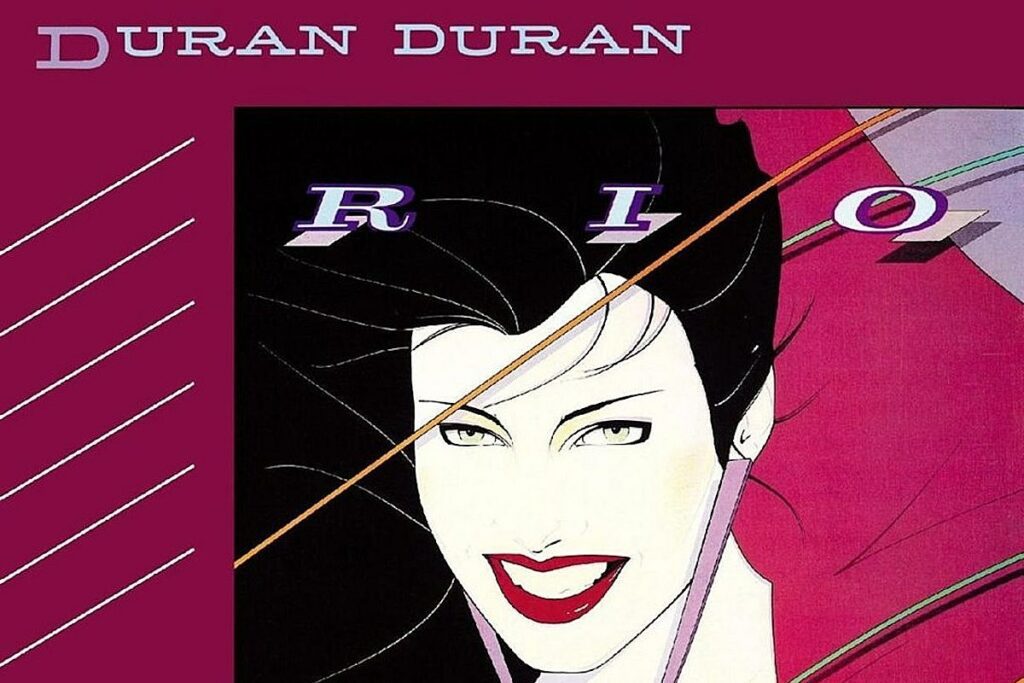
Their meteoric rise to stardom seemed like a dream, with hits like “Hungry Like the Wolf,” “Rio,” and “The Reflex” propelling them to the top of the charts. But behind the glitz and glamour, Duran Duran faced their share of challenges, navigating the ever-changing music industry and enduring the scrutiny of media frenzy. Duran Duran are a band that really took control of the rise of MTV and music videos, spearheading them out of Birmingham, directly into the rest of the world.
Yet, through it all, their passion for music never waned. Their experimentation with genres, blending new wave, synth-pop, and rock elements, showcased their artistic brilliance. Duran Duran’s influence remains palpable in contemporary music, with countless artists paying homage to their legacy.
In the hearts of devoted fans and newcomers alike, Duran Duran remains a beacon of sonic artistry, a timeless reminder of the power of music to shape a generation and beyond. Their journey continues, with new chapters awaiting, as they prove that some bands are not just legendary – they are eternal.
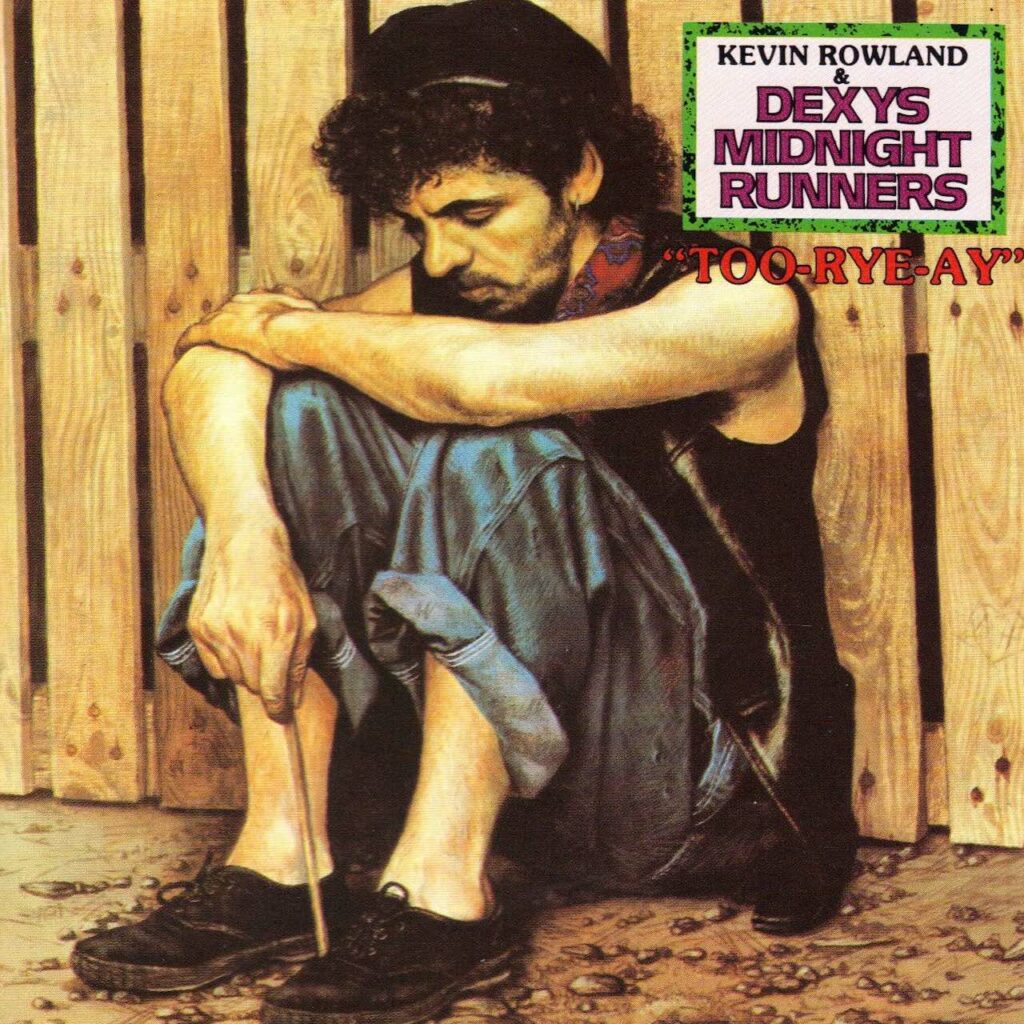
DEXY’S MIDNIGHT RUNNERS:
In the gritty streets of Birmingham, a band emerged in the late 1970s that would soon ignite a musical revolution – Dexy’s Midnight Runners. Led by the enigmatic and charismatic Kevin Rowland, they were a whirlwind of soul, punk, and Celtic influences that defied categorization.
Dexy’s Midnight Runners burst onto the scene with their debut album “Searching for the Young Soul Rebels,” a powerful blend of brass-infused anthems and thought-provoking lyrics. Their iconic hit “Come On Eileen” catapulted them to global fame, reaching the top of the charts and becoming an eternal dancefloor classic.
Famed for their distinctive fashion sense, wearing dungarees, hats, and an unapologetic sense of rebellion, Dexy’s were a breath of fresh air in the music world. Their music wasn’t just catchy; it was a call to arms for the misfits and dreamers. Their songs had a rawness that spoke to the struggles of working-class life, capturing the essence of the times with unapologetic authenticity.
But like many great bands, Dexy’s faced their share of turbulence, with lineup changes and creative struggles. Kevin Rowland’s unwavering pursuit of perfection and artistic vision led to tensions within the band, leading some members to depart. Yet, their passion for making music that resonated with the soul endured.
With every album, Dexy’s continued to push musical boundaries, exploring new genres and showcasing their versatility. Their 1982 album “Too-Rye-Ay” saw them infuse their sound with Irish folk influences, further solidifying their unique identity. The album’s single, “Come On Eileen,” won them the prestigious Best British Single at the Brit Awards in 1983, marking a pinnacle in their career.
To this day, Dexy’s Midnight Runners remain an emblem of musical purity, reminding us that it’s not about fitting in but standing out. Their anthems of hope, heartache, and resilience continue to echo across generations. With their timeless tunes and unyielding spirit, they continue to inspire artists, proving that sometimes, it’s the ones who dare to be different that leave the most profound impact on the world of music. Dexy’s Midnight Runners, with their inimitable sound and rebel hearts, will forever be etched in the tapestry of musical history.
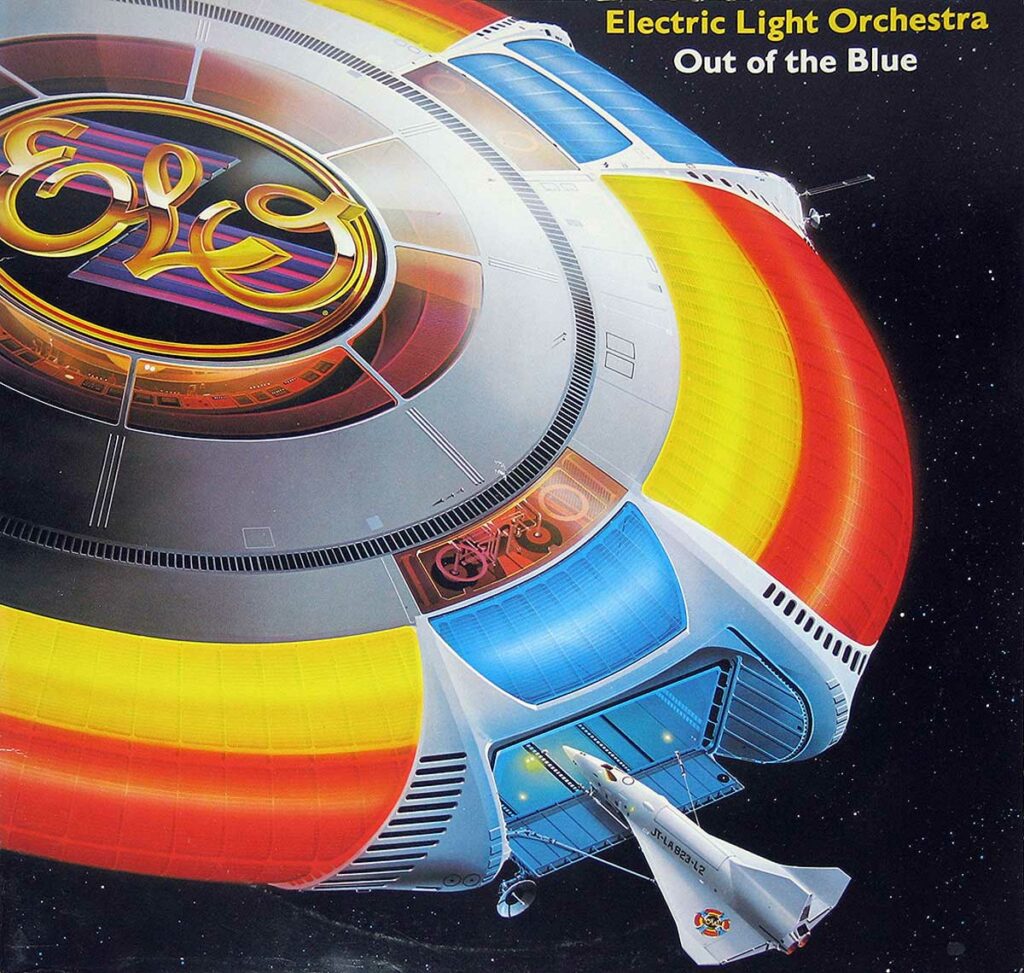
ELECTRIC LIGHT ORCHESTRA:
In the realm of symphonic rock, where classical elegance meets electric fervor, one band stands as a luminous beacon of musical brilliance – the Electric Light Orchestra (ELO). Formed in Birmingham, UK, in the early 1970s by the visionary songwriter and multi-instrumentalist Jeff Lynne, ELO’s fusion of rock ‘n’ roll with orchestral grandeur was nothing short of revolutionary.
Jeff Lynne’s singular vision and songwriting prowess propelled ELO to the forefront of the music scene. Their albums, adorned with cosmic artwork, took listeners on interstellar journeys, captivating minds and hearts with each celestial note.
With hits like “Mr. Blue Sky,” “Don’t Bring Me Down,” and “Livin’ Thing,” ELO’s symphonic soundscapes and infectious melodies dominated the charts, making them one of the best-selling bands of their time. The interplay of rock instruments with strings, synthesizers, and a heavenly choir elevated their compositions to a whole new level, earning them a dedicated fan base that spanned continents.
ELO’s live performances were legendary spectacles, blending rock concert energy with a full orchestra and a spaceship-themed stage setup. Jeff Lynne’s charismatic presence and the band’s impeccable musicianship made every concert an otherworldly experience.
Despite changes in the lineup and the ebb and flow of the music industry, ELO’s legacy endured. Their innovative sound has influenced countless musicians across genres, leaving an indelible mark on the world of rock and orchestral music.
After a brief hiatus, Jeff Lynne’s ELO made a triumphant return to the stage and studio in the 21st century, delighting fans with the timeless magic of their music once again.
Electric Light Orchestra remains a shining testament to the power of musical ingenuity, proving that when rock ‘n’ roll embraces the symphony, the result is a harmonious alchemy that continues to enchant generations. ELO’s legacy will forever illuminate the annals of rock history, reminding us that the fusion of imagination and talent knows no bounds.
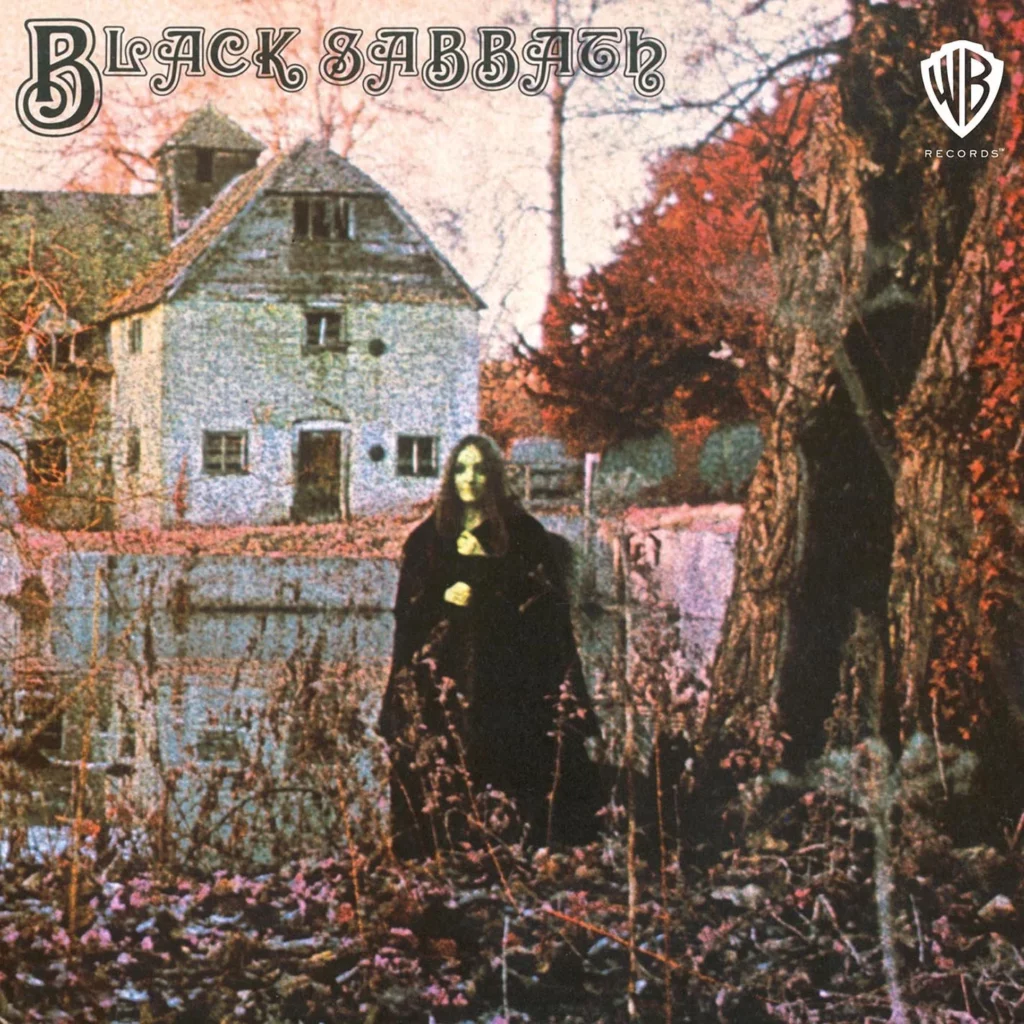
BLACK SABBATH:
In the dark and desolate alleys of Birmingham, a musical storm brewed in the late 1960s that would go on to birth a genre and shape the very essence of heavy metal – Black Sabbath. With their earth-shattering riffs, haunting lyrics, and a stage presence that sent shivers down spines, Black Sabbath emerged as the pioneers of a sound that would resonate with rebels, outcasts, and lovers of the macabre.
Formed by guitarist Tony Iommi, bassist Geezer Butler, drummer Bill Ward, and the inimitable voice of Ozzy Osbourne, Black Sabbath’s music delved into the darker realms of human existence, conjuring tales of horror, war, and the supernatural. Their self-titled debut album, released in 1970, was a thunderous revelation that shook the music world to its core.
The ominous sound of thunder, the tolling of bells, and Iommi’s heavy guitar riffs created an atmosphere that was unlike anything heard before. Their follow-up albums, including “Paranoid” and “Master of Reality,” solidified their status as metal legends, setting the stage for an entire genre that would carry their torch for decades to come.
Black Sabbath’s influence extended far beyond music. Their imagery and lyrical themes birthed the gothic aesthetic, while their relentless pursuit of creative expression inspired countless bands to explore the darker, heavier side of rock.
Despite internal struggles, lineup changes, and the challenges of fame, Black Sabbath’s spirit endured. Their farewell tour in 2017 marked the end of an era, but their legacy remains immortal. Their music continues to reverberate across time, inspiring new generations of headbangers and keeping the fire of heavy metal burning bright.
Black Sabbath’s journey stands as a testament to the power of raw, unapologetic music and the indomitable spirit of four young lads who dared to defy the norm. From the industrial heart of Birmingham to the farthest reaches of the metal universe, Black Sabbath’s legacy will forever echo as a harbinger of darkness and a beacon of musical revolution.
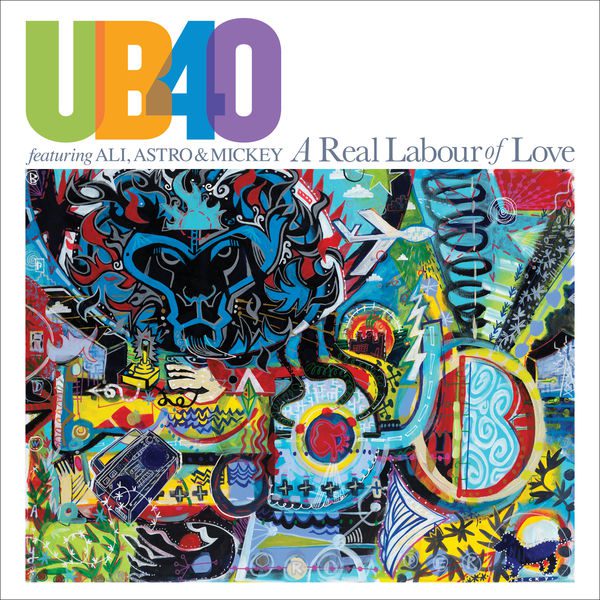
UB40
In the vibrant city of Birmingham, another musical sensation took root in the late 1970s, fusing reggae rhythms with soulful melodies – UB40. Named after the UK government’s unemployment benefit form, UB40’s music became a call for social consciousness and a celebration of unity, making them one of the most iconic reggae bands in the world.
Formed by a group of friends from various cultural backgrounds, UB40’s multicultural lineup added a unique flavor to their music. Led by the charismatic Ali Campbell on vocals, Robin Campbell on guitar, and a talented ensemble of musicians, UB40’s distinctive sound embraced reggae, ska, and pop, creating an infectious blend that transcended borders.
Their debut album, “Signing Off,” released in 1980, struck a chord with audiences, highlighting the struggles of the working class and the disenfranchised. Hits like “One in Ten” and “Food for Thought” cemented their reputation as not just musicians but also as social commentators.
UB40’s rise to global stardom was unstoppable, with chart-topping albums like “Labour of Love” and “Promises and Lies.” Their renditions of classic reggae tunes, including “Red Red Wine” and “Kingston Town,” became anthems of love and togetherness that resonated across generations.
Through the years, UB40 faced their share of challenges, including internal tensions and lineup changes. Yet, their commitment to spreading messages of love, unity, and political awareness remained unwavering.
UB40’s music served as a bridge between cultures and ideologies, proving that music has the power to unite hearts and break down barriers. Their enduring legacy has influenced musicians worldwide and continues to inspire a new era of reggae enthusiasts.
From the streets of Birmingham to the stages of arenas and festivals worldwide, UB40’s spirit of inclusivity and their distinctive reggae sound continues to reverberate. Their music remains a timeless testament to the beauty of diversity, leaving an indelible mark on the world of reggae and beyond. UB40’s legacy as the ambassadors of reggae is a testament to the power of music in bringing people together under the banner of love and harmony.
The Most Expensive Guitars Ever Sold.
Expensive guitars: The side of the music industry we don’t always see…
The soulful resonance of finely tuned guitar strings, the electrifying riffs that awaken emotions, and the melodies that capture hearts – the guitar has long held a special place in the hearts of musicians and music enthusiasts alike. Throughout history, this iconic instrument has witnessed the rise of legends and ignited the passion of countless aspiring artists. Yet, amidst the sea of guitars that span various brands, styles, and price ranges, there exists a select few that have transcended mere musical instruments to become exquisite works of art, revered for their history, craftsmanship, and, most notably, their jaw-dropping price tags.
In the world of priceless musical treasures, these guitars stand out like dazzling gems, capturing the imagination and fascination of collectors, musicians, and admirers alike. Some liken them to the Stradivarius violins of the classical music realm – instruments that hold an unparalleled value and represent the pinnacle of artistic achievement.
In this blog, we embark on a journey through the realm of the most expensive guitars ever sold, exploring the tales of these extraordinary instruments that have made headlines and smashed auction records. From the iconic Fender Stratocasters played by legendary musicians to the rarest Gibson Les Paul Standards with their fabled “Burst” finish, each guitar has a story to tell that spans decades of music history and resonates with the hearts of those who cherish the artistry of sound.
So, let’s delve into the world of strumming luxury, where craftsmanship meets legend, and where the strings of these extraordinary guitars have not only produced harmonies but also woven stories of passion, artistry, and record-breaking prices. Join us as we celebrate these musical marvels, appreciating the magic they hold, regardless of the numbers that define their worth.
5. The Reach Out to Asia Fender Stratocaster
In 2004 a horrendous wave of tsunamis swept through the coastlines of Asia causing unprecedented damage, death and despair. The world responded with many different fundraisers, aid packages and support from governments, charities and volunteers.
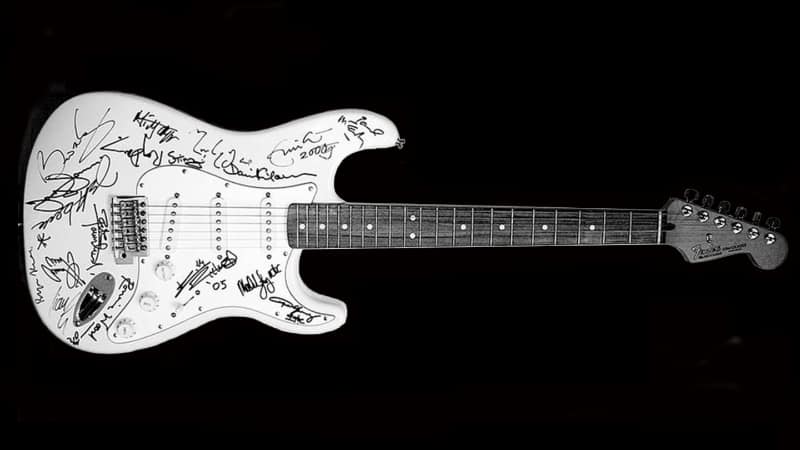
The music scene responded in one of the most brilliant ways it possibly could. A Mexican-made Fender Stratocaster (worth just £350 at the time) was signed by some of the biggest names in music history and auctioned off for a massive $2.8 million and the proceeds went straight to Reach Out to Asia to help those affected.
The fundraiser was organised by Bryan Adams, and it was signed by Adams along with 18 other artists including Mick Jagger, Keith Richards, Eric Clapton, Brian May, Jimmy Page, David Gilmour, Jeff Beck, Pete Townsend, Mark Knopfler, Ray Davies, Liam Gallagher, Ronnie Wood, Tony Iommi, Angus and Malcolm Young, Paul McCartney, Sting, Ritchie Blackmore, and Def Leppard.
This guitar is a symbol of what the music industry is worth, and what it can achieve for the world in times of trouble.
4. Eddie Van Halen’s Hot For Teacher Kramer
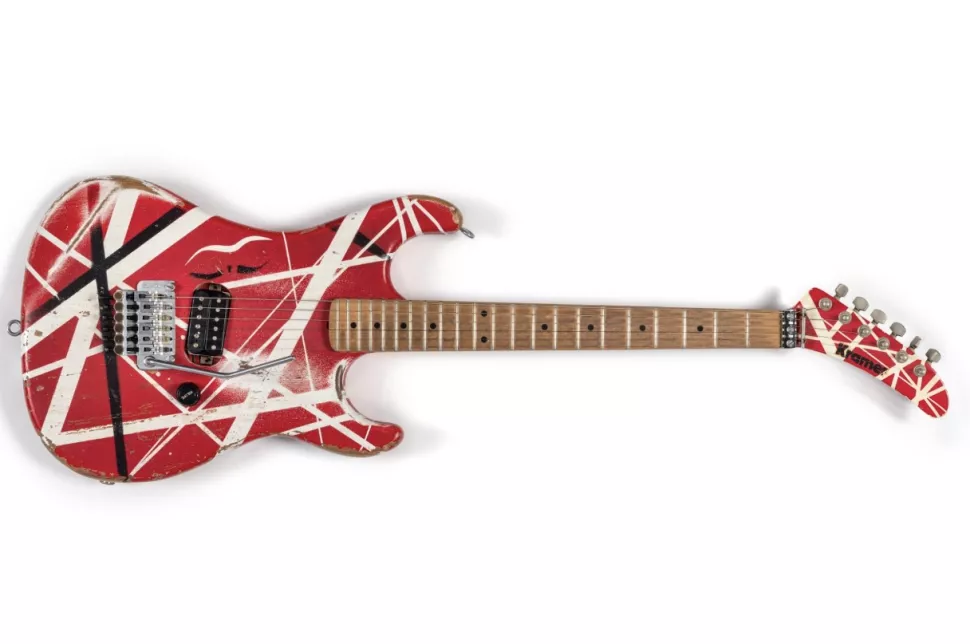
EVH’s custom-made Kramer guitar was played in the incredible ‘Hot For Teacher’ track that defined Van Halen as a band and was one of the most iconic guitars in the world during the peak of the MTV era. This guitar was put to auction in 2023 and sold for an unbelievable $3.9 million making it the 4th most expensive sold to date.
This guitar was built and made specifically for EVH making it one of a kind. It contained a Poplar double-cut “Strat” style body, the top routed for a single double-coil Seymour Duncan humbucker pickup, volume control, Floyd Rose bridge with whammy bar, unvarnished 22 fret maple bolt-on neck (stamped “UNK” on heel) with Kramer sticker on headstock, unvarnished body and headstock spray painted with Van Halen’s characteristic black and white abstract stripe design on a red ground, rear routed for the Floyd Rose’s three springs and stop, no pick guard or rear cover (as designed), screw holes on the back for Eddie Van Halen’s patented flip-up rest (for playing the guitar horizontally.)
Truly a piece of musical history.
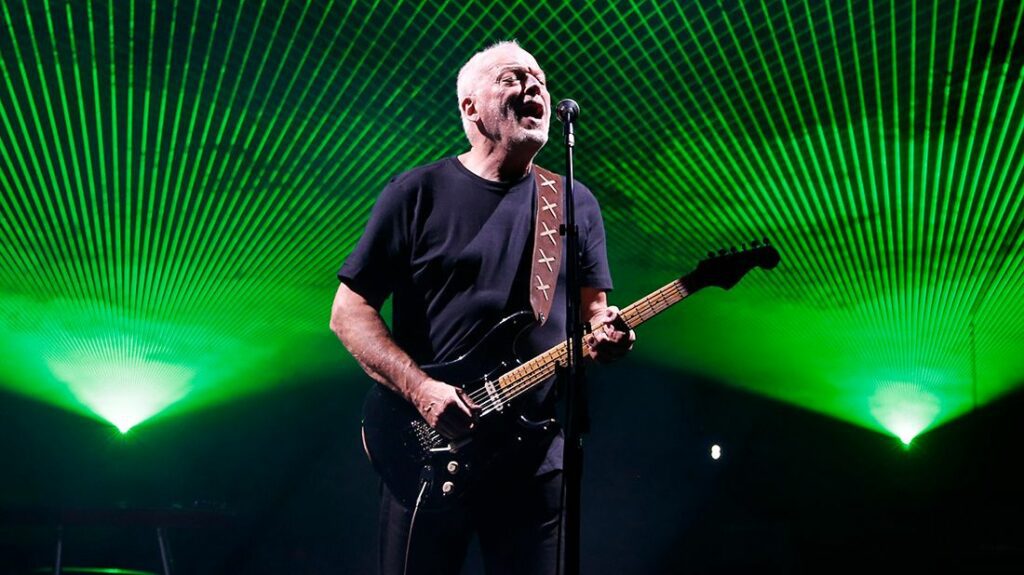
3. David Gilmour’s Black Stratocaster
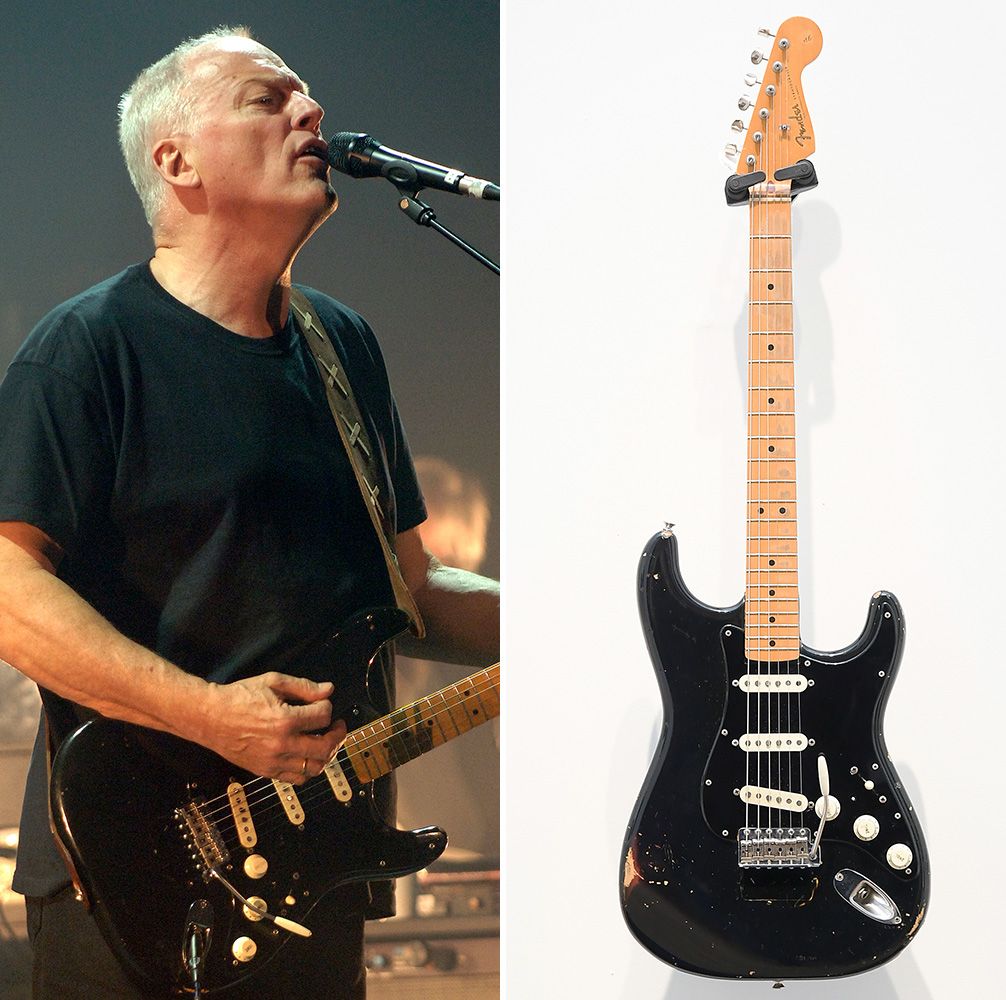
David Gilmour is one of the most notable figures in the world of music globally, especially in the guitar world. ‘The Black Strat’ was used throughout Gilmour’s solo career and in performances and recordings of Pink Floyd songs including “Shine On You Crazy Diamond”, “Money” and “Comfortably Numb”.
‘The Black Strat’ was purchased by Gilmour in 1970 to replace a guitar that he lost on a Pink Floyd tour in America. It underwent many modifications over its lifetime including swapping the neck between maple and rosewood, added Gibson Humbuckers, the bridge was swapped in out and for various tremolo systems and loads more. This guitar had a stint at the Hard Rock Cafe, in Dallas where it underwent some serious damage and theft.
After repair and restoration, Gilmour put this historic guitar up for auction where it ended up selling for a whopping $3.97 million making it the 3rd most expensive guitar ever sold.
2. Kurt Cobain’s Fender Mustang Guitar
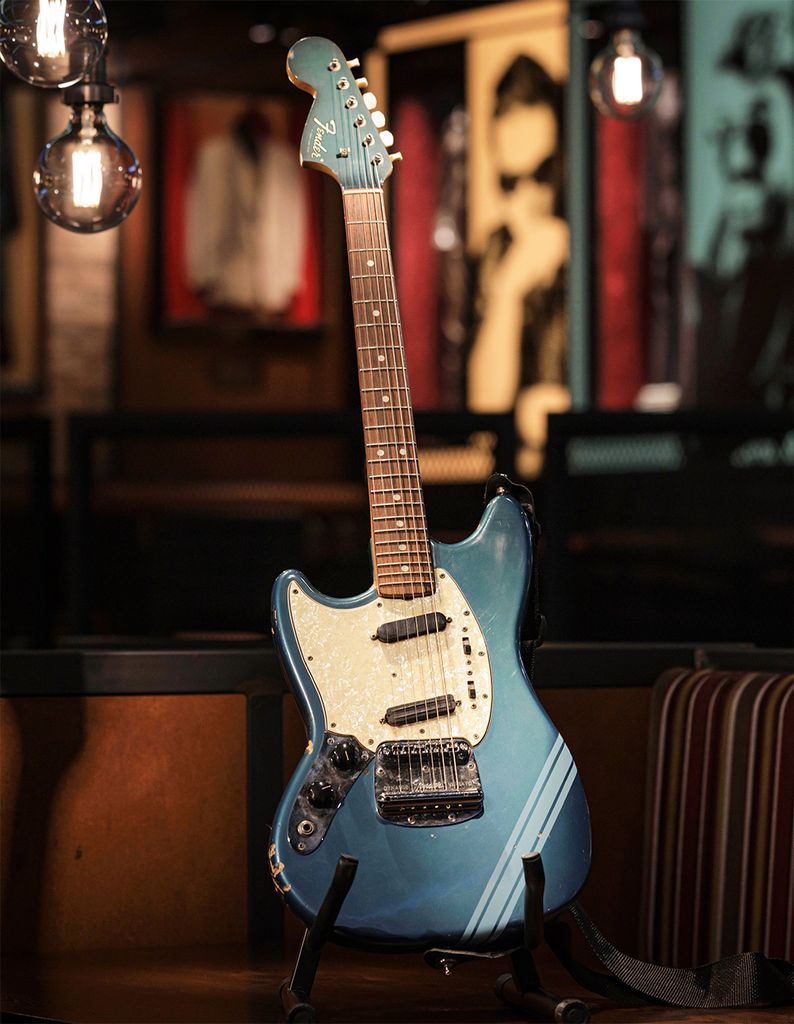
We have all seen this guitar before right? This absolute beast was used in the world-famous “Smells Like Teen Spirit” music video. This music video was a huge part of Nirvana’s rise to absolute and complete stardom, and what is seen as the building block for grunge music across the world.
This guitar ended up being sold to the Indianapolis Colts owner and CEO Jim Irsay (who actually bought David Gilmour’s Black Strat too) for the sum of $4.5 million. This world-famous left-handed guitar was estimated at $800,000 and the final sale price absolutely smashed that.
And Finally… Kurt Cobain’s Martin D-18E
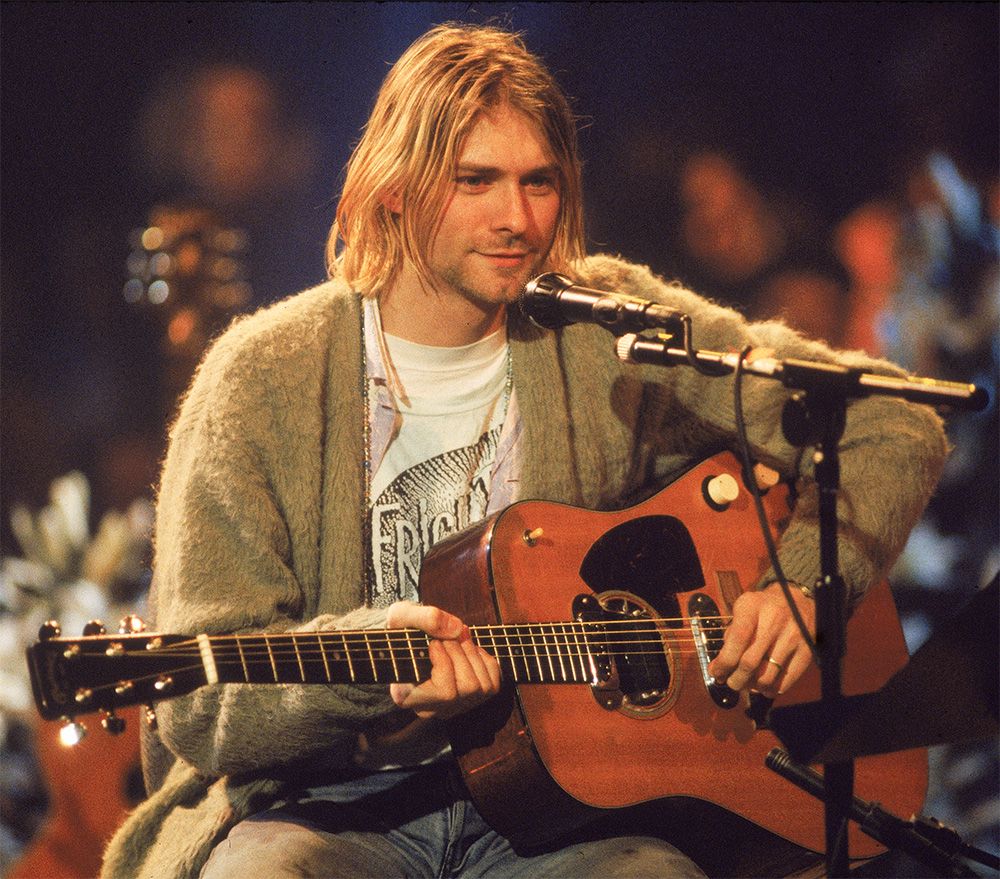
Kurt Cobain doesn’t just hold the 2nd most expensive guitar sale, but the 1st too! In the iconic MTV Unplugged performance, Cobain used a 1959 Martin D-18E acoustic-electric guitar and it sounded absolutely incredible. This performance holds a special place in the hearts of Nirvana fans because it was just 5 months prior to the death of Kurt.
The man who purchased this piece of music history was the founder of Rode Microphones, Peter Freedman. Freedman spent just over $6 million on this guitar and has promised that he will take it on a world tour, giving us the chance to see it ourselves.
“It’s a big deal. I didn’t even buy it for me,” he told the news.
“I paid for it but I’m going to use it to highlight the plight of artists worldwide by touring it around, and then I’m going to sell it and use the dough for that as well, later.”
“Musicians and artists have supported my family since the ’60s. We’ve been in that game forever so I’ve been very lucky with RØDE and I’ve been able to give away lots of money”
Cobain customised this guitar, adding a Bartolini pickup to the soundhole and is rumoured to be the last guitar he ever played.
Want to win yourself a guitar for a fraction of the prices spoken about here? Click here
Rock music, characterized by its energetic rhythms, amplified guitars, and rebellious spirit, has had an enduring impact on the music scene since its inception. Emerging in the 1950s as a fusion of various genres, including blues, country, and rhythm and blues (R&B), rock music quickly captured the attention of young audiences and became a catalyst for cultural change.
Rooted in the African-American musical traditions and the working-class struggles of the time, rock music gained popularity through its raw, electrifying sound. It offered an outlet for self-expression and became a symbol of youthful rebellion against the societal norms of the era.
With its infectious beats and catchy melodies, rock music transcended racial and social barriers, uniting people from different backgrounds under a shared passion. From the early pioneers like Elvis Presley, Chuck Berry, and Little Richard, who infused rock ‘n’ roll with their charisma and charisma and raw talent, to the British Invasion bands like The Beatles and The Rolling Stones, who brought a new wave of creativity and experimentation, rock music constantly evolved and reinvented itself.
Over the years, rock music has spawned various subgenres, including psychedelic rock, hard rock, punk rock, alternative rock, and many more. Each subgenre reflects the cultural, social, and musical shifts of its time, allowing rock music to remain relevant and adaptable to changing tastes and trends.
As we explore the evolution of rock music from the 1950s to today, we will delve into the transformative moments, influential artists, and cultural impact that have shaped this genre into the powerhouse it is today. Join us on this journey through the decades as we celebrate the vibrant history and legacy of rock music.
The Importance of Rock Music in Shaping Culture
Rock music holds a significant place in the annals of popular culture, leaving an indelible mark on society, fashion, and attitudes. From its early days, rock music challenged societal norms and became the voice of a generation seeking change and self-expression.
In the 1950s, rock ‘n’ roll embodied the rebellious spirit of youth, with its energetic rhythms and provocative lyrics. It served as a vehicle for expressing discontent with the status quo, and its popularity spread like wildfire among teenagers, who embraced it as a symbol of freedom and individuality. This newfound cultural force challenged the conservative values of the time, igniting debates and fueling fears of moral decline.
During the 1960s, the British Invasion brought rock music to new heights, with bands like The Beatles leading the charge. Their infectious melodies and charismatic personalities captivated audiences worldwide, redefining the concept of “rock star” and creating a frenzy of fandom. The music became a unifying force, transcending cultural and geographical boundaries, and fostering a sense of global community.
As rock music continued to evolve, the counterculture movement of the late 1960s and early 1970s embraced it as a medium for expressing anti-establishment sentiments and advocating for social change. The psychedelic and experimental sounds of the era became synonymous with the ideals of peace, love, and personal liberation.
Moreover, rock music has influenced fashion trends and lifestyle choices throughout its history. From the rebellious leather jackets and pompadours of the rock ‘n’ roll era to the psychedelic tie-dye and long hair of the hippie movement, rock music has been closely intertwined with fashion, becoming a source of inspiration for countless individuals.
Rock music has played a pivotal role in shaping popular culture. Its power to challenge conventions, inspire social movements, and influence fashion trends is a testament to its enduring impact. As we explore the evolution of rock music, we will uncover the profound ways in which this genre has shaped and continues to shape our cultural landscape.
The Birth of Rock n Roll in the ’50s
The emergence of rock ‘n’ roll in the 1950s was deeply rooted in the fusion of various musical genres, most notably blues, country, and rhythm and blues (R&B). These genres, originating from different cultural and racial backgrounds, came together to create a revolutionary sound that would shape the future of music.
Blues, with its soulful vocals and expressive guitar work, provided the emotional foundation for rock ‘n’ roll. African-American blues artists like Muddy Waters, B.B. King, and Howlin’ Wolf infused their music with raw intensity, capturing the hardships and joys of everyday life. Their influence can be heard in the vocal stylings and guitar riffs of early rock ‘n’ roll pioneers.
Country music, on the other hand, contributed its storytelling traditions and distinctive twang to the development of rock ‘n’ roll. Artists such as Hank Williams and Johnny Cash brought heartfelt narratives and a strong connection to rural America, resonating with audiences and shaping the lyrical content of rock songs.
Rhythm and blues, with its infectious rhythms and electrifying energy, played a crucial role in the evolution of rock ‘n’ roll. R&B artists like Fats Domino, Ray Charles, and Little Richard brought a vibrant mix of gospel, jazz, and blues, infusing it with a lively and danceable quality. Their exuberant performances and catchy melodies set the stage for the high-energy nature of rock ‘n’ roll.
The convergence of these influences in the 1950s created a new sound that captivated audiences worldwide. Pioneering artists like Elvis Presley, often dubbed the “King of Rock ‘n’ Roll,” blended these elements with their own unique styles, bringing rock music into the mainstream and forever changing the musical landscape.
The birth of rock ‘n’ roll in the 1950s was a result of the convergence of blues, country, and R&B. The emotional depth of blues, the storytelling of country, and the infectious rhythms of R&B provided the foundation for this revolutionary genre. As we explore the evolution of rock music, it becomes clear that these early influences laid the groundwork for the many subgenres and transformations that would follow.
Pioneers and early influencers (Elvis Presley, Chuck Berry, Little Richard)
The birth of rock ‘n’ roll in the 1950s can be attributed to the groundbreaking contributions of several influential artists who shaped the sound, style, and attitude of the genre. Among these pioneers were Elvis Presley, Chuck Berry, and Little Richard.
Elvis Presley, often referred to as the “King of Rock ‘n’ Roll,” burst onto the scene with his magnetic stage presence, powerful voice, and charismatic blend of rock, blues, and country. His fusion of these genres, showcased in hits like “Hound Dog” and “Jailhouse Rock,” captivated audiences and propelled him to unprecedented stardom. Presley’s rebellious image and uninhibited performances challenged social norms, making him an icon of youth culture and a symbol of rock ‘n’ roll’s rebellious spirit.
Chuck Berry, known for his electrifying guitar riffs and clever storytelling lyrics, was another key figure in the development of rock ‘n’ roll. With songs like “Johnny B. Goode” and “Maybellene,” Berry brought a distinct blend of blues, country, and R&B to the forefront of popular music. His innovative guitar solos and energetic stage presence laid the foundation for the future of rock guitar playing and established him as one of rock’s greatest pioneers.
Little Richard, with his flamboyant style, powerful voice, and dynamic piano playing, infused rock ‘n’ roll with an exuberant energy and wild spirit. Songs like “Tutti Frutti” and “Long Tall Sally” showcased his raw and uninhibited vocal delivery, earning him the title of “The Architect of Rock and Roll.” Little Richard’s influence extended beyond his music, as he challenged racial and gender norms in the conservative 1950s, inspiring future generations of artists to express themselves authentically.
Rock ‘n’ roll’s Impact on youth culture and Rebellion
Rock ‘n’ roll quickly became a cultural phenomenon, particularly among the youth of the 1950s, as it provided an outlet for rebellion and self-expression. The energetic and provocative nature of the music resonated with teenagers who sought an escape from the conformity of the era.
Rock ‘n’ roll became synonymous with youthful rebellion, symbolizing a break from traditional values and a rejection of societal norms. It represented a generational shift, with young people embracing the music as a form of liberation and identity. The rebellious spirit of rock ‘n’ roll was often reflected in the lyrics, which touched upon themes of love, freedom, and non-conformity.
Furthermore, rock ‘n’ roll played a pivotal role in breaking down racial barriers. During a time of segregation and racial tension, the music brought together audiences of different backgrounds. African-American artists like Little Richard and Chuck Berry achieved widespread success and garnered cross-cultural appeal, challenging the racial divisions of the time. This integration of musical influences and audiences set the stage for the future of rock music as a genre that transcended racial boundaries.
In conclusion, the birth of rock ‘n’ roll in the 1950s was marked by the contributions of visionary artists such as Elvis Presley, Chuck Berry, and Little Richard. Their innovative music and rebellious attitudes reshaped popular music and laid the foundation for the rock ‘n’ roll movement. The genre’s impact extended beyond the music itself, as it became a symbol of youth rebellion, a catalyst for social change, and a powerful force in breaking down racial barriers. The spirit and influence of these early pioneers continue to resonate in rock music to this day.
The British Invasion of the 1960s
The Beatles and their revolutionary sound
The British Invasion of the 1960s marked a turning point in the evolution of rock music, as a wave of British bands, led by the legendary Beatles, took the world by storm. The Beatles’ impact on popular music and culture cannot be overstated, as they revolutionized the sound, songwriting, and image of rock music.
The Beatles, consisting of John Lennon, Paul McCartney, George Harrison, and Ringo Starr, brought a fresh and innovative approach to rock. Their catchy melodies, harmonies, and thoughtful lyrics captivated audiences and showcased their incredible musical prowess. From their early hits like “She Loves You” and “I Want to Hold Your Hand” to their groundbreaking albums like “Sgt. Pepper’s Lonely Hearts Club Band” and “Abbey Road,” the Beatles consistently pushed the boundaries of what rock music could achieve.
Their experimentation with studio techniques, incorporation of orchestral arrangements, and exploration of diverse musical styles expanded the sonic possibilities of rock music. The Beatles’ success not only influenced countless artists who followed, but it also transformed the perception of popular music as a serious art form.
The Rolling Stones and the rise of blues-based rock
Alongside the Beatles, another iconic British band, The Rolling Stones, played a pivotal role in the British Invasion and the evolution of rock music. While the Beatles leaned towards pop and experimentation, The Rolling Stones embraced a raw, bluesy sound that resonated with audiences hungry for a grittier form of rock ‘n’ roll.
Drawing inspiration from American blues legends like Muddy Waters and Howlin’ Wolf, The Rolling Stones infused their music with a rebellious edge. Their early hits like “Satisfaction” and “Paint It Black” showcased Keith Richards’ distinctive guitar riffs, Mick Jagger’s charismatic vocals, and a raucous energy that defined their sound.
The Rolling Stones’ commitment to the blues roots of rock music set them apart, and their influence on the genre cannot be overstated. They brought a swagger and a sense of danger to their performances, becoming the embodiment of rock ‘n’ roll excess and rebellion. Their longevity and ability to adapt their sound over the years have solidified their status as one of the greatest rock bands of all time.
British bands’ influence on American rock (The Who, The Kinks)
The British Invasion not only introduced the world to the Beatles and The Rolling Stones but also showcased the immense talent of other British bands that left an indelible mark on rock music. Two notable acts that emerged during this period were The Who and The Kinks.
The Who, led by Roger Daltrey and Pete Townshend, brought a powerful and aggressive sound to rock music. Their anthems like “My Generation” and “Baba O’Riley” captured the frustrations and rebellious spirit of youth, while their live performances, featuring smashing guitars and explosive stage antics, became legendary.
The Kinks, fronted by Ray Davies, explored a wide range of musical styles and lyrical themes. From their early hits like “You Really Got Me” to more complex concept albums like “Arthur” and “Lola Versus Powerman and the Moneygoround, Part One,” The Kinks showcased a versatility and storytelling ability that set them apart.
These British bands influenced American rock artists of the time, contributing to the broader evolution of the genre. The British Invasion not only changed the landscape of popular music but also ignited a cultural exchange between the United States and the United Kingdom, fostering a creative synergy that would shape rock music for decades to come.
The British Invasion of the 1960s brought forth groundbreaking bands like The Beatles, The Rolling Stones, The Who, and The Kinks, who pushed the boundaries of rock music. The Beatles revolutionized the sound and perception of popular music, while The Rolling Stones brought a raw and bluesy edge. The influence of these British bands extended beyond their own success, inspiring American artists and sparking a cultural exchange that shaped the future of rock music. The impact of the British Invasion remains palpable, as the innovations and artistic achievements of this era continue to resonate in the rock genre to this day.
The Evolution of Rock in the 1970s and 1980s
The Rise of Progressive Rock and Heavy Metal
The 1970s and 1980s witnessed the diversification and evolution of rock music into various subgenres, each with its own distinct characteristics. Two prominent subgenres that emerged during this period were progressive rock and heavy metal, both of which pushed the boundaries of musical complexity and intensity.
Progressive rock, exemplified by bands like Pink Floyd, Genesis, and Yes, expanded the possibilities of rock music by incorporating elements of classical music, jazz, and experimental sounds. These bands crafted lengthy compositions, intricate instrumentation, and thought-provoking lyrical themes. The genre’s progressive nature allowed for extended instrumental solos, conceptual album themes, and a focus on virtuosity.
Heavy metal, on the other hand, emerged as a louder, heavier, and more aggressive form of rock. Bands like Black Sabbath, Led Zeppelin, and Deep Purple pioneered the genre with their distorted guitar riffs, thunderous drums, and powerful vocals. Heavy metal music often delved into darker lyrical themes, employing intricate guitar solos and high-energy performances to create a visceral and cathartic experience for listeners.
The Punk Rock Rebellion and the Birth of New Wave
As the 1970s progressed, a backlash against the perceived excesses of mainstream rock music gave rise to the punk rock movement. Punk rock, characterized by its raw energy, minimalist song structures, and confrontational lyrics, challenged the established norms of the music industry. Bands like The Ramones, The Sex Pistols, and The Clash embraced a do-it-yourself ethos, rejecting the polished and commercialized sound of mainstream rock.
Punk rock’s rebellious spirit paved the way for the emergence of new-wave music in the late 1970s and early 1980s. New wave bands like Blondie, Talking Heads, and The Police blended elements of punk, pop, and electronic music, creating a more polished and danceable sound. New wave was characterized by its catchy hooks, synthesizer-driven melodies, and a fusion of various musical styles.
The Rise of Alternative Rock and Grunge
In the 1980s and early 1990s, the alternative rock movement gained traction, offering an alternative to the mainstream rock sound. Bands such as R.E.M., The Smiths, and Sonic Youth infused rock music with influences from punk, indie rock, and post-punk. Alternative rock embraced a DIY ethos and emphasized authenticity and introspection in its lyrics.
One of the most influential subgenres of alternative rock was grunge, which originated in the Pacific Northwest of the United States. Bands like Nirvana, Pearl Jam, and Soundgarden fused elements of punk, metal, and alternative rock to create a distinctive sound characterized by distorted guitars, anguished vocals, and introspective lyrics. Grunge’s raw and emotionally charged music resonated with a disillusioned youth culture and became a defining sound of the early 1990s.
In conclusion, the 1970s and 1980s witnessed the diversification and evolution of rock music into subgenres like progressive rock, heavy metal, punk rock, new wave, alternative rock, and grunge. These subgenres pushed the boundaries of musical experimentation, lyrical themes, and performance styles, shaping the future of rock music. The impact of these movements is still felt in contemporary rock music, as they continue to inspire new generations of artists to explore and innovate within the genre.
Rock’s Influence on Other Genres
Rock Fusion: Blending Rock with Other Musical Styles
Rock music has consistently influenced and been influenced by various other genres throughout its history. One notable phenomenon is the fusion of rock with different musical styles, resulting in exciting and innovative subgenres.
Jazz-Rock Fusion: In the late 1960s and early 1970s, jazz and rock musicians began exploring the fusion of their respective genres. Bands like Miles Davis, Weather Report, and Mahavishnu Orchestra combined the improvisational nature of jazz with the energy and instrumentation of rock. This fusion led to the creation of complex and dynamic compositions, incorporating elements of funk, Latin rhythms, and experimental techniques.
Funk Rock: Another fusion genre that emerged in the 1970s was funk rock. Artists such as Sly and the Family Stone, Red Hot Chili Peppers, and Prince blended the rhythmic grooves and infectious basslines of funk with the raw power of rock guitars and vocals. This hybrid sound brought a danceable and energetic quality to rock music, inspiring future generations of funk rock bands.
Rock Music in Pop: Pop-Rock and Power Pop
Rock’s influence on pop music has been undeniable, with many pop artists incorporating rock elements into their sound. Two prominent subgenres that emerged from this fusion are pop-rock and power pop.
Pop-Rock: Pop-rock combines the catchy melodies and hooks of pop music with the instrumentation and attitude of rock. Bands like The Beatles, Fleetwood Mac, and Coldplay have achieved great success by infusing their pop sensibilities with rock aesthetics, creating radio-friendly hits that resonate with a wide audience.
Power Pop: Power pop emerged in the 1970s as a distinct subgenre within pop-rock. Artists like Cheap Trick, Big Star, and The Raspberries crafted melodic, guitar-driven songs with strong vocal harmonies. Power pop embraced the energy and attitude of rock while maintaining a pop-oriented song structure and melodic sensibility.
Rock and Hip Hop: Rap Rock and Nu-Metal
Rock’s influence extended to the world of hip hop, resulting in the fusion subgenres of rap rock and nu-metal.
Rap Rock: Rap rock emerged in the late 1980s and early 1990s, combining the aggressive and rhythmic elements of hip hop with the instrumentation and attitude of rock. Bands like Rage Against the Machine, Beastie Boys, and Linkin Park incorporated rap vocals, heavy guitar riffs, and turntable scratching to create a powerful and energetic sound.
Nu-Metal: Nu-metal, which gained popularity in the late 1990s and early 2000s, blended elements of alternative metal, rap rock, and industrial rock. Bands like Korn, Limp Bizkit, and System of a Down combined heavy guitar riffs, anguished vocals, and electronic elements with rap-inspired verses. Nu-metal had a significant impact on popular music, reaching a wide audience and influencing subsequent generations of rock and hip hop artists.
Rock’s influence on other genres has resulted in exciting fusion subgenres. Jazz-rock fusion, funk rock, pop-rock, power pop, rap rock, and nu-metal have showcased the versatility and cross-pollination of rock music. These fusions have contributed to the evolution of popular music, breaking down genre barriers and inspiring new artistic directions. The interplay between rock and other genres continues to shape the contemporary music landscape.
The Evolution of Rock Music in the 21st Century
Alternative Rock Music and Indie Revival
The 21st century has witnessed the continued evolution of rock music with the rise of alternative rock and the revival of indie rock. These subgenres have played a significant role in shaping the sound and direction of rock in recent years.
Alternative rock, which emerged in the 1980s and ’90s, experienced a resurgence in the 2000s with bands like Radiohead, Foo Fighters, and Muse leading the way. These artists pushed the boundaries of rock, incorporating experimental elements, atmospheric soundscapes, and introspective lyrics. Alternative rock in the 21st century has embraced a wide range of influences, ranging from electronic music to progressive rock, resulting in a diverse and innovative sonic landscape.
Alongside alternative rock, indie rock has experienced a remarkable revival. Indie rock bands like Arctic Monkeys, The Black Keys, and Vampire Weekend have gained popularity for their raw and authentic approach to rock music. Drawing inspiration from classic rock, garage rock, and post-punk, indie rock combines catchy melodies, clever lyrics, and a DIY ethos that resonates with a new generation of music lovers.
The Rise of Post-Rock and Experimental Sounds
In the 21st century, the boundaries of rock music have been further expanded through the emergence of post-rock and the exploration of experimental sounds. Post-rock, pioneered by bands like Sigur Rós, Explosions in the Sky, and Godspeed You! Black Emperor, takes a more atmospheric and textural approach to rock. It often incorporates elements of ambient music, classical arrangements, and lengthy instrumental passages, creating immersive and cinematic soundscapes.
Experimental rock has also gained traction, with artists like Radiohead, Tame Impala, and Animal Collective pushing the boundaries of what rock music can sound like. These bands incorporate elements of electronic music, psychedelia, and avant-garde influences to create innovative and unpredictable sonic landscapes. Experimentation with unconventional song structures, sampling, and production techniques has become a hallmark of the genre, allowing for new and exciting sonic possibilities.
Rock’s Integration with Pop and Electronic Music
In the 21st century, rock has increasingly integrated with pop and electronic music, resulting in hybrid genres that blend various influences and styles.
Pop-rock, characterized by catchy hooks, melodic sensibilities, and radio-friendly appeal, has remained a popular subgenre. Bands like Maroon 5, Imagine Dragons, and OneRepublic have achieved mainstream success by infusing rock elements into their pop sound, appealing to a wide audience with their infectious melodies and energetic performances.
Electronic rock, also known as electro-rock or synth-rock, has emerged as a fusion of rock instrumentation with electronic music production. Bands like The Killers, Muse, and MGMT have embraced synthesizers, drum machines, and electronic textures, creating a hybrid sound that combines the energy of rock with the infectious beats and sonic experimentation of electronic music.
In summary, the evolution of rock in the 21st century has seen the resurgence of alternative rock, the revival of indie rock, the exploration of post-rock and experimental sounds, and the integration of rock with pop and electronic music. These developments have contributed to the diverse and ever-evolving nature of rock music, showcasing its ability to adapt, innovate, and captivate audiences in the modern era. As the music landscape continues to evolve, rock remains a vibrant and influential genre that continues to inspire and shape the future of popular music.
Mastering essential guitar techniques is crucial for any guitarist looking to enhance their playing skills. In this article, we will explore ten fundamental techniques that every guitarist should strive to master. Whether you’re a beginner or an experienced player, these techniques will provide a solid foundation for your guitar journey. After each explanation of the technique we will include a video demonstration of the technique.
I. Guitar Technique 1: Alternate Picking
Alternate picking is a technique where you alternate between downward and upward strokes. It not only helps in increasing speed and accuracy but also improves your overall control and articulation. The video below delves into the benefits of alternate picking, its applications in different musical styles such as rock, metal, and jazz, and provide tips for improving your alternate picking skills. Additionally, you should understand the importance of synchronisation between your picking hand and fretting hand to achieve clean and precise alternate picking patterns.
Example:
II. Guitar Technique 2: Hammer-ons and Pull-offs
Hammer-ons and pull-offs are essential techniques that allow you to create smooth, legato phrases. A hammer-on involves using a finger of the fretting hand to “hammer” onto a higher fret, producing a clear note without picking it again. Conversely, a pull-off is when you “pluck” a higher fretted note with a finger of the fretting hand, creating a seamless transition to a lower note. The video below will define and demonstrate these techniques, share examples of songs that utilise them effectively across various genres, and provide exercises to enhance your hammer-on and pull-off proficiency. Also you can explore techniques like trills and combinations of hammer-ons and pull-offs for more advanced players.
Example:
III. Guitar Technique 3: Bending
Bending is a technique that adds expression and emotion to your guitar playing. By pushing or pulling a string, you raise or lower its pitch, creating a vocal-like quality. The video below will explain different bending techniques, such as whole-step and half-step bends, and discuss the importance of intonation and pitch control. Additionally, it delves into various bending styles and explore how bending is used to add nuance and feeling to solos and melodies. Through exercises and practical tips, we’ll guide you in achieving accurate and expressive bends while maintaining a clean and controlled sound.
Example:
IV. Technique 4: Vibrato
Vibrato is a subtle yet powerful technique used to add character and emotion to notes. It involves small, rapid variations in pitch that create a “wobble” effect. Vibrato adds expressiveness to your playing, explore various vibrato styles such as wrist vibrato and finger vibrato, and provide exercises to develop control and expressiveness in your vibrato technique.
Example:
V. Guitar Technique 5: Slides
Slides can add fluidity and interest to your playing, creating smooth transitions between notes and adding a unique flavor to your melodies and solos. The video below will explain how slides work, including both ascending and descending slides, and discuss different slide techniques such as legato slides and slide bends. It showcases examples of songs that effectively use slides across various genres, from blues to rock to country, and offer tips for executing smooth and accurate slides. Additionally, we’ll explore techniques like double stops and slide harmonics for more advanced players.
Example:
VI. Guitar Technique 6: Palm Muting
Palm muting is a technique that creates a percussive, muted sound by lightly resting the side of your picking hand near the bridge of the guitar. It is commonly used in genres like rock, punk, and metal to achieve a tight and controlled sound. The video below will define palm muting, discuss its applications in different music genres, and provide techniques for achieving clean and controlled palm muting. We’ll explore the concept of palm muting dynamics and show how varying the pressure of your palm can create different tonal qualities. Check out the video below for exercises to help you develop precision and consistency in your palm muting technique.
Example:
VII. Guitar Technique 7: Fingerpicking
Fingerpicking allows for intricate melodies, complex chord progressions, and simultaneous bass lines, providing a fuller and more versatile sound. The video below will provide an overview of fingerpicking technique, discuss the advantages of fingerpicking, and offer exercises and patterns to enhance your fingerpicking dexterity. It will show different fingerpicking styles like classical, folk, and flamenco, and showcase how fingerpicking can be used to create beautiful arrangements and express intricate musical ideas.
Example:
VIII. Guitar Technique 8: Sweep Picking
Sweep picking is a technique used in fast and fluid arpeggio playing, often associated with genres like shred and metal. It involves using a combination of picking and rolling motions across multiple strings to produce a rapid succession of notes. The video below explains the sweep picking technique, highlight notable guitarists known for their sweep picking skills, and provide exercises to help you master this challenging technique. It discusses the importance of economy of motion, synchronization, and finger placement in achieving clean and effortless sweep picking patterns.
Example:
IX. Technique 9: Tapping
Tapping involves using your fingers to produce notes on the fretboard, creating a unique and distinctive sound. Popularized by guitar virtuosos like Eddie Van Halen, tapping opens up a world of possibilities for creating fast and intricate patterns. The video below explores tapping, showcase iconic tapping songs and solos, and provide tips for practicing and incorporating tapping into your playing. The video offers exercises to help you develop finger independence, accuracy, and speed in your tapping technique.
Example:
X. Guitar Technique 10: Hybrid Picking
Hybrid picking combines the use of a pick and fingers to achieve a unique sound, providing greater flexibility and options for both rhythm and lead playing. The video below will define hybrid picking, discuss its benefits, present examples of songs that utilise hybrid picking, and offer exercises to develop accuracy and coordination in your hybrid picking technique. It explores hybrid picking patterns, string skipping, and integrating hybrid picking with other techniques such as alternate picking and fingerstyle. Additionally, the video shows how hybrid picking can be used to create interesting and dynamic phrases across various genres.
Example:
Guitar Techniques:
Mastering these ten essential guitar techniques will undoubtedly elevate your playing abilities and open up new creative possibilities. Remember, practice and consistency are key to mastering any technique. So, grab your guitar, dive into these techniques, and embark on an exciting journey of musical growth and expression. As you build a strong foundation with these techniques, you’ll find yourself becoming a more versatile and confident guitarist, capable of expressing your unique musical voice. Enjoy the process, experiment, and most importantly, have fun as you explore the vast world of guitar playing.
In the vast realm of music, there exists an arsenal of tools that enable musicians to sculpt captivating sonic landscapes. Among these tools, guitar pedals reign supreme, offering a gateway to infinite creative possibilities. These small, unassuming boxes have the power to transform an ordinary guitar into a symphony of sound, imbuing it with character, depth, and emotion. They are the alchemical catalysts that bridge the gap between the musician’s imagination and the ethereal realms of music.
In this blog, we embark on an extraordinary journey into the realm of guitar pedals. From the raw power of distortion to the ethereal realms of reverb, we will delve deep into the various types of pedals, uncovering their mysteries, exploring their sonic nuances, and shedding light on how they shape the guitar’s tone. Whether you’re a seasoned guitarist seeking to expand your tonal palette or a budding musician eager to explore new sonic frontiers, join us as we unlock the secrets of these enigmatic devices.
Guitar pedals, also known as effects pedals or stompboxes, are small electronic devices designed to alter the sound of an electric guitar. They serve as intermediaries between the guitar and the amplifier, introducing various effects and manipulating the signal to create a wide range of tones and textures. These pedals are typically housed in compact, durable enclosures and are activated by stepping on a footswitch, hence the term “stompbox.”
Each guitar pedal is designed to produce a specific audio effect or modify the guitar’s signal in a particular way. From the distortion and overdrive that add grit and intensity to the smooth echoes of delay and the lush modulation of chorus, guitar pedals come in a variety of types, each offering its own sonic flavour. By incorporating these effects into their playing, guitarists can shape their sound, evoke emotions, and bring their musical vision to life.
Guitar pedals have become an integral part of virtually every genre of music, from rock and blues to jazz, metal, and beyond. They allow guitarists to explore new sonic territories, add depth and complexity to their compositions, and establish a unique sonic identity. With a vast array of pedals available, each with its own distinct characteristics, guitarists can curate their own personalized palette of effects, tailoring their tone to suit their musical style and artistic vision.
I. Different Types of Guitar Pedals:
Distortion Pedals: Distortion pedals are the sonic architects of rock ‘n’ roll rebellion. They harness the power of grit, aggression, and raw energy, allowing guitarists to unleash roaring riffs and blistering solos. From the legendary “screamer” pedals that define classic rock to the searing high-gain beasts that propel modern metal, we’ll dissect the inner workings of distortion pedals, unravel their sonic characteristics, and guide you towards finding the perfect one to manifest your desired sonic fury.
Popular distortion pedals and their characteristics –
There is a wide range of distortion pedals available on the market, each with its own unique tonal characteristics and sonic capabilities. Here are a few popular distortion pedals and a brief overview of their characteristics:
Ibanez Tube Screamer: The Ibanez Tube Screamer is one of the most iconic and widely used distortion pedals. It is known for its smooth and creamy overdrive tone, which is achieved by its signature midrange boost and warm clipping characteristics. The Tube Screamer excels at adding sustain, enhancing note definition, and delivering a classic bluesy or rock-driven tone.
Boss DS-1 Distortion: The Boss DS-1 Distortion is a legendary pedal that has been a staple on countless pedalboards for decades. It offers a versatile range of distortion, from mild overdrive to full-on distortion. The DS-1 is known for its tight and punchy tone, making it suitable for a wide variety of genres, including rock, punk, and metal.
Pro Co RAT: The Pro Co RAT (RAT stands for “Real And Totally” overdriven) is a highly regarded distortion pedal that has gained popularity for its versatility and wide-ranging tonal options. The RAT can produce anything from a smooth and bluesy overdrive to a heavy and aggressive distortion. It is known for its dynamic response and the ability to cut through the mix with its distinctively edgy and saturated tone.
Fulltone OCD: The Fulltone OCD (Obsessive Compulsive Drive) is a sought-after pedal loved for its transparent and amp-like overdrive to high-gain distortion capabilities. It provides rich harmonic content, touch sensitivity, and a wide gain range. The OCD can take you from a clean boost to crunchy rhythm tones or soaring lead sounds with clarity and definition.
Electro-Harmonix Big Muff Pi: The Electro-Harmonix Big Muff Pi is an iconic fuzz/distortion pedal that has left an indelible mark on the music industry. It produces a thick and saturated fuzz tone with a pronounced sustain and aggressive character. The Big Muff Pi is renowned for its ability to create massive walls of fuzz, making it a favorite among players in genres like stoner rock, psychedelia, and alternative.
Overdrive Pedals: Often misunderstood as mere siblings of distortion, overdrive pedals possess a unique sonic charm of their own. These versatile tone-shapers add warmth, texture, and richness to your guitar’s voice, breathing life into bluesy licks, soulful melodies, and driven rock anthems. We’ll demystify the subtle distinctions between overdrive and distortion, explore the iconic overdrive pedals that have etched their legacy in music history, and empower you to infuse your playing with nuanced, expressive tonal magic.
Delay Pedals: As time bends and echoes reverberate, delay pedals transport your sound into captivating dimensions. They infuse your playing with mesmerizing trails, cascading repeats, and rhythmic patterns that breathe life into your musical tapestry. We’ll unravel the secrets of delay pedals, examining their intricacies, exploring the diverse array of delay types, and introducing you to the iconic units that have graced countless albums. Prepare to embark on a sonic journey through the vast corridors of time.
At its core, a delay pedal captures the incoming guitar signal, stores it temporarily, and then plays it back after a set amount of time. This delayed playback creates the perception of echo or repetition, effectively extending the duration of the original sound.
Controls and Parameters: Delay pedals offer various controls and parameters that allow you to shape the desired echo and repetition effects:
Delay Time: The delay time control determines how long the delay pedal waits before playing back the delayed signal. By adjusting this control, you can achieve short slapback echoes, medium-length delays, or long, atmospheric reverberations.
Feedback/Regen: The feedback or regen control determines the number of repeats or echoes. Higher settings result in more repetitions, while lower settings produce fewer repeats and a shorter decay time.
Level/Blend: The level or blend control lets you adjust the mix between the original signal and the delayed signal. This control allows you to blend the delayed echoes seamlessly with your dry guitar sound.
Additional Parameters: Some delay pedals may offer additional parameters like modulation, filtering, or tap tempo functionality. Modulation adds subtle pitch variations to the delayed signal, creating a swirling or chorusing effect. Filtering controls allow you to shape the frequency response of the echoes, emphasizing or attenuating certain frequencies. Tap tempo functionality enables you to synchronize the delay time with the tempo of your music.
Famous guitarists who utilise delay guitar pedals –
David Gilmour (Pink Floyd): David Gilmour’s ethereal guitar soundscapes and iconic solos in Pink Floyd’s music owe a great deal to his use of delay effects. His skillful implementation of delay pedals, particularly the Electro-Harmonix Deluxe Memory Man, can be heard in songs like “Comfortably Numb” and “Shine On You Crazy Diamond,” where he creates atmospheric textures and mesmerizing echoes.
The Edge (U2): The Edge is renowned for his distinct guitar sound, characterized by an extensive use of delay and echo effects. He often employs delay pedals such as the Line 6 DL4 and the TC Electronic Flashback in U2’s music, creating rhythmic patterns, soaring solos, and cascading delays that are integral to the band’s signature sound.
Johnny Marr (The Smiths): Johnny Marr’s intricate guitar work in The Smiths often incorporated delay effects to create a jangly, atmospheric sound. His rhythmic arpeggios and melodic lines, as heard in songs like “How Soon Is Now?” and “This Charming Man,” were enhanced by the use of delay pedals like the Boss DM-2, contributing to the band’s unique sound.
Modulation Pedals: Within the realm of modulation lies a realm of sonic enchantment. Chorus, phaser, flanger—the names themselves evoke imagery of ethereal landscapes, swirling textures, and evolving sonic waves. Modulation pedals infuse your guitar with movement, depth, and an otherworldly allure. We’ll delve into the inner workings of modulation effects, unravel their captivating soundscapes, and introduce you to the legendary pedals that have painted sonic masterpieces throughout the ages.
Reverb Pedals: When your guitar’s notes dance through vast chambers, shimmer in expansive halls, or embrace the intimate depth of a small room, it is the spellbinding work of reverb pedals. These devices create an immersive sense of space, transforming your guitar into an instrument that resonates within ethereal realms. We’ll explore the concept of reverb, unravel its role in adding dimension and atmosphere to your playing, and introduce you to a range of popular reverb pedals, each with its own unique sonic characteristics. Get ready to transport your listeners to breathtaking sonic landscapes.
How reverb pedals work –
Reverb is an essential effect that plays a significant role in shaping the sonic landscape of music. It simulates the natural reverberation that occurs in different acoustic environments, adding a sense of space, depth, and ambiance to audio signals. Let’s explore the concept of reverb and its role in creating immersive soundscapes.
Reverb, short for reverberation, refers to the persistence of sound reflections in an enclosed space after the sound source has stopped. When a sound is produced in a room, it travels to various surfaces, such as walls, ceilings, and floors, and bounces off them. These reflections mix and interact with the original sound, creating a complex blend of echoes that gradually decay over time.
In the realm of music production and audio effects, reverb is achieved through the use of digital algorithms or physical devices known as reverb units. These units replicate the characteristics of different acoustic spaces, such as concert halls, chambers, plates, or springs, and apply the simulated reverberation to the audio signal.
Creating a Sense of Space: Reverb helps to create a sense of physical space within a recording or performance. It gives the impression that the sound is occurring in a specific environment, whether it’s a small room, a cavernous hall, or an expansive outdoor setting. By adding reverb to a dry, close-miked recording, you can make it sound as if the performance is taking place in a larger, more reverberant space.
Enhancing Depth and Dimension: Reverb adds depth to audio by creating a sense of distance between the listener and the sound source. The reflections and decay of reverb contribute to the perception of objects and instruments occupying different positions in a three-dimensional sound field. By adjusting the parameters of reverb, such as decay time and early reflections, you can manipulate the perceived depth and spatial positioning of elements in the mix.
Establishing Mood and Atmosphere: Different reverb settings can evoke various moods and atmospheres. A short, subtle reverb can add a sense of intimacy or closeness, while a long, lush reverb can create a dreamy, ethereal quality. The choice of reverb type and settings can help establish the desired emotional tone of a musical piece, whether it’s a haunting, cavernous sound for a ballad or a bright, spacious feel for an energetic pop track.
Blending and Gluing Elements: Reverb acts as a unifying element that helps blend disparate sounds together in a mix. By applying a consistent reverb to different instruments or vocal tracks, you can create a cohesive sonic environment, making them sound as if they belong in the same space. This cohesive blending can contribute to a more polished and professional-sounding production.
Adding Texture and Interest: Reverb can also be used creatively to add texture, movement, and interest to a sound. By applying modulation or pre-delay to the reverb, you can create subtle variations or rhythmic patterns within the decay, enhancing the overall character of the sound. This can be particularly effective in ambient music, soundscapes, or atmospheric guitar parts.
Reverb is a powerful tool for adding space, depth, and atmosphere to music. By simulating the natural reverberation of different acoustic environments, reverb enhances the sonic experience, immersing the listener in a rich and immersive soundscape. From creating a sense of space and depth to establishing mood and texture, reverb is a versatile effect that plays a crucial role in shaping the overall sonic identity of a musical piece.
II. Choosing the Right Guitar Pedal:
The process of selecting the perfect guitar pedal is both exciting and daunting. With a multitude of options available, it’s essential to consider various factors that will influence your sonic journey. We’ll guide you through the decision-making process, discussing the importance of factors such as budget, musical style, and desired tone. By understanding your specific needs, you can make an informed choice and find the pedal that resonates with your musical vision. Furthermore, we’ll provide valuable tips on how to effectively test and compare pedals, whether it’s through hands-on experimentation, researching reviews and demos, or even borrowing or renting pedals before committing to a purchase. Embrace the adventure of discovery as you embark on a quest to find the perfect sonic companion.
III. Building a Pedalboard Setup:
Organizing and integrating your pedals into a cohesive pedalboard setup is key to unlocking their full sonic potential. We’ll take you on a journey through the essential components and considerations for building a well-rounded pedalboard. From choosing the right power supply to understanding pedal order and signal flow, we’ll provide insights that will help you optimize your tone and create a seamless musical experience. Whether you’re a beginner looking for a straightforward setup or an experienced player aiming for a complex rig, we’ll explore common pedalboard layouts and configurations to suit a range of musical styles and preferences. Additionally, we’ll share tips for cable management and troubleshooting, ensuring that your pedalboard setup remains reliable and inspires you to push the boundaries of your creativity.
Choosing the Right Pedalboard: The first step in building your pedalboard setup is selecting the right pedalboard itself. Consider factors such as size, durability, portability, and the number of pedals you plan to use. Pedalboards come in various shapes and sizes, from compact and lightweight options for minimal setups to larger boards capable of accommodating extensive pedal collections. Assess your needs and preferences to find a pedalboard that suits your playing style and gigging requirements.
Power Supply Considerations: A reliable power supply is crucial for a pedalboard setup. It provides consistent, clean power to your pedals, ensuring optimal performance and reducing the risk of unwanted noise or signal degradation. Look for a power supply with sufficient outputs to accommodate your pedals and consider features like isolated outputs for minimizing noise and voltage regulation for stable power delivery. It’s also essential to choose a power supply that matches the voltage requirements of your pedals (typically 9V or 18V).
Pedal Order and Signal Flow: The order in which you place your pedals in the signal chain significantly affects your tone. While there are no strict rules, certain guidelines can help you achieve the desired sound. Generally, the signal flow starts with dynamic-based effects (such as compressors or wah pedals), followed by gain-based effects (distortion, overdrive), modulation effects (chorus, phaser), time-based effects (delay, reverb), and finally, any additional EQ or volume pedals. Experimentation is key, and you may discover unique sounds by deviating from conventional signal chains.
Patch Cables and Signal Integrity: High-quality patch cables are essential for maintaining signal integrity and minimizing unwanted noise in your pedalboard. Invest in low-capacitance cables with sturdy connectors to ensure reliable connections and minimal signal loss. Keep the cable lengths as short as possible to reduce the chances of signal degradation and noise interference. Neatly arrange and secure your cables to avoid accidental pulls or tangles during performances.
Velcro or Pedalboard Tape: To keep your pedals securely in place on the pedalboard, consider using Velcro or pedalboard tape. Attach one side of the adhesive material to the bottom of your pedals and the other side to the pedalboard’s surface. This allows for easy rearrangement of pedals while ensuring they stay firmly in place during performances, even when subjected to stage vibrations and movement.
Cable Management: Efficient cable management not only enhances the visual appeal of your pedalboard but also reduces the risk of accidental unplugging or damage. Use cable ties, zip ties, or cable organizers to bundle and route your cables neatly along the edges or underneath the pedalboard. Consider using a cable routing solution such as cable channels or a pedalboard with built-in cable routing features to streamline the process.
Gig Bag or Case: Protecting your pedalboard during transport is essential, especially if you frequently gig or travel with your setup. Invest in a sturdy gig bag or a hard case designed specifically for your pedalboard’s size and shape. This ensures that your pedals remain safe from impacts, spills, and environmental hazards while on the move.
Remember, building a pedalboard setup is a personal and iterative process. It may take time to find the ideal layout, pedal placement, and organization that suits your playing style and preferences. Continually experiment, listen, and refine your setup to create a pedalboard that enhances your musical expression
To ensure that your pedals continue to perform flawlessly and stand the test of time, proper maintenance and care are essential. We’ll provide practical guidance on cleaning and protecting your pedals, preventing common electrical issues and signal loss, and troubleshooting potential problems that may arise. By implementing effective maintenance practices, you can preserve the integrity of your pedals and prolong their lifespan. Additionally, we’ll explore considerations for storage and transportation, safeguarding your beloved pedals from damage while on the go. A well-maintained pedal collection will serve as a reliable creative companion, ready to deliver sonic bliss whenever inspiration strikes.
V. Exploring Experimental and Unique Guitar Pedals:
For those seeking to venture beyond the boundaries of conventional guitar tones, there exists a realm of experimental and unique guitar pedals. These unorthodox devices push the boundaries of sonic exploration, offering a plethora of unconventional sounds and textures. We’ll introduce you to a world where glitchy bitcrushers coexist with ambient granular synthesizers, and where pedals with mind-bending functions inspire new avenues of creativity. Embrace the spirit of sonic experimentation and step into a realm where innovation knows no bounds.
Introduction to unconventional and niche pedals
While distortion, delay, and reverb pedals are commonly found on many pedalboards, the world of guitar pedals extends far beyond these familiar effects. Exploring unconventional and niche pedals opens up a realm of sonic possibilities that can inspire creativity and push the boundaries of your playing. These pedals, often characterized by their unique designs and specialized functions, offer guitarists a chance to experiment with unconventional sounds and textures.
Unconventional and niche pedals come in a variety of forms, catering to specific musical genres or experimental approaches. They may include fuzzes with unusual filtering capabilities, glitch and granular effects that manipulate audio in unexpected ways, or even pedals that generate synth-like tones. These pedals can add a distinct flavour to your sound, allowing you to craft music that stands out from the crowd.
One of the fascinating aspects of exploring unconventional pedals is the element of discovery. With less mainstream recognition, these pedals often come from smaller manufacturers or boutique builders who are passionate about pushing sonic boundaries. They are built with care, attention to detail, and a dedication to providing unique sonic experiences. As a result, using these pedals can spark new ideas, spark creativity, and lead you down unexplored musical paths.
When considering unconventional and niche pedals, it’s important to keep in mind your personal playing style, musical preferences, and desired sonic outcomes. Experimentation and open-mindedness are key in exploring these pedals, as they may offer unconventional controls, parameter interactions, or unexpected results. Embracing the unconventional can lead to exciting sonic adventures and unlock fresh dimensions in your playing.
Examples of unique guitar pedals and their unconventional sounds
Electro-Harmonix Mel9 Tape Replay Machine: This pedal emulates the sound of vintage tape-based Mellotron keyboards. It produces lush and haunting orchestral sounds, including strings, choirs, and brass sections. With its ability to transform your guitar into an ensemble of Mellotron-like textures, the Mel9 opens up a world of atmospheric and cinematic possibilities.
Red Panda Particle: The Particle is a granular delay and pitch-shifting pedal that manipulates your guitar’s signal into fragmented and glitchy textures. It slices your sound into tiny grains and rearranges them, creating intricate patterns and evolving sonic landscapes. From shimmering textures to chaotic bursts, the Particle delivers experimental and unpredictable sonic adventures.
EarthQuaker Devices Rainbow Machine: This pedal defies conventional expectations, producing otherworldly and ethereal sounds. It combines pitch-shifting, modulation, and harmonizing effects to create cascading harmonies, bizarre detuned tones, and unpredictable arpeggiated patterns. The Rainbow Machine adds a touch of surrealism and unpredictability to your playing.
Death By Audio Echo Dream 2: The Echo Dream 2 is a hybrid delay and fuzz pedal that offers a unique blend of warm analogue delay and gritty fuzz distortion. It creates a distorted and warbled tape-like echo effect, adding a vintage and lo-fi character to your sound. The pedal’s unconventional controls and interactions allow for a wide range of atmospheric and unpredictable delay textures.
Chase Bliss Audio Thermae: The Thermae is a truly unique analogue delay pedal that incorporates a pitch-shifting algorithm inspired by vintage rack-mounted harmonizers. It allows you to create cascading delays with shifting harmonies and intricate pitch intervals. The pedal’s “Sliders” feature enables real-time manipulation of pitch intervals, resulting in unconventional and evolving delay textures.
Meris Enzo: The Enzo is a versatile synthesizer pedal that transforms your guitar into a polyphonic synthesizer. It offers a range of synth sounds, including monophonic leads, lush pads, and complex arpeggios. With its extensive control options and modulation capabilities, the Enzo unlocks a world of synth-inspired tones and experimental sonic landscapes.
Conclusion:
Guitar pedals are the enchanting tools that empower guitarists to transcend the limitations of their instruments, unlocking boundless creative expression. Throughout this blog, we have embarked on a captivating journey, exploring the various types of pedals, offering guidance in selecting the perfect ones, and providing insights into building an optimized pedalboard setup. Now armed with this knowledge, you can embark on your own sonic odyssey, shaping breathtaking tones, and immersing yourself in a world of infinite musical possibilities. Embrace the power of guitar pedals, and let your music soar to new heights.
“Top 10 Guitarists of All Time”, what a statement! In the vast realm of music, the guitar has long been hailed as one of the most captivating and versatile instruments. From the soulful melodies of the blues to the electrifying riffs of rock, the guitar has shaped the course of musical history and continues to inspire and mesmerize listeners across generations.
We’ll be cranking up the volume as we celebrate the guitar gods who have given us unforgettable riffs, mind-bending solos, and ear-melting melodies. From the mind-blowing genius of Jimi Hendrix to the soulful blues of B.B. King, we’re going to groove to the sounds that have shaped the music we love.
Prepare to be captivated as we delve into the lives, legacies, and unique contributions of these iconic musicians. From the revolutionary Jimi Hendrix to the blues-driven mastery of B.B. King, we will shine a spotlight on their awe-inspiring technical abilities, genre-defining sounds, and groundbreaking innovations.
We will marvel at the soulful playing of Stevie Ray Vaughan, whose fiery licks continue to send shivers down the spines of listeners worldwide. We will delve into the ethereal realm of Pink Floyd’s David Gilmour, whose haunting melodies and emotive solos have become the soundtrack of a generation.
We cannot forget the thunderous power and virtuosity of Eddie Van Halen, whose lightning-fast fingers and inventive techniques transformed the face of rock music forever. And we will witness the bluesy magic of Eric Clapton and Carlos Santana, whose expressive playing and soul-stirring solos have touched the hearts of millions.
Throughout this blog, we will explore the nuances of their playing styles, the influences that shaped their musical journeys, and the impact they have had on aspiring guitarists around the world. Whether you are a seasoned guitar aficionado or simply someone with a deep appreciation for the instrument, this blog promises to offer a rich and captivating exploration of the greatest guitarists of all time.
So, join us as we embark on this enchanting voyage through the realms of music, paying homage to the legends whose fingers danced across the frets, weaving sonic tapestries that will continue to resonate for generations to come.
Jimi Hendrix (1942-1970) is widely regarded as one of the greatest and most influential guitarists in the history of rock music. Born in Seattle, Washington, Hendrix’s innovative and revolutionary approach to playing the electric guitar transformed the instrument’s possibilities and forever changed the landscape of popular music.
Hendrix’s guitar playing was characterized by his mesmerizing combination of technical skill, creativity, and boundless musicality. He pushed the boundaries of what was thought possible on the instrument, exploring new sonic territories and employing innovative techniques such as feedback, distortion, and wah-wah pedals. His mastery of the guitar allowed him to effortlessly blend elements of blues, rock, funk, and psychedelia into a unique and groundbreaking sound.
Hendrix’s discography is filled with timeless classics that showcase his extraordinary talent as both a guitarist and a songwriter. Songs like “Purple Haze,” “All Along the Watchtower,” and “Voodoo Child (Slight Return)” exhibit his virtuosic playing, imaginative chord progressions, and emotive vocals. His ability to create intricate and melodic guitar solos remains unparalleled, leaving an indelible mark on generations of guitarists.
Beyond his technical prowess, Hendrix was a captivating performer who exuded charisma and stage presence. His electrifying live performances, often characterized by his iconic guitar theatrics, captivated audiences worldwide and cemented his status as a rock icon.
Tragically, Hendrix’s life was cut short at the age of 27, leaving behind only a brief but incredibly influential body of work. Despite his untimely death, his musical legacy continues to inspire and influence countless musicians to this day. Jimi Hendrix’s impact on the guitar and popular music as a whole cannot be overstated, making him an enduring symbol of artistic innovation and creative expression. How could Hendrix not be one of the top 10 guitarists of all time?
Get ready to groove to the soulful sounds of Eric Clapton, the guitar legend known as “Slowhand.” With a career spanning over six decades, Clapton has solidified his status as one of the greatest guitarists of all time. From his early days with The Yardbirds and Cream to his successful solo career, Clapton has captivated audiences with his mesmerizing blues-infused playing and heartfelt songwriting.
Clapton’s guitar skills are marked by a seamless blend of technical precision and emotional depth. His smooth and expressive playing style is characterized by fluid bends, tasteful phrasing, and a soulful touch that can make even the simplest notes resonate with profound emotion. His ability to convey raw emotion through his guitar has earned him the admiration of fans worldwide.
Notable for his mastery of the blues, Clapton has paid homage to his influences while adding his unique touch to the genre. Songs like “Layla,” “Crossroads,” and “Tears in Heaven” have become timeless classics, showcasing his incredible guitar work and songwriting prowess.
Beyond his guitar virtuosity, Clapton’s distinctive voice and knack for storytelling have further endeared him to audiences. His ability to evoke a range of emotions, from heartache to hope, has made his music resonate on a deeply personal level.
Clapton’s impact extends beyond his own recordings, as he has collaborated with countless artists and contributed to numerous iconic songs. His versatility and willingness to explore different genres have allowed him to leave an indelible mark on rock, blues, and even pop music.
As a true guitar icon, Eric Clapton’s influence on generations of musicians cannot be overstated. His timeless music continues to inspire and move people around the world, solidifying his place as a true legend in the realm of guitar heroes. Again, whatever you think of Clapton, he definitely changed the game in the guitar world. For sure in the top 10 guitarists of all time.
Prepare to enter the realm of rock ‘n’ roll greatness with Jimmy Page, the mastermind behind the iconic sound of Led Zeppelin. Jimmy Page’s musical genius and innovative guitar work have made him one of the most revered and influential guitarists in history.
Page’s guitar playing is characterized by its power, finesse, and undeniable creativity. His virtuosic skill combined with his keen sense of melody and rhythm set him apart from his contemporaries. With Led Zeppelin, Page pushed the boundaries of rock music, blending blues, folk, and Eastern influences to create a sound that was both heavy and ethereal. This genius blend of genres gives him a firm position in the top 10 guitarists of all time
One of Page’s defining traits is his ability to craft unforgettable riffs that have become anthems for generations. From the thunderous opening of “Whole Lotta Love” to the iconic intro of “Stairway to Heaven,” his riffs have become part of the collective musical consciousness.
Page’s solos are equally awe-inspiring, showcasing his technical prowess, improvisational skills, and sheer creativity. With his wizardry on the guitar, he took listeners on sonic journeys filled with emotion and intensity. His solo in “Since I’ve Been Loving You” is a masterclass in blues-infused guitar playing, while the intricate and mesmerizing solo in “Black Dog” demonstrates his innovative approach to rock music.
Beyond his guitar wizardry, Page’s contributions as a producer and songwriter cannot be overlooked. His meticulous attention to detail and innovative recording techniques resulted in some of the most iconic and influential albums of all time.
Jimmy Page’s impact on the world of guitar and rock music as a whole is immeasurable. His inventive playing, memorable compositions, and timeless recordings continue to inspire generations of musicians and fans alike. Jimmy Page stands as a true guitar legend, forever etched in the pantheon of rock ‘n’ roll.
Eddie Van Halen
Get ready to be blown away by the electrifying talent of Eddie Van Halen, the guitar virtuoso who revolutionized rock music and forever changed the way the guitar is played. With his unparalleled skills, boundless creativity, and infectious stage presence, Van Halen has left an indelible mark on the world of music.
Eddie Van Halen’s guitar playing was a force of nature. His lightning-fast fingers danced across the fretboard, effortlessly delivering jaw-dropping solos and blistering riffs. His innovative approach to playing included techniques such as two-handed tapping, harmonics, and whammy bar tricks, showcasing a level of technical mastery that was simply mind-boggling.
What set Van Halen apart was not just his technical brilliance but also his ability to infuse his playing with an infectious sense of joy and energy. His guitar solos were not just displays of technicality but also moments of pure musical expression, filled with emotion and a sense of fun.
As a founding member of the band Van Halen, Eddie Van Halen spearheaded a new era of rock music. Their self-titled debut album, released in 1978, introduced the world to their unique blend of hard rock, pop hooks, and Eddie’s electrifying guitar work. Tracks like “Eruption” and “Ain’t Talkin’ ‘Bout Love” showcased his innovative playing style and solidified his place in guitar history.
Eddie Van Halen’s influence reverberated across generations, inspiring countless guitarists to pick up the instrument and explore new sonic possibilities. His impact on the development of rock guitar cannot be overstated, and his contributions to the genre will continue to be celebrated for years to come.
Sadly, Eddie Van Halen passed away in 2020, leaving behind a monumental legacy. His guitar genius, infectious enthusiasm, and groundbreaking contributions to rock music will forever be remembered and cherished by fans and musicians around the world. For this reason we can’t leave him out of the top 10 guitarists of all time list!
Prepare to be mesmerized by the soulful and electrifying guitar playing of Stevie Ray Vaughan, a true legend of the blues. Vaughan’s mastery of the instrument, coupled with his raw emotion and blistering technique, has firmly established him as one of the greatest guitarists of all time.
Stevie Ray Vaughan breathed new life into the blues genre, infusing it with his own unique blend of passion, intensity, and virtuosity. His guitar playing was a fiery force, characterized by searing solos, lightning-fast licks, and a deep connection to the emotional core of the music. Whether he was bending notes with his soul-stirring vibrato or delivering lightning-quick runs up and down the neck, Vaughan’s playing had an unmatched energy and authenticity.
Vaughan’s catalogue of songs is a testament to his incredible talent and creativity. From the blistering blues-rock of “Pride and Joy” to the soulful balladry of “Texas Flood,” his guitar work displayed a wide range of expression and an unwavering commitment to the music. His explosive live performances were legendary, capturing the hearts of audiences with his captivating stage presence and unmatched showmanship.
Tragically, Vaughan’s life was cut short in a helicopter crash in 1990, leaving a void in the world of music. However, his impact continues to resonate. His influence can be heard in the playing of countless guitarists who were inspired by his technical mastery, fiery passion, and unyielding dedication to the blues.
Stevie Ray Vaughan’s legacy is one of artistic brilliance and a true testament to the power of music. His ability to channel emotion through his guitar was unparalleled, and his contribution to the blues genre is immeasurable. Vaughan’s soulful playing and undeniable talent continue to captivate and inspire, making him a guitar hero whose spirit will forever live on.
Personally, I’d have put him in the top 10 guitarists of all time purely on his clothing choices! Someone who looks that cool shouldn’t also be that good at playing guitar!
Carlos Santana
Get ready to groove to the mesmerizing sounds of Carlos Santana, the guitar virtuoso whose music transcends genres and uplifts the spirit. Santana’s unique fusion of rock, Latin rhythms, jazz, and blues has captivated audiences around the world and solidified his status as one of the most influential guitarists of all time.
Carlos Santana’s guitar playing is characterized by its distinctive tone, soulful phrasing, and infectious rhythms. His melodic solos are a testament to his deep musicality, blending technical proficiency with heartfelt expression. Santana’s ability to weave together intricate guitar lines with a vibrant sense of groove creates a hypnotic and uplifting experience for listeners.
One of Santana’s defining moments came with the release of the album “Santana” in 1969, which showcased his band’s infectious blend of Latin-infused rock. Hits like “Evil Ways” and “Oye Como Va” propelled Santana into the mainstream, with his signature guitar sound becoming instantly recognizable.
Beyond his guitar prowess, Santana is a true musical collaborator, bringing together a diverse range of artists to create unforgettable songs. His collaborations with vocalists like Rob Thomas on “Smooth” and Michelle Branch on “The Game of Love” brought his music to new generations and earned him numerous accolades, including multiple Grammy Awards.
Carlos Santana’s music is more than just notes and chords; it carries a message of unity, spirituality, and social consciousness. His artistry is infused with a sense of joy, peace, and love that transcends language and cultural boundaries. His guitar playing has the power to uplift the soul and inspire a deep connection to the universal language of music.
Carlos Santana’s impact on the world of guitar and popular music is profound. His unique blend of genres, infectious rhythms, and soulful playing continues to inspire and resonate with fans worldwide. Carlos Santana is not just a guitar legend; he is a musical icon whose influence will be felt for generations to come.
David Gilmour
David Gilmour Earls Court 19th May 1973
Prepare to embark on a sonic journey guided by the ethereal guitar playing of David Gilmour, the visionary behind the iconic sound of Pink Floyd. Gilmour’s atmospheric melodies, soul-stirring solos, and emotive playing style have left an indelible mark on the world of music.
As the lead guitarist and vocalist of Pink Floyd, David Gilmour played a pivotal role in shaping the band’s progressive and psychedelic sound. His guitar work seamlessly blended with the band’s innovative compositions, creating immersive sonic landscapes that transported listeners to otherworldly realms.
Gilmour’s guitar playing is characterized by its rich tone, fluidity, and profound emotional depth. His ability to convey a wide range of feelings through his instrument is unparalleled. From the haunting solos in “Comfortably Numb” to the melancholic beauty of “Shine On You Crazy Diamond,” Gilmour’s guitar work evokes a profound sense of introspection and connection.
Beyond his technical mastery, Gilmour’s contribution as a songwriter and vocalist cannot be overlooked. His introspective lyrics and smooth, haunting voice added another layer of depth to Pink Floyd’s music, making it an immersive and thought-provoking experience.
Gilmour’s impact on the music industry extends far beyond his work with Pink Floyd. His solo albums, such as “On an Island,” continue to showcase his musical brilliance and further solidify his status as a guitar legend.
David Gilmour’s influence on generations of musicians is immeasurable. His innovative guitar playing, combined with his introspective songwriting, has inspired countless artists and shaped the landscape of progressive rock and beyond. Gilmour’s contribution to music can be felt in the emotional resonance of his compositions, the breathtaking beauty of his guitar solos, and the enduring legacy of Pink Floyd.
In summary, David Gilmour’s impact on music is a testament to his artistic vision and unparalleled skill as a guitarist. His ability to create atmospheric and emotionally charged music has left an indelible imprint on the world of music, making him a true icon of rock and a source of inspiration for generations to come.
B.B. King
B.B. King, the legendary guitarist whose music is synonymous with heartfelt emotion and timeless artistry. B.B. King’s impact on the blues genre and his influence on generations of musicians are immeasurable.
Known as the “King of the Blues,” B.B. King’s guitar playing was a masterclass in expressing raw emotion. With his signature Gibson guitar “Lucille” in hand, King effortlessly wove together expressive bends, precise phrasing, and soulful vibrato. His playing had a distinctive touch and tone that resonated with listeners, capturing the essence of the blues like no other. The man deserves to be in the top 10 guitarists of all time list more than anyone!
B.B. King’s ability to infuse his guitar solos with deep feeling and conviction is what truly set him apart. His solos were not just about technical prowess; they were stories told through his guitar. Each note carried a weight of longing, heartache, or triumph, allowing listeners to connect with the essence of the blues on a profound level.
Beyond his instrumental prowess, B.B. King was also a gifted vocalist. His warm, rich voice perfectly complemented his guitar playing, further enhancing the emotional impact of his music. Songs like “The Thrill Is Gone” and “Sweet Little Angel” showcased his ability to deliver powerful and soulful performances that touched the hearts of audiences worldwide.
B.B. King’s impact on the blues genre extends far beyond his own recordings. His influence can be heard in the playing of countless guitarists who were inspired by his distinctive style, such as Eric Clapton and Stevie Ray Vaughan. His music has served as a foundation for the development of modern blues and continues to be celebrated as a cornerstone of the genre.
B.B. King’s legacy as a blues guitarist is one of authenticity, passion, and soul. His ability to communicate the deepest human emotions through his guitar playing and heartfelt vocals has made him an enduring icon of the blues. B.B. King’s music remains a testament to the enduring power of the blues and a reminder of his unmatched talent as a true blues guitar legend.
Slash
Prepare to rock out with the iconic top hat-wearing guitarist, Slash. With his distinctive look, signature top hat, and unparalleled guitar skills, Slash has left an indelible mark on the world of rock music.
Slash’s guitar playing is a perfect blend of technical virtuosity, raw energy, and infectious riffage. His bluesy, soulful solos and gritty rhythm playing have become synonymous with the sound of Guns N’ Roses, the band he co-founded. Songs like “Sweet Child o’ Mine” and “November Rain” feature his instantly recognizable guitar work, showcasing his ability to craft unforgettable hooks and deliver scorching guitar solos.
What sets Slash apart is his ability to combine elements of classic rock, blues, and punk into a cohesive and explosive sound. His guitar playing is marked by his signature tone, achieved through his use of Gibson Les Paul guitars and his mastery of techniques such as bending, vibrato, and tasteful phrasing.
Slash’s impact extends beyond his work with Guns N’ Roses. His collaborations with various artists, including Michael Jackson, Ozzy Osbourne, and Myles Kennedy, have showcased his versatility as a guitarist. His melodic sensibility and knack for crafting memorable guitar lines have made him a sought-after collaborator.
Beyond his guitar wizardry, Slash embodies the spirit of rock ‘n’ roll. His effortless coolness, stage presence, and undeniable talent have made him an idol for aspiring guitarists worldwide. His image and style have become iconic symbols of rock ‘n’ roll rebellion.
Slash’s influence on the world of rock music is immeasurable. His melodic solos, infectious riffs, and undeniable charisma have inspired countless guitarists and fans alike. Slash’s status as a guitar hero and rock icon is well-deserved and his legacy as one of the top 10 guitarists of all time is firmly cemented in the annals of rock history.
Joe Satriani
ANAHEIM, CALIFORNIA – OCTOBER 09: Musician Joe Satriani performs onstage during the Experience Hendrix concert at City National Grove of Anaheim on October 09, 2019 in Anaheim, California. (Photo by Scott Dudelson/Getty Images)
Prepare to be transported to a world of unparalleled guitar virtuosity with Joe Satriani, the maestro of instrumental rock. Satriani’s technical precision, imaginative compositions, and emotive playing style have established him as one of the most accomplished and influential guitarists of our time.
Joe Satriani’s mastery of the guitar is simply awe-inspiring. His flawless technique allows him to effortlessly navigate through intricate scales, lightning-fast arpeggios, and mind-bending legato runs. His command over the instrument is matched only by his ability to infuse each note with passion and expression.
Satriani’s compositions are a testament to his creative genius. From the soaring melodies of “Surfing with the Alien” to the epic sonic landscapes of “Flying in a Blue Dream,” his music transcends genres, seamlessly blending rock, jazz, blues, and classical influences. His ability to create engaging instrumental compositions that captivate and engage listeners is a testament to his exceptional songwriting skills.
Beyond his technical prowess, Satriani’s music resonates on an emotional level. His ability to convey a wide range of emotions through his guitar playing is unparalleled. Whether it’s the exhilaration of a soaring solo or the melancholic beauty of a delicate passage, Satriani’s music has the power to stir the soul and evoke a profound emotional response.
Joe Satriani’s influence on the world of guitar cannot be overstated. His innovative playing style and groundbreaking compositions have inspired countless guitarists and shaped the landscape of instrumental rock. As a highly sought-after teacher, he has also mentored and influenced a new generation of guitar virtuosos.
In summary, Joe Satriani’s technical prowess, creative vision, and ability to evoke emotion through his guitar playing have solidified his place as a true guitar legend. His impact on the world of instrumental rock is immeasurable, and his music continues to captivate and inspire guitarists and music enthusiasts around the globe. Absolutely deserving to be in the top 10 guitarists of all time!
Are you considering picking up a new hobby or skill? Learning how to play the guitar can be a fantastic choice for anyone, regardless of age or background. Not only is it an enjoyable activity, but it also has numerous benefits that can positively impact your physical and mental health. For example, according to a study published in the Journal of Alzheimer’s Disease, playing a musical instrument like the guitar can improve cognitive function and memory.
Playing the guitar can also improve your hand-eye coordination and fine motor skills, as well as reduce stress and anxiety. In fact, many studies have found that playing the guitar can have a calming effect on the body and mind, which can lead to reduced levels of stress hormones like cortisol.
Additionally, mastering this instrument can provide a sense of accomplishment and self-expression that can enrich your life in countless ways. Whether you’re interested in performing in front of a live audience or simply playing for your own enjoyment, the guitar can be a fulfilling and rewarding hobby.
If you’re ready to start learning, there are many resources available online that can help you get started. Websites like Ultimate Guitar and Justin Guitar offer free lessons and resources for beginners, while paid services like Guitar Tricks and Fender Play provide more structured and comprehensive learning programs. With the right guidance and practice, anyone can learn how to play the guitar and experience the many benefits that come with it.
Learning to play the guitar can have a significant impact on cognitive function. Numerous studies have shown that playing a musical instrument like the guitar can enhance brain function in a variety of ways, including improving memory, concentration, and overall cognitive ability.
One study published in the Journal of Alzheimer’s Disease found that older adults who played an instrument like the guitar had significantly higher cognitive function scores than those who did not play an instrument. The study suggests that learning an instrument may be an effective way to protect against cognitive decline in older age.
Another study published in the journal Frontiers in Psychology found that playing the guitar can improve working memory, which is essential for tasks that require concentration and focus. The researchers found that guitar players had increased activity in the prefrontal cortex, the part of the brain responsible for working memory.
Playing the guitar also requires the use of both hands, which can improve coordination and communication between the two hemispheres of the brain. This increased communication can lead to improved overall cognitive ability and problem-solving skills.
In addition to these benefits, learning to play the guitar can also be a fun and rewarding hobby. Whether you’re playing for personal enjoyment or performing for others, the sense of accomplishment that comes from mastering a new skill can boost self-confidence and overall well-being.
Overall, learning to play the guitar is not only a great way to enjoy music but also to improve cognitive function and enhance brain health.
Learning the Guitar Reduces Stress and Anxiety
Playing the guitar has been shown to be an effective way to reduce stress and anxiety. Research has found that playing music, including the guitar, can have a calming effect on the body and mind. According to a study published in the International Journal of Music Education, playing the guitar can reduce levels of the stress hormone cortisol, leading to a reduction in feelings of stress and anxiety.
Furthermore, playing the guitar can help you to relax and unwind after a long day. It’s a great way to escape from the daily grind and focus on something that you enjoy. When you’re playing the guitar, you’re able to fully immerse yourself in the music and let go of any worries or concerns.
Playing music has also been shown to have a positive impact on mental health. According to a study published in the Journal of Affective Disorders, playing a musical instrument can improve mood and decrease symptoms of depression and anxiety. Additionally, the act of playing music can increase feelings of self-esteem and confidence, which can help to reduce anxiety levels.
Overall, playing the guitar is a great way to promote relaxation, reduce stress and anxiety, and improve mental health. Whether you’re a beginner or an experienced player, picking up the guitar and playing a few chords can be a simple and effective way to promote well-being.
If you’re interested in learning more about how playing music can improve mental health, check out this article by the American Psychological Association. Additionally, this article by Medical News Today explores the numerous benefits of playing music, including reducing stress and anxiety.
Learn the Guitar for Higher Self Esteem.
Playing music can have a positive impact on self-esteem. When you learn to play an instrument, you’re developing a new skill that requires time, effort, and dedication. As you progress and improve, you’re likely to feel a sense of accomplishment and pride in your abilities. This can lead to an increase in self-esteem and confidence.
Furthermore, playing music can provide a sense of personal fulfilment and satisfaction. When you’re playing music, you’re engaging in a creative activity that can help you express yourself and explore your emotions. This can be especially beneficial for those who struggle with expressing themselves in other ways.
Additionally, playing music can provide opportunities for social connection and support, which can also boost self-esteem. Whether you’re performing for an audience or playing with other musicians, the sense of community that comes from making music with others can be a powerful source of validation and support.
Research has also found that playing music can have a positive impact on mental health, which can, in turn, improve self-esteem. Playing music can be a great way to improve self-esteem and promote personal growth. Whether you’re a beginner or an experienced player, the act of making music can be a powerful source of self-expression, connection, and fulfilment.
Improved Social Skills
Learning to play the guitar can be a great way to improve social skills. Playing music is a social activity that can provide opportunities for collaboration, communication, and connection with others. Whether you’re jamming with other musicians or performing for an audience, playing the guitar can help you develop a range of social skills that can be useful in a variety of contexts.
One of the key social skills that can be developed through playing music is communication. When you’re playing music with others, you need to communicate effectively in order to stay in time and create a cohesive sound. This can help you develop your listening and communication skills, which can be valuable in both personal and professional relationships.
Playing music can also provide opportunities for collaboration and teamwork. When you’re playing with other musicians, you need to work together to create a harmonious sound. This can help you develop your teamwork and collaboration skills, which can be valuable in a range of contexts.
Furthermore, playing music can provide opportunities for social connection and support. Whether you’re playing with friends or performing for an audience, the sense of community that comes from making music with others can be a powerful source of validation and support.
Learning to play the guitar can be a great way to improve social skills and build connections with others. Whether you’re a beginner or an experienced player, the act of making music can be a powerful way to develop a range of valuable social skills.
So, Now What?
There are lots of things to think about when starting out playing the guitar. See our other blog articles to learn where to go from here:
As the world is changing, so is the music industry. Technology has allowed for a different way of learning instruments and recording music. This blog will answer the question Should I use guitar learning apps? What guitar learning app should I use? Is it cheaper to learn guitar using an app than in person?
We’re going to explore the question that many guitar enthusiasts are asking: do guitar learning apps actually work? With the advancement of technology, the landscape of music learning has drastically changed. In the past, aspiring musicians would have to rely solely on traditional methods such as taking lessons from a teacher, watching instructional videos (as in an ACTUAL video or DVD), or learning by ear. But now, with the advent of guitar learning apps, anyone with an internet connection has access to a wealth of guitar learning resources at their fingertips.
In this blog we are going to be exploring:
What are the benefits of using an app to learn guitar?
What are thelimitations of using an app to learn guitar?
What apps should I use to learn guitar?
What are the Benefits of Using Guitar Learning Apps?
Learning to play an instrument like the guitar is a rewarding experience that can bring a lot of joy and satisfaction. However, it can also be challenging and time-consuming, especially if you don’t have access to a teacher or a structured learning program. Luckily, technology has made it easier than ever to learn to play the guitar with the help of a dedicated learning app. In this blog chapter, we’ll explore the benefits of using an app to learn how to play the guitar.
Convenience
One of the most significant benefits of using a learning app to master the guitar is convenience. With an app, you can learn whenever and wherever you want, without having to worry about scheduling conflicts or transportation. This flexibility is particularly beneficial for people with busy schedules, as it allows them to fit in practice time whenever they have a free moment.
2. Structured Learning
Another significant advantage of using an app to learn how to play the guitar is the structured learning that it provides. Most learning apps offer a comprehensive and structured approach to learning, guiding users through various levels and skill-building exercises. This structured approach ensures that you’re progressing at an appropriate pace and building a solid foundation of skills and knowledge.
3. Customisation
Learning apps also offer customization options, allowing users to tailor their learning experience to their specific needs and interests. For example, you can choose to focus on a particular style of guitar playing, or you can customize your practice sessions to target specific areas that you want to improve. This level of customization ensures that as a learner you can really work on what you need to and stay on it for as long as you want without a bigger cost.
4. Value for Money
When you look at the differences between hiring a private music teacher, enrolling in a course or using an app to learn how to play the guitar, the app definitely comes out as the thrifty option! Hiring a private guitar teacher can be quite expensive, with hourly rates ranging from £25 to £100 or more. While private lessons can provide a personalized learning experience and immediate feedback, they may not be feasible for everyone due to the cost. In contrast, guitar learning apps usually offer a monthly or yearly subscription model, which is much more cost-effective for learners.
5. Interactivity
Learning through an app can be more engaging and interactive than traditional methods, with features like gamification, interactive tutorials, and progress tracking. Gamification refers to the use of game-like elements, such as challenges, rewards, and badges, to motivate and incentivize learners to practice and progress. Many guitar learning apps incorporate gamification features, such as levelling up, earning points, and unlocking new content as the user improves their skills.
Progress tracking is another useful feature of guitar learning apps. With progress tracking, users can monitor their performance over time and identify areas where they need to focus their practice. This can be motivating for learners, as they can see tangible progress and improvement in their skills.
See Redlight Blue’s video ranking different online guitar learning resources!
What are the Limitations of Using an App to Learn How to Play the Guitar?
In recent years, many apps have emerged to help individuals learn how to play the guitar. These apps are designed to make learning the instrument easier and more convenient. However, while these apps may have some benefits, they also have some limitations that should be considered before relying solely on them for learning to play the guitar.
One of the primary limitations of using an app to learn how to play the guitar is the lack of personalization. These apps often have a one-size-fits-all approach, with pre-designed lesson plans that may not take into account an individual’s unique learning style or skill level. This can make it difficult for individuals to progress in their guitar-playing abilities and may lead to frustration and discouragement.
Another limitation of using an app to learn how to play the guitar is the lack of real-time feedback. While apps can provide instant feedback on some aspects of playing, such as tuning or chord placement, they cannot provide the nuanced feedback that a teacher or mentor can provide. This feedback is crucial for identifying areas that need improvement and making adjustments to technique or playing style.
Furthermore, apps cannot replace the experience of playing with other musicians. Playing with others allows individuals to learn new techniques and styles, and to develop their musical intuition. Apps may have features that allow individuals to play along with pre-recorded tracks or simulate playing with a band, but they cannot replicate the dynamic and energy that comes from playing with other live musicians.
Another limitation of using an app to learn how to play the guitar is the lack of motivation and accountability. Without a teacher or mentor to hold them accountable, individuals may be more likely to procrastinate or lose interest in practicing. Additionally, without the social pressure of performing for others, individuals may not feel as motivated to improve their skills or challenge themselves.
Finally, apps may not provide a well-rounded education in guitar playing. Learning to play the guitar involves more than just learning chords and scales. It also involves developing a musical ear, understanding music theory, and building a repertoire of songs to play. Apps may focus on specific aspects of guitar playing, such as chord progressions or fingerpicking, but may not provide a comprehensive education in all aspects of guitar playing.
In conclusion, while apps can be a useful tool for learning how to play the guitar, they have limitations that should be considered before relying solely on them for guitar instruction. These limitations include the lack of personalization, real-time feedback, experience playing with others, motivation and accountability, and a well-rounded education. To become a proficient guitar player, it is important to supplement app-based instruction with lessons from a teacher or mentor, as well as playing with other musicians and developing a broad understanding of music theory and repertoire.
What Apps Should I Use to Learn Guitar?
If you’re interested in learning how to play the guitar, there are many apps available that can help you get started. However, with so many options to choose from, it can be difficult to know which apps are worth your time and which ones will provide the most effective instruction. In this blog, we’ll explore some of the best apps for learning the guitar and what they have to offer.
Yousician is a popular app that offers a variety of lessons for guitar players of all skill levels. It uses a gamified approach to learning, with rewards and badges for completing lessons and challenges. Yousician offers a range of lesson types, including guitar chords, fingerpicking, and strumming patterns, as well as practice exercises and feedback on your playing. Yousician is available on iOS, Android, and desktop platforms.
Justin Guitar is a free app that provides video lessons and tutorials for guitar players. The lessons are designed to be easy to follow and cover a wide range of topics, including chords, scales, and music theory. Justin Guitar also offers a community forum where you can connect with other guitar players and get feedback on your playing. The app is available on iOS and Android.
Guitar Tricks is a subscription-based app that offers thousands of video lessons and tutorials for guitar players. The lessons are taught by professional guitarists and cover a wide range of genres and techniques. Guitar Tricks also offers a range of tools and features, including a chord finder, metronome, and tuner. The app is available on iOS and Android.
Fender Play is another subscription-based app that offers guitar lessons for players of all skill levels. The lessons are taught by experienced guitar teachers and cover a range of styles and techniques. Fender Play also includes a range of tools and features, including a chord library, tuner, and metronome. The app is available on iOS, Android, and desktop platforms.
Ultimate Guitar Tabs is an app that provides access to a vast library of guitar tabs and chords for popular songs. The app includes interactive tabs with chord diagrams, lyrics, and playback, making it easy to learn and play along with your favourite songs. Ultimate Guitar Tabs is available on iOS and Android.
If this is the route you want to go down there are many apps available for learning how to play the guitar, each with their own unique features and benefits. The apps listed above are some of the best options available and can provide a solid foundation for developing your guitar skills. However, it’s important to remember that apps should be used as a supplement to more traditional methods of learning, such as lessons from a teacher or playing with other musicians. By combining these methods, you can become a skilled and confident guitar player.
So What Should I Do Next?
Learning how to play the guitar can be a rewarding and fulfilling experience, and apps can be a great tool to help you get started. However, it’s important to remember that apps are just one piece of the puzzle when it comes to learning the guitar. To become a proficient player, it’s important to supplement app-based instruction with lessons from a teacher or mentor, as well as playing with other musicians and developing a broad understanding of music theory and repertoire.
When choosing an app to learn the guitar, it’s important to consider your individual learning style and skill level. There are many apps available, each with its own unique features and benefits, so it’s important to do your research and find the app that best fits your needs.
Once you’ve chosen an app to learn the guitar, it’s important to stay motivated and dedicated to your practice. Set aside time each day or week to practice, and track your progress over time. Remember that learning the guitar takes time and patience, and don’t get discouraged if you don’t see immediate results.
In addition to using apps, it’s also important to connect with other guitar players and musicians. Joining a local music group or taking lessons from a teacher can provide valuable feedback and support, and can help you develop your skills and confidence as a player. Ultimately, the key to success in learning the guitar is to stay dedicated, motivated, and open to learning. By combining app-based instruction with traditional methods of learning and practice, you can become a skilled and confident guitar player, and enjoy all the benefits that come with making music. So hopefully we have answered your questions Should I use an app to learn the guitar? What guitar-learning app should I use? Is it cheaper to learn guitar using an app than in person?
Want to win a guitar for a fraction of the price? Head over to our competitions page to see what we have on offer!