Few modern country guitarists have carried the torch of twangy virtuosity quite like Brad Paisley. Known for his lightning-fast chicken pickin’, signature Telecaster tones, and genre-defying finesse, Paisley’s guitar history is a journey through vintage tone, technical mastery, and personal innovation. From his earliest gigs in West Virginia to headlining arenas with a stack of Dr. Z amps behind him, Paisley has become a gear icon in his own right.
Early Influences and Beginnings
Brad Paisley was born in 1972 in Glen Dale, West Virginia. His love for guitar began early—he received his first guitar at age 8, a gift from his grandfather. That guitar, a Silvertone acoustic, sparked a lifelong passion. By age 13, Paisley was already performing regularly, often on local radio and TV shows.
Musically, his early influences ranged from traditional country legends like Chet Atkins, Buck Owens, and Merle Haggard to guitar heroes like Eric Clapton and Eddie Van Halen. This eclectic mix of styles laid the foundation for Paisley’s genre-blending chops: part honky-tonk, part shredder.
The Telecaster Obsession
Paisley’s name has become nearly synonymous with the Fender Telecaster, and for good reason. While he’s played various guitars over the years, the Telecaster has remained his go-to weapon of choice. He appreciates the way its simplicity allows his playing to shine through.
Key Guitars:
- 1952 Fender Telecaster (nicknamed “Old Pink”) – This road-worn guitar is one of his main live axes. Despite its battered look, it’s a tone monster.
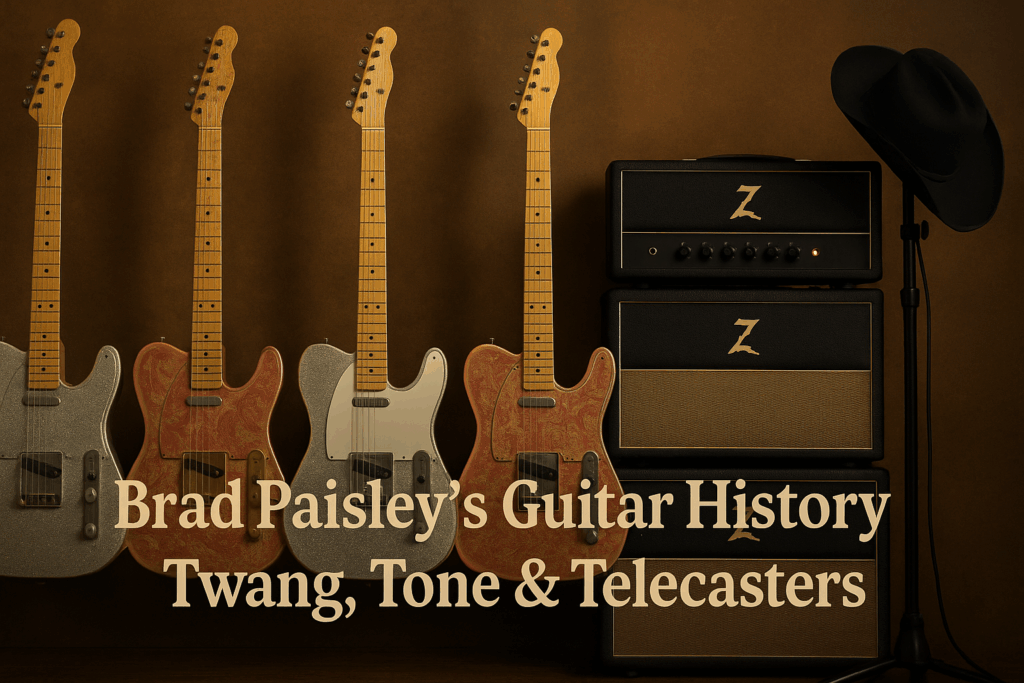
- 1968 Pink Paisley Telecaster – Paisley famously fell in love with the aesthetics of the pink paisley finish and owns several vintage and modern examples. Fender eventually collaborated with him on a signature version.
- Brad Paisley Signature Fender Telecaster – Released in 2017, this lightweight model features a Paulownia body with a spruce top, Road Worn® silver sparkle finish, and custom-wound pickups. It’s built for comfort, tone, and Paisley’s aggressive picking style.
Other Guitars in the Arsenal
Although he’s loyal to Teles, Paisley occasionally reaches for other instruments to suit the song:
- Crook Custom Guitars – Some of his most iconic instruments are built by Bill Crook, including several paisley-finished and sparkle-bodied T-style guitars.
- Gibson J-45 and Hummingbird – These acoustics often make appearances during ballads or solo acoustic performances.
- Gretsch G6120 – Used occasionally for a different flavor of twang.
- Custom PRS, Gibson Les Paul, and Strat-style guitars have been seen on stage or in the studio when the song demands a different voice.
Amplifiers and Effects
Brad Paisley is a tone connoisseur. He’s known for dialing in crystal-clear, harmonically rich tones that still punch through a mix.
Amplifiers:
- Dr. Z Amps – Especially the Z Wreck, built in collaboration with Ken Fischer of Trainwreck Amps. Paisley worked closely with Dr. Z to develop the amp’s sound.
- Vox AC30 – Used in the studio for chime and classic British edge.
- Fender Bassman and Deluxe Reverbs – For vintage American clean tones.
- Matchless and Bad Cat amps – Occasionally used for additional flavors.
Pedals:
Paisley keeps it relatively simple on his pedalboard:
- Wampler Paisley Drive – His signature overdrive, designed to deliver touch-sensitive grit.
- Delay and Reverb – For ambient flavor and slapback.
- Compressor – A key component in maintaining dynamic clarity during chicken pickin’ runs.
- Volume and Wah pedals – Used sparingly but with intention.
Signature Playing Style
Brad Paisley’s technique is a blend of:
- Chicken pickin’
- Hybrid picking
- Bends and double-stops
- Fast scalar runs
- Use of open strings and harmonics
What sets him apart is not just his speed, but his phrasing—Paisley is equally at home ripping solos as he is supporting a melody or adding tasteful fills.
Studio and Recording Legacy
Paisley is more than a performer—he’s a producer and tone sculptor, often recording guitar parts with vintage mics and amps in his home studio, The Wheelhouse. His recordings feature layered guitar textures, clever tone choices, and meticulous attention to detail.
Notable albums showcasing his guitar work:
- Mud on the Tires (2003)
- Time Well Wasted (2005)
- Play: The Guitar Album (2008) – An instrumental guitar album featuring guests like BB King, Vince Gill, and Albert Lee.
- American Saturday Night (2009)
- Love and War (2017)
Legacy and Influence
Brad Paisley’s guitar work has brought a level of virtuosity back to modern country radio. While many artists have leaned into pop production, Paisley continues to fly the flag for real guitar-driven music. His tone, gear choices, and playing style have inspired a new generation of players—both in and outside the country genre.
Whether he’s dueling with Vince Gill, covering a rock classic, or tearing through a bluegrass-inspired lick, Paisley proves that the guitar still matters in mainstream music.
Conclusion
Brad Paisley’s guitar history is a celebration of tradition and innovation. With one foot in the past and the other stepping boldly into modern tonecraft, Paisley is the rare artist who speaks fluently across eras. From battered Telecasters to boutique amps, his setup is a love letter to tone, twang, and technique—making him one of the most respected guitarists in modern country music.