The 1980s were a golden era of guitar-driven music, where tone was as flamboyant and iconic as the fashion. From arena rock and shred metal to post-punk and new wave, the guitar sounds of the ’80s were defined by innovation, technology, and excess. Whether you’re after the soaring leads of Eddie Van Halen or the shimmering chorus-laden textures of The Cure, here’s how to dial in that unmistakable ‘80s guitar tone.
1. Gear Essentials: The 1980s Toolkit
Guitars:
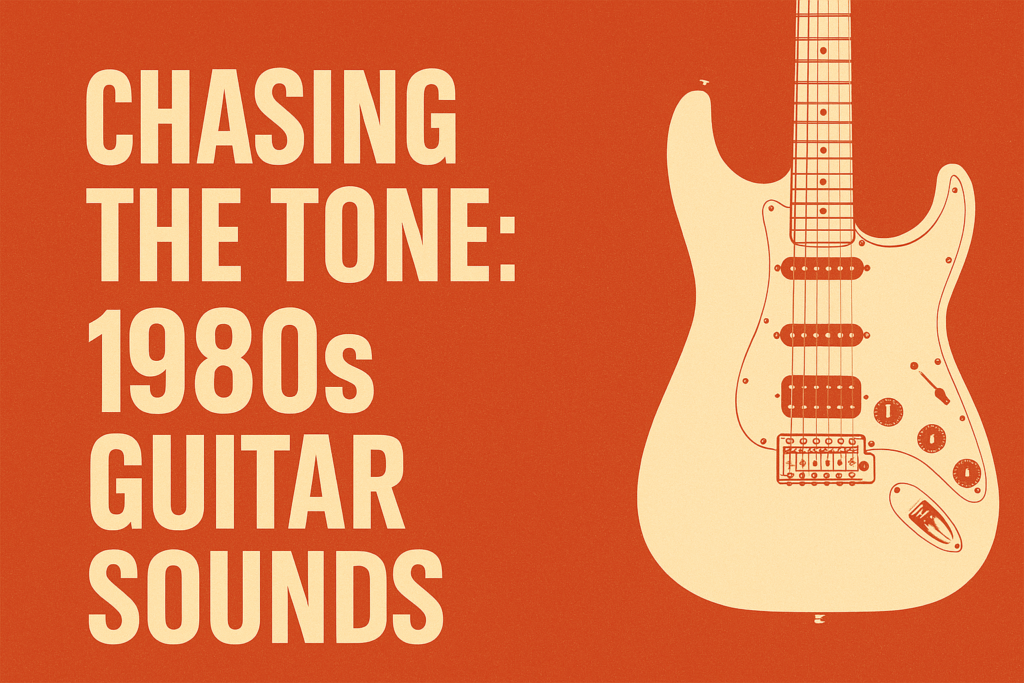
The ’80s were dominated by flashy Superstrats with high-output pickups. Think:
- Kramer Baretta
- Charvel Model Series
- Ibanez RG and JEM
- Fender Stratocasters (with added humbuckers or active electronics)
Pickups:
- EMG active pickups (e.g. David Gilmour, Steve Lukather)
- DiMarzio Super Distortion or Seymour Duncan JB for a hot-rodded sound
- Coil-splitting options were common for added tonal flexibility.
Amplifiers:
- Marshall JCM800 – The king of ‘80s hard rock and metal
- Mesa/Boogie Mark IIC+ – Satriani and Metallica’s secret weapon
- Roland JC-120 – A staple for clean, chorus-rich tones (The Police, The Smiths)
2. Effects: The ‘More Is More’ Mentality
Must-have pedals and processors:
- Chorus – Absolutely essential. Try a Boss CE-2 or CE-3 for classic analog warmth.
- Delay – Long digital delays with clear repeats (TC Electronic, Boss DD-2)
- Reverb – Gated reverb or plate reverb helped define stadium ambience.
- Compression – Smoothed out picking dynamics for that polished tone.
- Flanger/Phaser – Used creatively by players like Alex Lifeson and EVH.
- Rack Units – Eventide, Lexicon, and ADA MP-1 preamps added studio sheen to live rigs.
3. Playing Techniques: Shred & Shine
- Legato and tapping – Inspired by Van Halen and later Satriani/Vai
- Palm muting with precision – Especially in metal and hard rock
- Clean arpeggios with chorus – Think The Cure, U2, and Duran Duran
- Dive bombs and whammy abuse – Thanks to Floyd Rose-equipped guitars
- Fast alternate picking and sweep picking – From the rise of neo-classical shred
4. Tone Settings: Knob-Tweaking Tips
EQ Tips:
- Scooped mids for metal tones (Mesa/Boogie or graphic EQs)
- Boosted mids for lead cuts in classic rock
- Bright, treble-rich cleans with reverb and chorus for new wave
Gain Staging:
- Preamp gain was cranked in the ‘80s; pedals were often used to boost, not saturate.
- Try stacking a light overdrive into a cranked amp for lead tones.
5. Notable Tone Inspirations
- Eddie Van Halen – Brown sound, EVH-style midrange focus, Phase 90, Echoplex
- The Edge (U2) – Clean delay-driven riffs, dotted eighth notes, AC30 amps
- Prince – Funky, compressed clean tones with quirky modulation
- David Gilmour (’80s era) – EMG pickups, Boss delays, JC-120 clean tones
- Vernon Reid (Living Colour) – Experimental rack effects and explosive tones
- Steve Vai / Joe Satriani – Ibanez guitars, sustainers, Eventide FX
6. Recording the ’80s Tone Today
To replicate these tones in a modern setting:
- Use amp modelers or plugins like Helix, Kemper, or Neural DSP with vintage amp profiles.
- Explore plugin suites (e.g. Arturia Chorus Jun-6, Valhalla Delay, Eventide Blackhole).
- Don’t forget to pan rhythm guitars wide, and layer with stereo effects for that massive 80s mix.
Conclusion:
Recreating the guitar tones of the 1980s is more than just chasing gear—it’s about embracing the boldness, the clarity, and the experimentation that defined a decade. Whether you’re riffing like Ratt, arpeggiating like The Police, or diving into digital delays like U2, the keys are attitude, technique, and some glorious modulation.