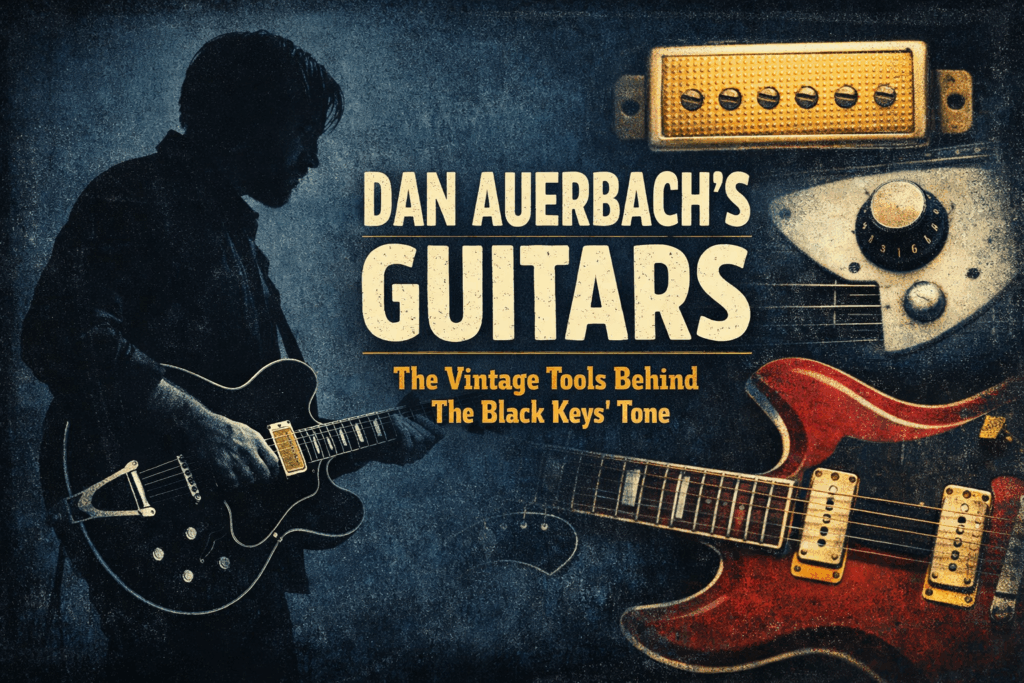
Few modern rock guitarists have built such a recognisable sound from such unconventional tools as Dan Auerbach, the driving force behind The Black Keys. From raw basement blues to arena-filling rock, Auerbach’s tone is rooted in vintage guitars, forgotten brands, and instruments chosen for character rather than prestige.
Rather than relying on predictable “holy grail” models, Dan has spent years assembling an arsenal of quirky, soulful guitars that help define the band’s gritty, fuzz-laden sound.
Vintage Oddballs at the Core of Dan Auerbach’s Sound
At the heart of Auerbach’s rig are instruments many players once overlooked — department-store brands, short-run models, and guitars built with personality rather than perfection.
Harmony Hollowbodies & Gold Foil Guitars
One of Dan’s most iconic guitars is a Harmony H78-style hollowbody, often associated with vintage DeArmond gold-foil pickups. These pickups deliver a wide, microphonic, slightly unruly tone — perfect for the Black Keys’ stripped-back duo format.
Gold foils offer:
- Clear note separation
- Woody low end
- A raspy, vocal midrange
They shine when pushed through fuzz and small amps, forming the backbone of many classic Black Keys recordings.
Supro & National: Garage-Blues Royalty
Auerbach’s love of Supro guitars is legendary. Models like the Supro Martinique played a huge role in shaping tones on tracks like Howlin’ for You, delivering snarling, compressed fuzz with minimal effort.
Alongside Supro electrics, Dan has long used National Reso-Glass guitars. These fiberglass-bodied instruments produce a punchy, slightly hollow tone that sits perfectly between bass and drums, especially in a two-piece band.
Guild, Gibson & Familiar Shapes (with a Twist)
While Auerbach is known for obscure guitars, he also turns to classic designs — though usually in less common forms.
Guild S-200 Thunderbird
The Guild S-200 Thunderbird is a standout. Its unique pickups and offset styling deliver a thicker, darker sound than a Fender, while retaining clarity under fuzz and overdrive.
Gibson SGs & Juniors
Dan has frequently used Gibson SG Juniors, favouring their P-90 pickups for their aggressive midrange and raw response. These guitars slot neatly into the Black Keys’ blues-rock foundation without sounding over-refined.
Telecasters, Rickenbackers & More
Fender-style Telecasters, Rickenbackers, and various short-scale oddities also appear across tours and studio sessions — each chosen for its voice, not its logo.
Acoustics, Resonators & Roots Influences
Auerbach’s gear choices extend beyond electrics. Songs like Little Black Submarines showcase his love for resonators and acoustics.
- Vintage Dobro resonator guitars bring metallic bite and old-world blues texture
- Classic acoustics such as a Martin D-18 appear in studio sessions
- Slide playing and open tunings highlight his deep roots in Delta and hill-country blues
These instruments reinforce the band’s connection to early American blues traditions.
Why Dan Auerbach’s Guitar Choices Matter
The key lesson from Dan Auerbach’s collection is simple: tone comes from character, not perfection.
Many of his guitars:
- Were inexpensive when he bought them
- Feature microphonic pickups and imperfect wiring
- React unpredictably to volume and attack
And that’s exactly why they work.
In a world of hyper-polished modern instruments, Auerbach’s guitars remind us that flaws, noise, and personality often make the most compelling music.
Final Thoughts
Dan Auerbach’s guitar choices have helped redefine what modern blues-rock can sound like. By embracing vintage oddities, forgotten brands, and instruments with history baked into every note, he’s crafted a tone that feels timeless, raw, and unmistakably human.
For players chasing that sound, the takeaway isn’t to buy a specific model — it’s to seek out guitars with soul, trust your ears, and let the instrument fight back just a little.