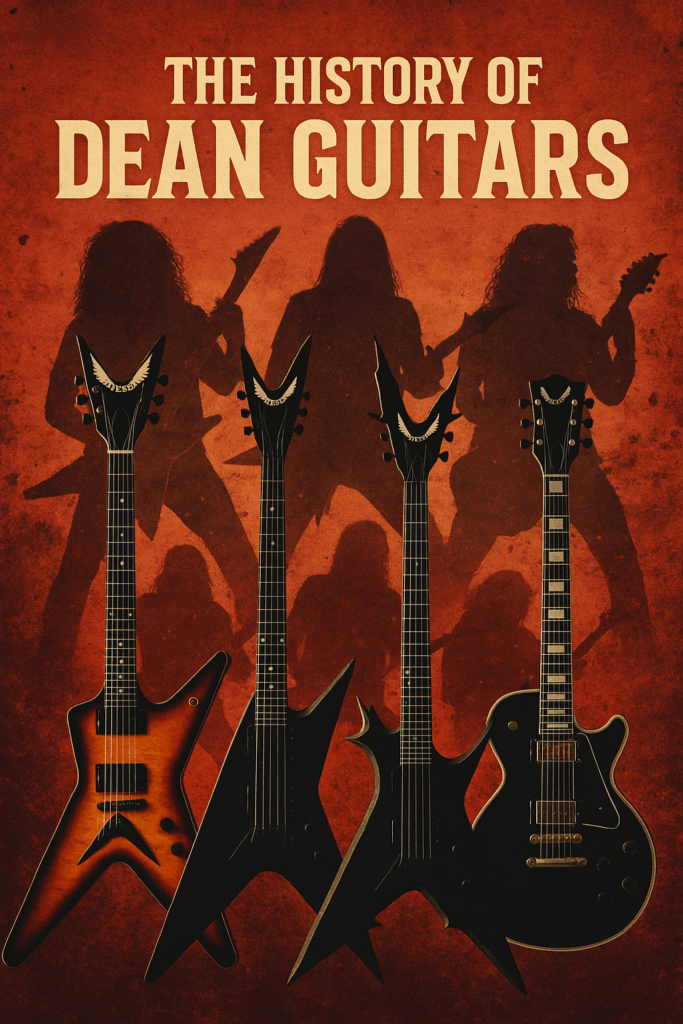
Dean Guitars was founded in 1976 by Dean Zelinsky in Chicago, Illinois. Zelinsky, only about 19‑20 years old at the time, aimed to build instruments that combined bold design, strong sustain, and performance – not just looks.
Some key early points:
- The company’s first designs included what would become their signature silhouettes: the ML, V, Z, and Cadillac shapes.
- The name “ML” reportedly comes from the initials of Zelinsky’s childhood friend, Matthew Lynn.
- After some early growth, Dean sold the company in the mid‑80s to Tropical Music (Oscar Medeiros), focusing for a time more on Latin markets, with a decline in visibility in the USA.
- In 1997, Armadillo Enterprises (led by Elliott Rubinson) bought the brand, revitalizing it, expanding its line‑up, getting artist endorsements, and moving into larger facilities.
Since then, Dean has built up a reputation for being loud, bold, dramatic in style, and very present in heavy metal / hard rock circles. Many of their models are shaped in non‑traditional ways, with striking headstocks and body outlines, often pushing for visual impact as much as tonal or playability innovations.
Signature Models & Design Icons
Here are some of the most important and influential models from Dean, what makes them special, and how they evolved:
| Model | Launched | Key Features / What Makes It Special |
|---|---|---|
| Dean ML | 1977 | Combines elements of the V and Z shapes. Very long “wings,” a pronounced headstock, high sustain—very much a statement guitar. Very associated with Dimebag Darrell in both tone and image. |
| Dean Vengeance (formerly VMNT) | ~2007 | Signature model with Dave Mustaine. Based on the V shape, built for aggressive, fast rhythm and lead playing; often with active pickups, sharp angles, top hardware etc. |
| Dean Razorback | Mid‑2000s (designed by Dimebag Darrell) | More aggressive version of ML shape; razor‑pointed wings; often very flashy finishes, high output pickups, designed for showiness and metal performances. |
| Cadillac | Also late ’70s, early models alongside ML, V, Z. | Combines elements of Explorer / Les Paul styled heft but with Dean’s design twists. Often mahogany body, set necks, multiple humbuckers. Great sustain, strong midrange presence. |
| Soltero | Introduced ~2006 | Single‑cut style (think Les Paul‑type) but with Dean flavour: set neck, different neck profile, signature versions (Leslie West etc.). Meant to combine classic single‑cut warmth with Dean’s more modern features. |
Famous Players who Made Dean Legendary
Without artists to bring them to the stage, these designs might have remained curiosities. Here are some of the most influential players and how they used Dean guitars:
- Dimebag Darrell (Pantera, Damageplan) — Perhaps the most iconic Dean artist. His use of the ML and the Razorback, especially the “From Hell” ML, made both guitar models (and their visual drama) famous.
- Dave Mustaine (Megadeth) — His VMNT / Vengeance series helped cement Dean’s reputation in thrash metal. Mustaine’s aggressive style fit well with Dean’s sharp‑edged designs.
- Corey Beaulieu (Trivium) — Used Razorback V among other Dean models. High‑precision playing, fast leads, modern metal; players like him helped bridge the classic Dean look into newer generations.
- Leslie West — A player with big tone, West has had his signature Soltero model; his style needed warmth, sustain, presence. Soltero gives that.
- Michael Schenker — Known for flying V‑style guitars (among others); Dean’s V shapes and artist series have included models for him.
- Others: Kerry King, Rich Williams, players from metal and rock genres who want show, bite, and presence.
The Influence, Challenges, and Present Day
Dean’s bold designs have had both advantages and drawbacks:
- Strengths: Visual impact, brand identity (you “know” a Dean guitar when you see it), sustain and stage presence. Their artist partnerships gave them credibility among rock & metal players. They also diversified into basses, acoustics, and more, so they aren’t just one trick.
- Challenges: Some of the designs are polarising. Aggressive shapes might be harder to transport or ergonomic issues for some players. Also, dealing with artist signature models and royalties has occasionally been complicated (for example legal issues around Dimebag’s estate and certain signature models).
Today, the brand continues to produce a wide range of products: from import instruments to high‑end USA custom shop Dean & Select series. Signature models remain a big part of their lineup; the Soltero, V/Vengeance, ML variants, Cadillacs, and some of the more recent shapes keep evolving.
Why Dean Still Matters
- Because design matters: Dean didn’t shy away from making guitars that look like stage pieces. For many players, having something that’s visually striking is part of their performance.
- Because there’s a bridge between old school and new: Many newer metal / rock guitarists cite Dean models as influences, or have used them in their careers. The classic designs (ML, V, etc.) are still relevant.
- Because signature models anchor credibility: When players like Mustaine, Dimebag, or Beaulieu put their name and preferences on a model, it tells you what the guitar is capable of.