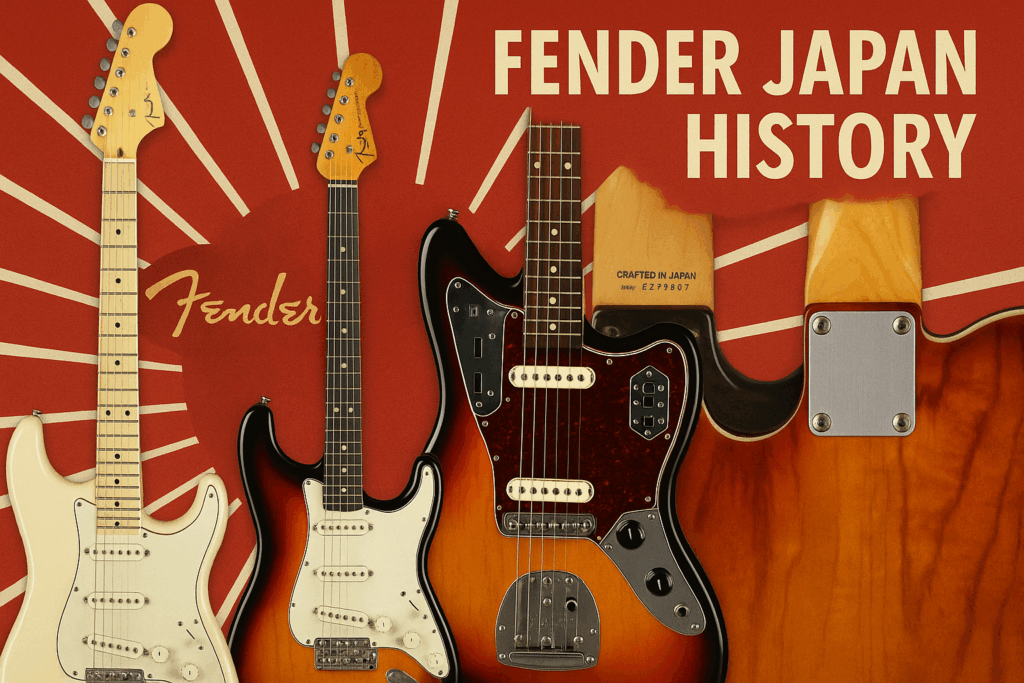
In the early 1980s, as Fender’s U.S. production quality was in decline and the market was flooded with high-quality, low-cost Japanese copies, Fender took an unprecedented step: it partnered with Japanese builders to create Fender Japan. What began as a strategic move to reclaim the brand’s reputation has since become one of the most beloved and respected branches of the Fender family.
From vintage reissues to Japan-only oddities, Fender Japan has produced some of the most collectible and unique instruments in Fender’s history—bridging the gap between affordability, quality, and innovation.
The Origins of Fender Japan (1982):
The seeds of Fender Japan were planted during a difficult era for the company. CBS still owned Fender, and the American manufacturing process was suffering from inconsistent quality control and labor disputes. Meanwhile, Japanese guitar manufacturers like Tokai, Greco, and Fernandes were producing remarkably accurate—and affordable—copies of classic Fender models.
Fearing erosion of their market share, Fender struck a licensing deal with Yamano Gakki and Kanda Shokai (owner of the Greco brand). In 1982, Fender Japan was officially born, with FujiGen Gakki selected as the primary builder.
Early Japanese Fenders were made exclusively for the Japanese domestic market (JDM), and were not initially intended for export.
The First Wave: JV Series and “Made in Japan” Glory
The first run of Fender Japan guitars was branded the JV (Japanese Vintage) series, and is now considered legendary among collectors. These instruments were meticulous reproductions of 1950s and 1960s Stratocasters and Telecasters—far more accurate than anything coming out of the U.S. at the time.
- Notable model: JV Stratocaster ’57 Reissue – This early reissue featured period-correct neck profiles, vintage-style pickups, and exceptional fit and finish.
- Famous player: Yngwie Malmsteen played an early JV Strat before his U.S. Signature model was created.
The neck plates were stamped JV**, and the guitars often used U.S.-made pickups. These models quickly gained a reputation for surpassing their American counterparts in consistency and build quality.
Craftsmanship and Model Innovation:
Throughout the late 1980s and into the 1990s, Fender Japan expanded beyond reissues to include models that were exclusive to the Japanese market. These were often bolder, quirkier, and more experimental than what was being made in the U.S.
Some standout models include:
- The Fender Contemporary Series – Featuring humbuckers, locking tremolos, and 22 frets, these were aimed at the shred market in the mid-’80s.
- The Fender Boxer Series – Aimed at heavy rock players, these HSS and HH-equipped Strat-style guitars featured active circuitry and bold colors.
- The Fender Aerodyne Series – Sleek, modern designs with carved tops, bound bodies, and minimal pickguards.
- Foto Flame Stratocasters and Telecasters – Known for their “photo flame” veneer tops that imitated figured maple.
The Export Phase: “Crafted in Japan” vs “Made in Japan”
From the mid-1990s onward, Fender Japan guitars began to reach overseas markets more regularly. At this point, production at FujiGen tapered off, and other factories like Dyna Gakki and Tokai Gakki became involved.
This era saw the rise of “Crafted in Japan” instruments—a term used for guitars made under these newer factory arrangements (generally 1997–2007).
While minor variations exist between “MIJ” and “CIJ” guitars, both retained the exceptional quality Fender Japan was known for.
Famous Players and Fender Japan Guitars:
- Kurt Cobain – Famously used a Fender Japan Jaguar (crafted with DiMarzio pickups and a modified bridge) during the Nevermind and In Utero eras. His use of Japanese offset guitars fueled a resurgence in popularity.
- J Mascis (Dinosaur Jr.) – Long associated with Fender Japan Jazzmasters. His signature model (eventually made by Squier) is based on a Japanese platform.
- Tom Morello (Rage Against the Machine) – Used a Fender Aerodyne Stratocaster on tour.
- Jim Root (Slipknot/Stone Sour) – Was seen playing Japanese-made models early in his career.
Fender Japan’s Legacy and Rebirth:
In 2015, Fender restructured and brought the Japanese line fully in-house, launching the Fender Japan Exclusive series and later the Made in Japan Traditional, Hybrid, and Modern series. These lines blended vintage specs with modern innovations and reaffirmed Fender Japan’s commitment to quality craftsmanship.
Today, MIJ Fenders are no longer just region-locked oddities—they’re sought after by collectors and players worldwide. Whether you’re chasing a vintage-spec Strat, a bound Telecaster in Candy Apple Red, or a limited-run reissue of a rare model, Fender Japan continues to offer some of the most exciting guitars in Fender’s entire lineup.
Conclusion:
Fender Japan began as a defensive business strategy but blossomed into one of the most respected wings of the Fender brand. Known for impeccable craftsmanship, bold design choices, and unique model offerings, these guitars have carved out a legacy all their own. From JV Strats to Aerodyne basses and beyond, Fender Japan guitars remain essential instruments for players, collectors, and tone chasers alike.