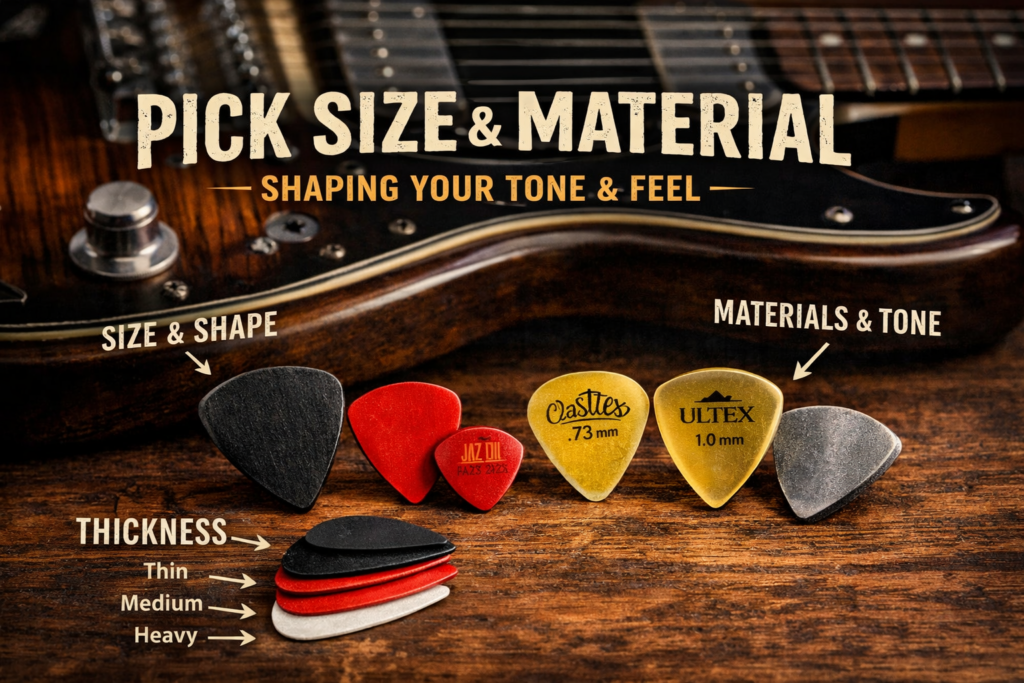
When guitarists talk about tone, the conversation usually turns to pickups, amps, or wood types. But one of the most immediate and powerful tone-shaping tools is often overlooked — the humble guitar pick.
That tiny piece of material between your fingers and the strings has a profound effect on attack, dynamics, comfort, and overall feel. Whether you’re chasing vintage warmth, modern precision, or expressive dynamics, your choice of pick can subtly — or dramatically — reshape your sound.
Let’s break down how pick size and material influence your playing.
Why Picks Matter More Than You Think
Before diving into specifics, it’s worth understanding why picks are so influential.
The pick is the first point of contact in your signal chain. It determines:
- How the string vibrates
- The sharpness or softness of attack
- The amount of control you have over articulation
In many ways, changing your pick is like adjusting your playing style without having to relearn technique.
Pick Size & Shape: Control vs Comfort
Standard Picks (351 Shape)
The classic teardrop shape most players start with.
- Balanced feel
- Versatile across styles
- Good for strumming and general use
Perfect if you need a do-it-all pick without extremes.
Small Picks (Jazz-Style, e.g. Jazz III)
Favoured by lead players and shredders.
- Increased precision
- Less flex = tighter control
- Ideal for fast alternate picking
Players like Eric Johnson and John Petrucci swear by smaller picks for accuracy and speed.
Tone impact:
Sharper attack, more defined notes, slightly brighter response.
Large Picks (Triangle / Oversized)
Often overlooked but incredibly useful.
- More surface area = relaxed grip
- Great for strumming and rhythm work
- Popular with acoustic players
Tone impact:
Softer attack, fuller strumming sound, more forgiving feel.
Pick Thickness: The Hidden Factor in Feel
While size affects grip and control, thickness dramatically changes how the pick interacts with the string.
- Thin (0.38–0.60mm): Flexible, ideal for strumming, softer attack
- Medium (0.60–0.88mm): Balanced response
- Heavy (1.0mm+): Stiff, precise, punchy
Heavier picks tend to produce:
- More volume
- Stronger fundamental note
- Less “flap” noise
Pick Materials: Where Tone Really Changes
Different materials don’t just feel different — they sound different too.
Celluloid
The vintage standard.
- Smooth feel
- Warm, rounded tone
- Slight natural flex
Great for classic rock, blues, and vintage tones.
Nylon
Soft and slightly grippy.
- Flexible even in thicker gauges
- Softer attack
- Excellent for rhythm work
Favoured by players who want comfort and reduced pick noise.
Tortex (Delrin)
A modern favourite.
- Matte grip
- Snappy, articulate tone
- Consistent wear
Used across genres for its balanced, reliable response.
Ultex (or similar high-density plastics)
Bright and precise.
- Very stiff
- Enhanced clarity
- Long-lasting
Perfect for players chasing maximum articulation and definition.
Metal Picks
Less common, but very distinctive.
- Extremely bright attack
- High string noise
- Unique feel
Often used for special effects or aggressive tones, especially in experimental or slide contexts.
How Picks Influence Tone in Practice
Here’s a simple way to think about it:
- Smaller + thicker + harder material → Tight, bright, articulate tone (great for lead)
- Larger + thinner + softer material → Warm, loose, rhythmic tone (great for strumming)
Even swapping between two similar picks can:
- Change perceived gain
- Alter pick attack in recordings
- Affect how your amp responds
Finding Your Perfect Pick
There’s no universal “best” pick — only what works for you.
Try this approach:
- Pick one variable at a time (size, then thickness, then material)
- Play both clean and distorted
- Focus on:
- Attack
- Comfort
- Control
- Fatigue over time
Many professional players rotate picks depending on the session — something worth experimenting with.
Final Thoughts
It’s easy to overlook picks because they’re inexpensive and small — but that’s exactly what makes them powerful.
Few gear changes are:
- As cheap
- As immediate
- As impactful
If you’ve never experimented beyond your usual pick, you’re potentially missing out on a whole new dimension of tone and feel.